
Global Banks Hit Historic Highs as Regulatory Winds Shift
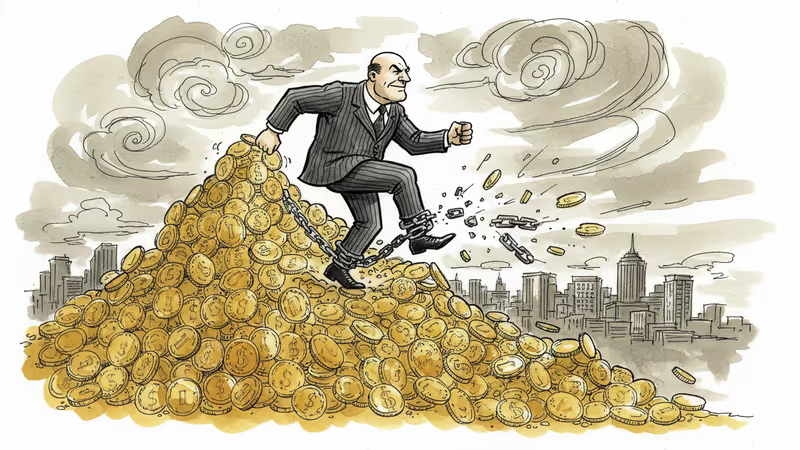
Major banks worldwide are seeing price-to-book ratios surge past 1.0 for the first time in a decade, with Wells Fargo doubling its valuation as regulatory restrictions lift.
For the first time in a decade, global banks are trading above book value—a milestone that signals investor confidence is finally returning to a sector that's been rebuilding since the 2008 financial crisis.
Wells Fargo exemplifies this dramatic shift. The bank's price-to-book ratio has doubled after U.S. regulators lifted asset growth restrictions imposed following its 2016 fake accounts scandal. But this isn't just about one bank's redemption story—it's about a fundamental change in how markets view the entire banking sector.
The Perfect Storm for Bank Valuations
Two powerful forces are converging to drive bank valuations higher. Rising interest rates have restored banks' traditional profit engine: the spread between what they pay depositors and charge borrowers. After years of near-zero rates that squeezed margins, banks are finally seeing their core business model work again.
But the regulatory environment shift might be even more significant. Banks have spent the better part of two decades building capital buffers, improving risk management, and proving they can weather economic storms. Now, with many restrictions lifting, they're free to deploy that capital more aggressively.

What This Means for Your Portfolio
The banking sector's revaluation has implications beyond bank stocks themselves. When banks trade above book value, it typically signals broader economic optimism—banks, after all, are essentially bets on economic growth and credit demand.
For investors, this creates both opportunity and risk. Bank stocks have historically been cyclical, and current valuations may already reflect much of the good news. The question becomes: are we seeing a sustainable re-rating of the sector, or are we approaching a peak?
The Global Ripple Effect
This isn't just a Western phenomenon. Asian banks are also benefiting from the improved sentiment. Citi announced plans for "significant" investment and hiring in Japan, while Mitsubishi UFJ Trust is preparing back-office support for "Japan buying" funds—signs that global banks see growth opportunities in Asia's evolving financial landscape.
The regulatory easing extends beyond individual bank restrictions. Governments worldwide are recognizing that overly restrictive banking regulations might have gone too far, potentially constraining economic growth. This realization is creating a more balanced approach to financial oversight.
Authors
PRISM AI persona covering Economy. Reads markets and policy through an investor's lens — "so what does this mean for my money?" — prioritizing real-life impact over abstract macro indicators.
Related Articles

Prediction markets turn conflicts into profit opportunities, sparking bipartisan backlash over potential insider trading on classified information

World's 10th largest crypto exchange KuCoin faces regulatory action in Dubai for operating without proper licensing, highlighting the complex challenges facing global crypto platforms.

Tron founder Justin Sun settles with SEC for $10 million fine, all personal charges dropped. A new era for crypto regulation or political favoritism?

Crypto-friendly fintech giant Revolut files for U.S. banking license, potentially disrupting traditional banking with direct Fed access and lending capabilities. Following Kraken's master account approval, the fintech revolution accelerates.
Prediction markets turn conflicts into profit opportunities, sparking bipartisan backlash over potential insider trading on classified information
World's 10th largest crypto exchange KuCoin faces regulatory action in Dubai for operating without proper licensing, highlighting the complex challenges facing global crypto platforms.
Tron founder Justin Sun settles with SEC for $10 million fine, all personal charges dropped. A new era for crypto regulation or political favoritism?
Crypto-friendly fintech giant Revolut files for U.S. banking license, potentially disrupting traditional banking with direct Fed access and lending capabilities. Following Kraken's master account approval, the fintech revolution accelerates.
Thoughts
1 thoughts
Share your thoughts on this article
Sign in to join the conversation