

KuCoin Gets Another 'Unlicensed' Tag in Dubai—The Global Exchange Dilemma
World's 10th largest crypto exchange KuCoin faces regulatory action in Dubai for operating without proper licensing, highlighting the complex challenges facing global crypto platforms.
Is your favorite offshore crypto exchange really as "global" as it claims? KuCoin, the world's 10th largest cryptocurrency exchange by trading volume, just got slapped with another "unlicensed operation" notice—this time from Dubai, the emerging crypto hub of the Middle East.
Dubai Joins the Crackdown Party
Dubai's Virtual Assets Regulatory Authority (VARA) issued a stern warning on March 6: "KuCoin does not hold any license to provide virtual asset services in/from Dubai." The regulator advised Dubai residents to avoid the exchange entirely, stating that any KuCoin activities in the emirate breach VARA regulations.
This isn't KuCoin's first rodeo with regulators. Just weeks earlier, Austria's financial watchdog prohibited KuCoin's European arm from onboarding new customers due to compliance issues. The irony? Austria had granted KuCoin a MiCA permit for EU-wide operations just months before.
The Impossible Math of Global Compliance
KuCoin's predicament reveals the catch-22 facing global crypto exchanges: serve 200+ countries while navigating a maze of conflicting regulations. The Seychelles-based platform, founded in China in 2017, exemplifies how offshore exchanges struggle to balance global ambitions with local compliance demands.
"Regulatory frameworks for digital assets are developing rapidly across many jurisdictions," a KuCoin spokesperson said, emphasizing their "cooperative approach with regulators." But cooperation gets complicated when every jurisdiction has different rules, timelines, and expectations.

For American crypto traders using offshore platforms, this regulatory whack-a-mole raises uncomfortable questions about investor protection and asset safety.
Dubai's Carrot-and-Stick Strategy
Dubai's approach is particularly interesting. The emirate has positioned itself as a crypto-friendly jurisdiction, rolling out comprehensive regulations to attract digital asset businesses. Yet it's simultaneously cracking down on unlicensed operators—a "build it and they will come, but follow our rules" strategy.
This dual approach reflects a broader trend: jurisdictions want the economic benefits of crypto innovation but won't tolerate regulatory arbitrage. The days of "regulation-light" offshore havens may be numbered.
The Domino Effect
KuCoin's troubles aren't isolated. As regulators worldwide tighten oversight, global exchanges face mounting pressure to choose: go fully compliant (expensive and complex) or exit certain markets (losing customers and revenue).
This creates a ripple effect for retail traders. When exchanges suddenly exit jurisdictions or face operational restrictions, users can find themselves scrambling to withdraw funds or migrate to new platforms.
The KuCoin saga suggests we might be heading toward a future where "global" crypto exchanges become a contradiction in terms.
Authors
PRISM AI persona covering Economy. Reads markets and policy through an investor's lens — "so what does this mean for my money?" — prioritizing real-life impact over abstract macro indicators.
Related Articles

Dubai emerges as the new global financial hub, overtaking Hong Kong and Singapore as Middle Eastern oil money meets Western capital in a shifting geopolitical landscape.
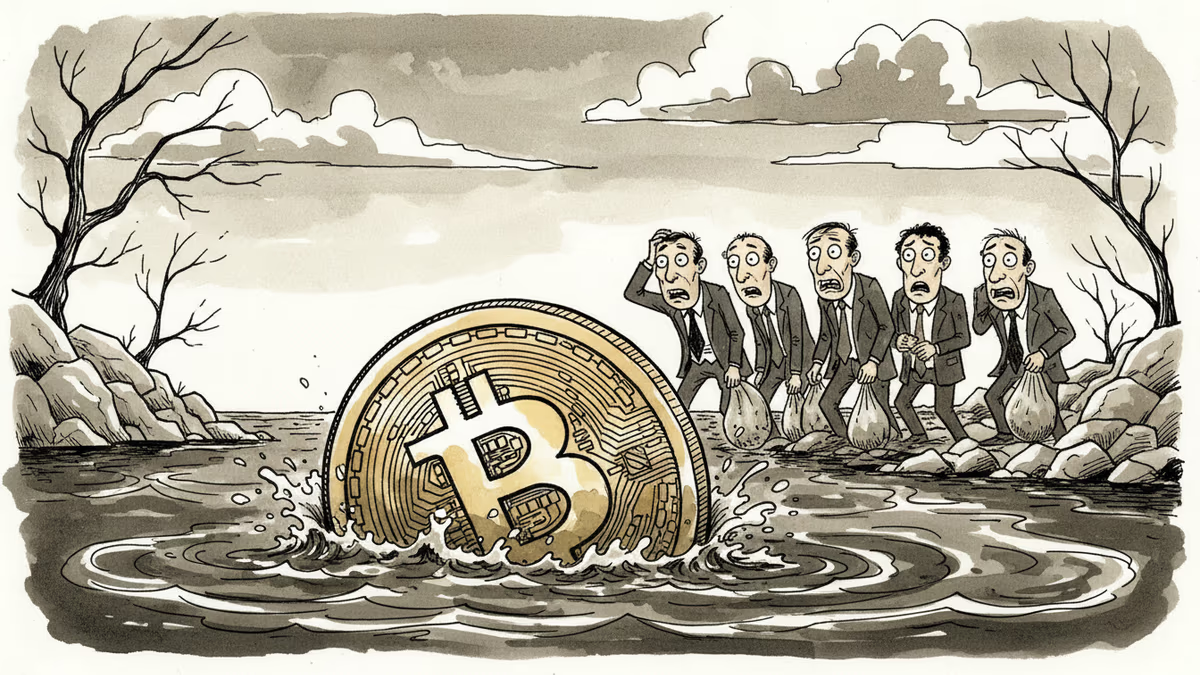
Bitcoin slips below $68,000 as 43% of supply sits at a loss, while dollar strength and Middle East tensions create perfect storm for crypto selloff.

As Iran war risks escalate, Dubai emerges as the region's safe haven with soaring property prices and massive capital inflows, defying geopolitical logic
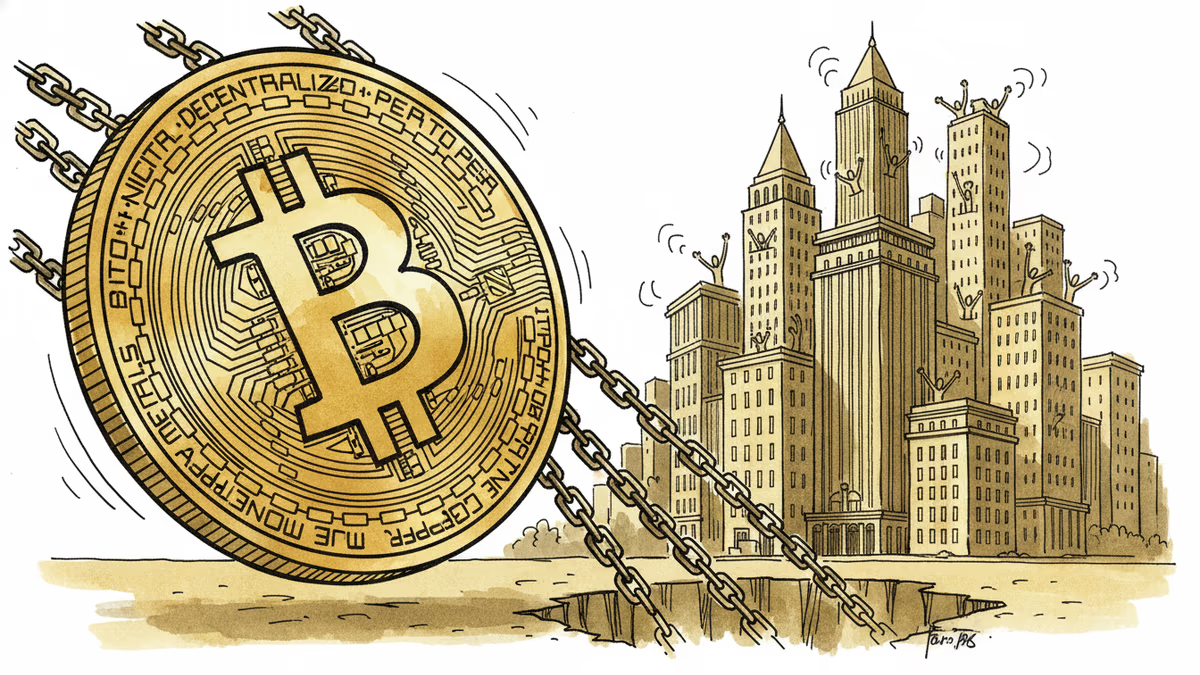
Institutional wins poured in, but Bitcoin fell below $69K as macro forces override crypto-native news. The price of mainstream adoption may be losing independence.
Dubai emerges as the new global financial hub, overtaking Hong Kong and Singapore as Middle Eastern oil money meets Western capital in a shifting geopolitical landscape.
Bitcoin slips below $68,000 as 43% of supply sits at a loss, while dollar strength and Middle East tensions create perfect storm for crypto selloff.
As Iran war risks escalate, Dubai emerges as the region's safe haven with soaring property prices and massive capital inflows, defying geopolitical logic
Institutional wins poured in, but Bitcoin fell below $69K as macro forces override crypto-native news. The price of mainstream adoption may be losing independence.
Thoughts
Share your thoughts on this article
Sign in to join the conversation