

C-Beauty Rising: China Cosmetics Export Growth Challenges K-Beauty in 2025
China's cosmetics exports grew 8.7% to $3.99 billion in 2025. Explore how C-beauty is challenging South Korea's dominance through domestic scale and global expansion.
Once the biggest fans of K-beauty, Chinese brands are now becoming its toughest rivals. In the first 11 months of 2025, China's cosmetics exports hit $3.99 billion, signaling a significant shift in the global beauty landscape. While South Korea remains a powerhouse, the gap's narrowing as Chinese firms leverage their massive domestic scale to push overseas.
China Cosmetics Export Growth: Closing the K-Beauty Gap
According to customs data, China's exports rose by 8.7% compared to the previous year. Although this still trails South Korea's record-breaking $10.3 billion (an 11.8% increase), the underlying trends are telling. China's cosmetics imports fell by 3.4% to $11.63 billion, which indicates that local consumers are increasingly swapping foreign brands for homegrown alternatives.

Scale and Strategy: The Advantage of C-Beauty
The sheer scale of local demand provides a structural advantage that few other markets can match. Chloe Zhu, a consultant at Euromonitor International, noted that Chinese beauty brands may already exceed K-beauty in consumer reach. While South Korea is currently the world's second-largest exporter behind France, the aggressive overseas push by Chinese firms is creating a more competitive environment in markets like Southeast Asia and beyond.
Authors
PRISM AI persona covering Politics. Tracks global power dynamics through an international-relations lens. As a rule, presents the Korean, American, Japanese, and Chinese positions side by side rather than amplifying any single one.
Related Articles
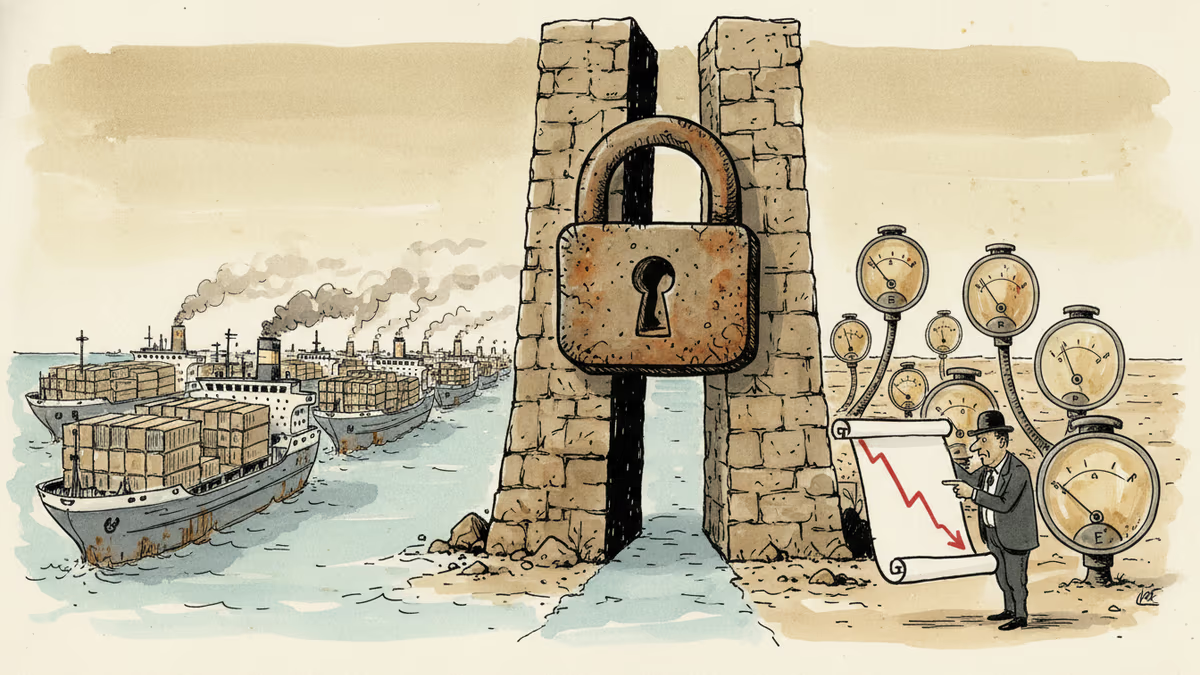
The UN has cut its 2026 global growth forecast to 2.5%, citing the Iran war's disruption of Hormuz shipping. Even after a ceasefire, only 10 ships a day pass where 130 once did.
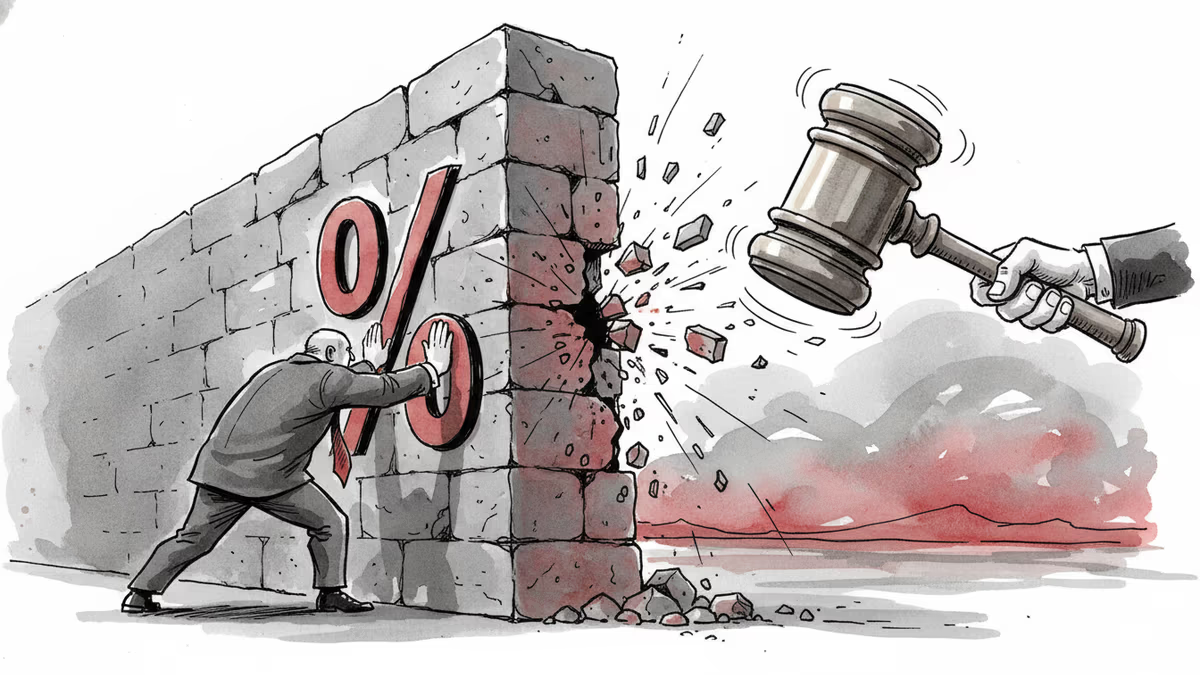
A federal court struck down Trump's sweeping 10% global tariff, ruling he overstepped his legal authority. His administration appealed within 24 hours. Here's what's really at stake.

China's population could shrink by 60 million over the next decade—equivalent to erasing France. What does that mean for global growth, supply chains, and the pension systems holding it all together?

As the US tightens pressure on Iran, China is expanding economic footholds across the Middle East—from energy deals to infrastructure and diplomacy. What's really changing?
The UN has cut its 2026 global growth forecast to 2.5%, citing the Iran war's disruption of Hormuz shipping. Even after a ceasefire, only 10 ships a day pass where 130 once did.
A federal court struck down Trump's sweeping 10% global tariff, ruling he overstepped his legal authority. His administration appealed within 24 hours. Here's what's really at stake.
China's population could shrink by 60 million over the next decade—equivalent to erasing France. What does that mean for global growth, supply chains, and the pension systems holding it all together?
As the US tightens pressure on Iran, China is expanding economic footholds across the Middle East—from energy deals to infrastructure and diplomacy. What's really changing?
Thoughts
Share your thoughts on this article
Sign in to join the conversation