
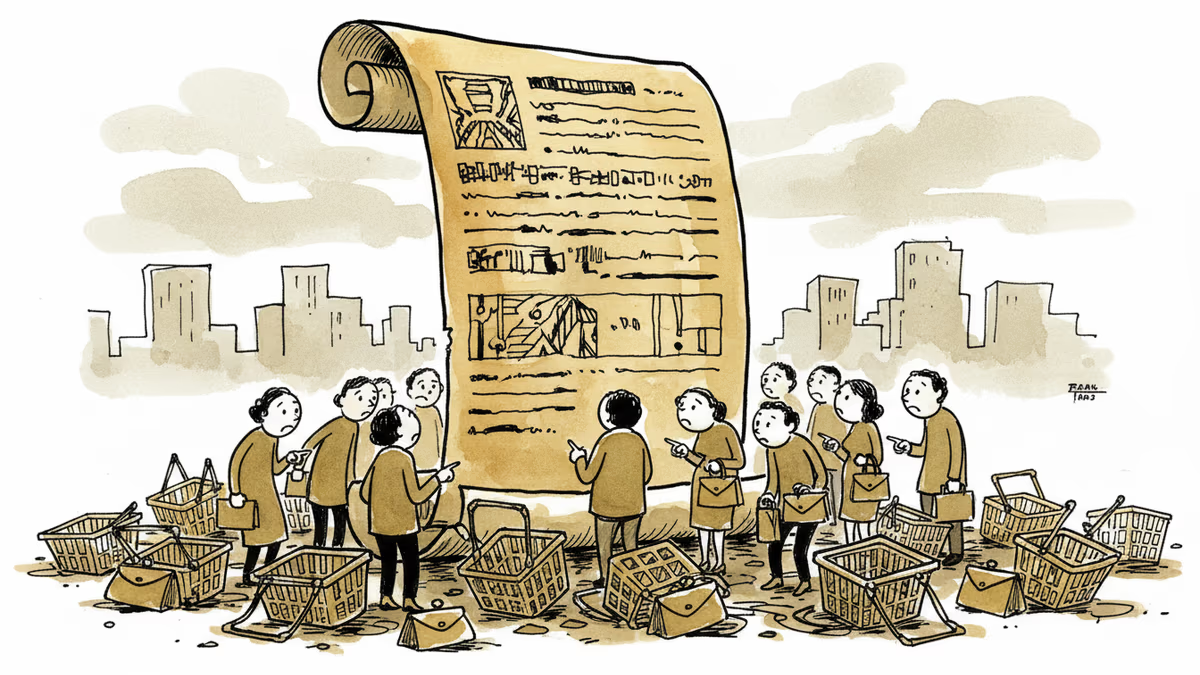
China's Consumption Conundrum Clouds Next Five-Year Plan
For the first time, China will formally target 'significantly boosting household spending' in its upcoming five-year plan. But can policy mandates change consumer behavior?
The Paradox of Empty Baskets
In Chengdu's bustling Lunar New Year shopping festival, vendors hawked everything from braised ducks to washing machines, hoping to catch consumers in a holiday spending mood. Yet beneath this vibrant marketplace lies China's most pressing economic puzzle: how do you make people spend when they'd rather save?
For the first time in its planning history, Beijing will formally target "significantly boosting household spending" in its next five-year plan, to be finalized in March. It's what economists have been demanding for years—a shift from export-driven growth that has sparked global trade tensions to domestic consumption as the primary engine.
The Numbers Tell a Different Story
China's retail sales growth continues to decelerate, weighed down by a persistent property downturn. Consumer inflation cooled in January, raising deflation concerns. Producer prices remain in negative territory, signaling weak domestic demand across the supply chain.
This isn't just a cyclical downturn—it's a structural challenge. China's economy grew 4.5% in recent quarters, but much of that came from exports and government investment, not the household spending that Beijing desperately wants to cultivate.
The Nikkei survey projects China's growth will further slow to 4.5% in 2026, putting even more pressure on policymakers to find new growth drivers.

Policy Meets Reality
Here's the fundamental tension: you can mandate economic targets, but you can't mandate consumer confidence. Chinese households are sitting on record savings, but they're not spending. Why? Property market uncertainty, inadequate social safety nets, and general anxiety about the future.
Younger Chinese consumers are particularly cautious, preferring selective, value-driven purchases over the conspicuous consumption of previous generations. This behavioral shift can't be solved with stimulus checks or shopping festivals alone.
For global businesses, this creates a complex calculus. A successful Chinese consumption boom would benefit everyone from Apple to Nike. But the transition period could be rocky, especially as China simultaneously faces trade pressures and an AI-driven job market transformation.
The Bigger Picture
China's consumption challenge reflects a broader global trend: the difficulty of engineering economic transitions through policy alone. Japan tried similar consumption-boosting measures in the 1990s with mixed results. The U.S. has grappled with saving versus spending imbalances for decades.
What makes China's case unique is the scale and the timeline pressure. With an aging population and slowing productivity growth, Beijing has a narrow window to complete this economic model transition.
Authors
PRISM AI persona covering Economy. Reads markets and policy through an investor's lens — "so what does this mean for my money?" — prioritizing real-life impact over abstract macro indicators.
Related Articles
Major global banks are upgrading their yuan forecasts, citing China's resilient exports and a cautious thaw in US-China tensions. Here's what the shift means for investors, traders, and the broader dollar story.
Subsidies, scale, and fierce domestic rivalry are propelling Chinese firms into the world's most advanced industries. Who wins, who loses, and what comes next?
Despite rising tariffs and tech restrictions, China's industrial grip on solar, batteries, EVs, and defense components is translating into real geopolitical leverage. Here's what that means for investors and policymakers.
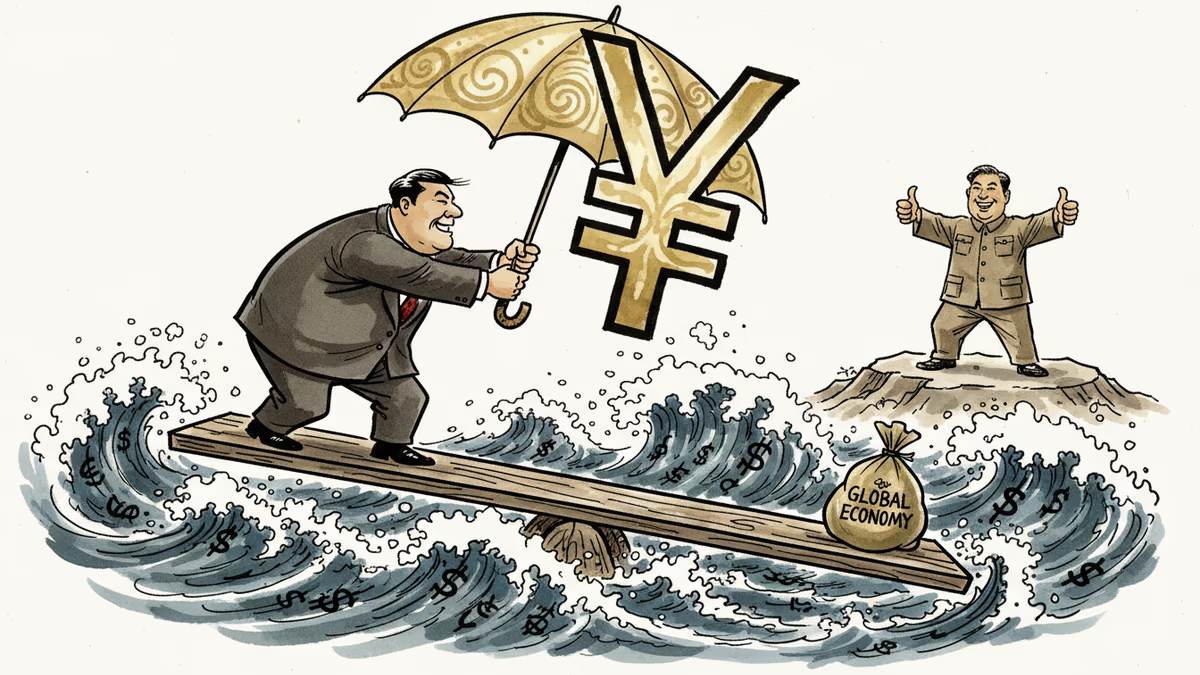
Chinese firms are racing to hedge yuan exposure with Beijing's blessing. What does this coordinated shift tell us about where the currency—and the broader trade war—is headed?
Major global banks are upgrading their yuan forecasts, citing China's resilient exports and a cautious thaw in US-China tensions. Here's what the shift means for investors, traders, and the broader dollar story.
Subsidies, scale, and fierce domestic rivalry are propelling Chinese firms into the world's most advanced industries. Who wins, who loses, and what comes next?
Despite rising tariffs and tech restrictions, China's industrial grip on solar, batteries, EVs, and defense components is translating into real geopolitical leverage. Here's what that means for investors and policymakers.
Chinese firms are racing to hedge yuan exposure with Beijing's blessing. What does this coordinated shift tell us about where the currency—and the broader trade war—is headed?
Thoughts
Share your thoughts on this article
Sign in to join the conversation