

US China AI Collaboration NeurIPS 2025: Data Shows Deep Academic Ties
Analyze the latest US China AI collaboration trends from NeurIPS 2025 data. Learn how Llama, Transformer, and Qwen models bridge the gap between superpowers.
They're shaking hands while keeping their fists clenched. While Washington and Beijing trade blows over AI supremacy, the research labs of both nations remain surprisingly enmeshed. A closer look at recent academic output suggests that the scientific community isn't as divided as the political headlines imply.
Mapping US China AI Collaboration NeurIPS Trends
According to an analysis by WIRED, the NeurIPS 2025 conference—held in December 2025—showcased a significant level of cross-border partnership. Out of 5,290 total papers, 141 (roughly 3%) involved co-authors from both US and Chinese institutions. This rate has remained steady, with 134 collaborative papers out of 4,497 recorded in 2024.

Algorithms Crossing the Pacific
The sharing of models and architectures is even more pervasive. The Transformer architecture, originally a Google breakthrough, appeared in 292 papers from Chinese institutions. Meta'sLlama models were featured in 106 of those studies. Conversely, Alibaba'sQwen model was a key element in 63 papers involving American researchers.
Jeffrey Ding, an assistant professor at George Washington University, noted that the two ecosystems are "inextricably enmeshed." Regardless of political pressure, researchers continue to leverage the best tools available, regardless of their origin.
Authors
Related Articles

China is restricting AI researchers and startup founders from traveling abroad as the U.S.-China AI performance gap narrows to just 2.7%. What Beijing's talent lockdown means for the global AI race.
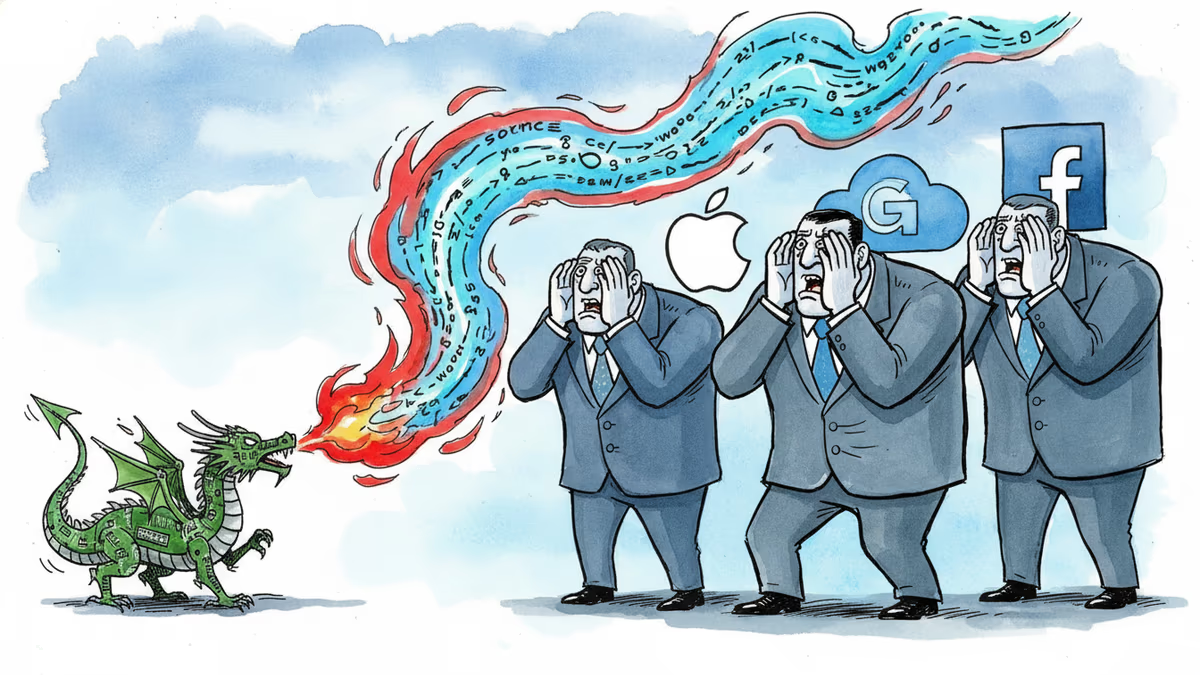
Moonshot AI raised $2B at a $20B valuation. Its Kimi models rank second on OpenRouter. What China's open-weight AI surge means for the global LLM market.
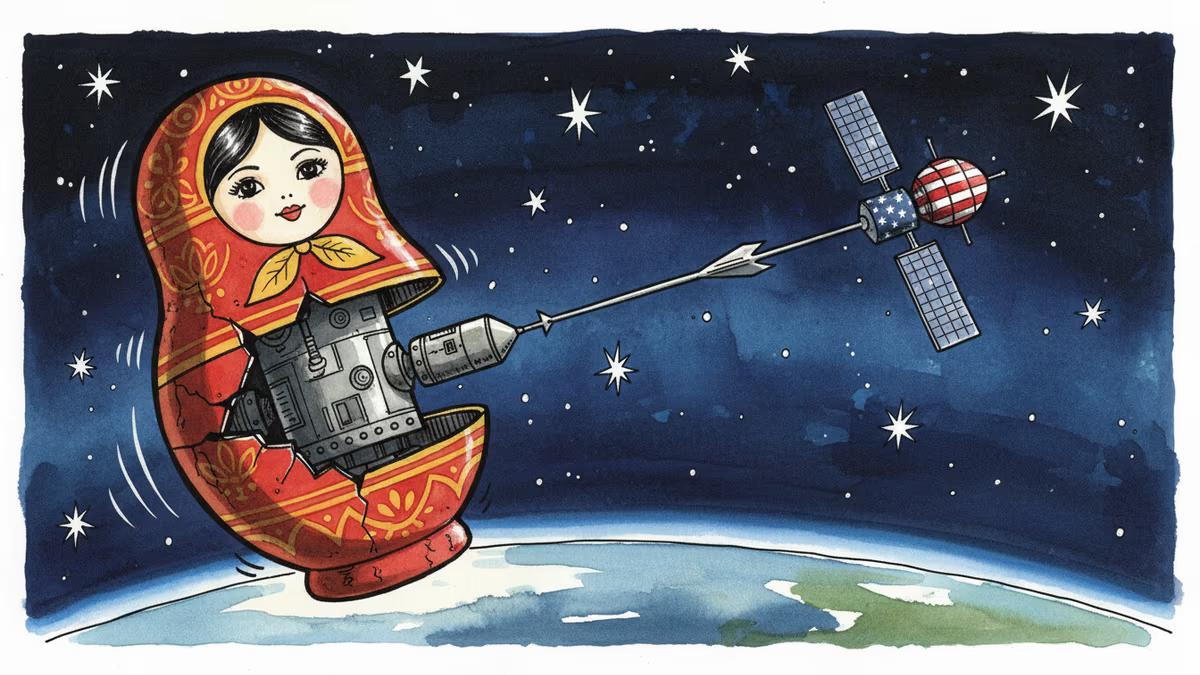
US Space Command confirms Russia has deployed operational anti-satellite weapons tracking American spy satellites in low-Earth orbit. What does this mean for space security?

Scammers posing as Iranian authorities are demanding bitcoin and tether from ships near the Strait of Hormuz—exploiting the fact that Iran already does exactly this.
China is restricting AI researchers and startup founders from traveling abroad as the U.S.-China AI performance gap narrows to just 2.7%. What Beijing's talent lockdown means for the global AI race.
Moonshot AI raised $2B at a $20B valuation. Its Kimi models rank second on OpenRouter. What China's open-weight AI surge means for the global LLM market.
US Space Command confirms Russia has deployed operational anti-satellite weapons tracking American spy satellites in low-Earth orbit. What does this mean for space security?
Scammers posing as Iranian authorities are demanding bitcoin and tether from ships near the Strait of Hormuz—exploiting the fact that Iran already does exactly this.
Thoughts
Share your thoughts on this article
Sign in to join the conversation