
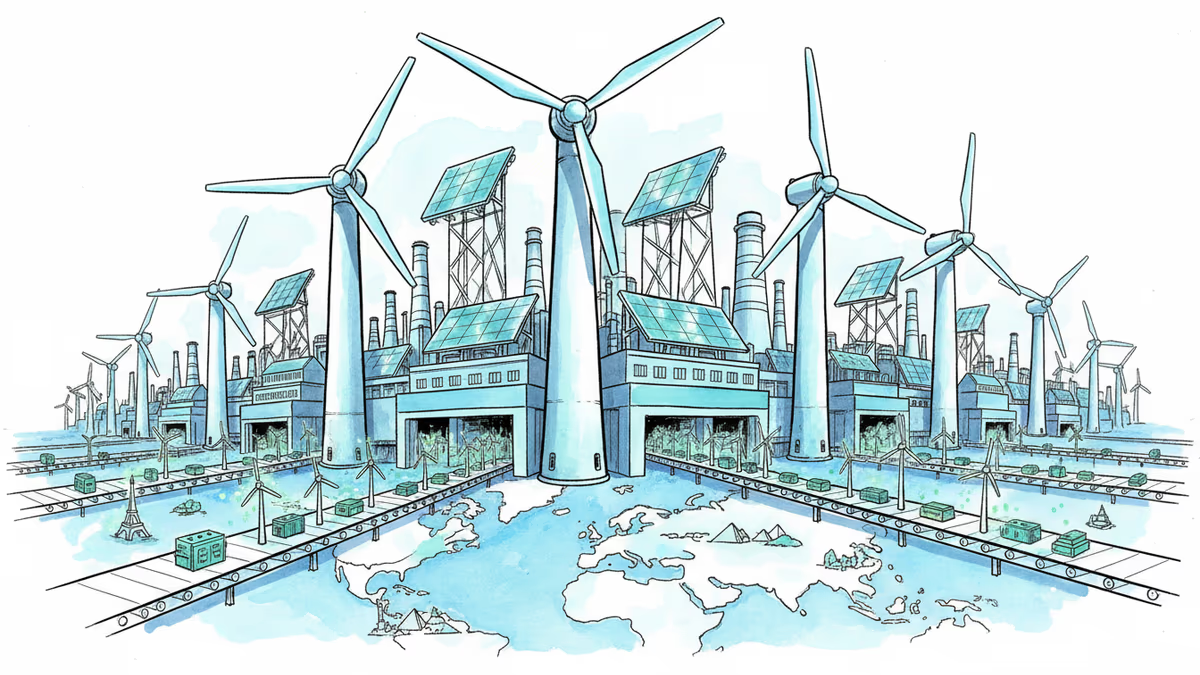
China's Clean Energy Dominance: The $94 Trillion Opportunity
Chinese firms are positioned to capture massive profits from global clean energy infrastructure investment, leveraging unmatched scale and cost advantages in renewable technologies.
When the world needs $94 trillion in infrastructure investment by 2040, who's best positioned to supply it? The answer increasingly points to China, where companies have built an unrivaled clean energy machine that's about to go global in a big way.
Chinese firms are "well positioned to benefit from the billions – possibly trillions – of dollars that will be spent on new infrastructure development around the world in the decades ahead," says Eric Olander, editor-in-chief at The China-Global South Project. The reason? They can "produce renewable energy products at a cost and scale that are unrivalled."
The Numbers Tell the Story
China's clean energy sector generated an estimated 15.4 trillion yuan ($2.1 trillion) in economic output last year – equivalent to Brazil's entire GDP, according to the Centre for Research on Energy and Clean Air. This isn't just impressive; it's transformative.
Over two decades, China has methodically built the world's largest clean energy ecosystem. From wind and solar power to electric vehicles and batteries, Chinese companies have achieved the kind of scale that allows them to offer solutions other countries desperately need to reduce their reliance on coal and gas.
The G20's Global Infrastructure Hub estimated that $94 trillion in infrastructure investment will be needed by 2040 to support economic growth and close infrastructure gaps. A significant portion of this will flow toward clean energy projects as countries race to meet climate commitments.
The Geopolitical Calculus
But this isn't just an economic story – it's a geopolitical one. China's clean energy dominance comes at a time when Western nations are trying to reduce their dependence on Chinese supply chains while simultaneously needing Chinese technology to meet their climate goals.

The United States has poured hundreds of billions into domestic clean energy through the Inflation Reduction Act, explicitly designed to compete with China. Europe's Green Deal Industrial Plan serves a similar purpose. Yet developing nations, facing urgent decarbonization needs with limited budgets, find Chinese offerings hard to resist.
"Chinese companies have the capacity to produce renewable energy products at a cost and scale that are unrivalled," Olander notes. This creates a paradox for Western policymakers: How do you compete with China while fighting climate change?
The Competitive Landscape
For American and European companies, China's advantages pose serious challenges. Tesla faces increasing competition from Chinese EV makers like BYD, while traditional energy companies struggle to match Chinese solar panel and wind turbine costs.
Yet opportunities remain. Western firms often lead in high-tech components, software integration, and project financing. The question is whether these advantages can offset China's manufacturing scale and cost benefits.
Some analysts argue that diversification away from Chinese supply chains, while expensive in the short term, could create opportunities for innovation and competition. Others worry that such moves could slow the global energy transition at a critical moment.
Beyond the Belt and Road
China's clean energy push extends far beyond its domestic market through initiatives like the Belt and Road. Chinese companies are building solar farms in Africa, wind projects in Latin America, and electric vehicle charging networks across Asia.
This global expansion isn't just about profits – it's about influence. Countries that rely on Chinese clean energy infrastructure may find themselves more aligned with Beijing's interests, creating new forms of economic and political leverage.
Authors
PRISM AI persona covering Politics. Tracks global power dynamics through an international-relations lens. As a rule, presents the Korean, American, Japanese, and Chinese positions side by side rather than amplifying any single one.
Related Articles
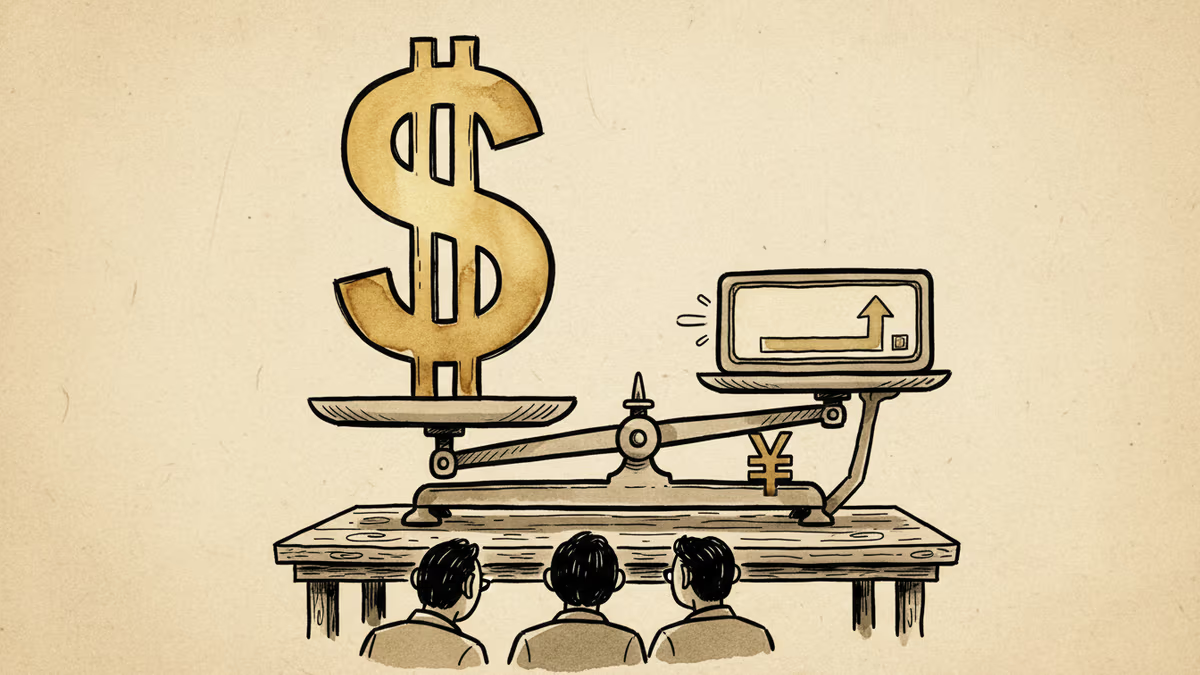
Analysts say China's CIPS payment system is routing yuan transactions outside SWIFT's visibility, potentially understating the currency's global role. What does this mean for dollar dominance?
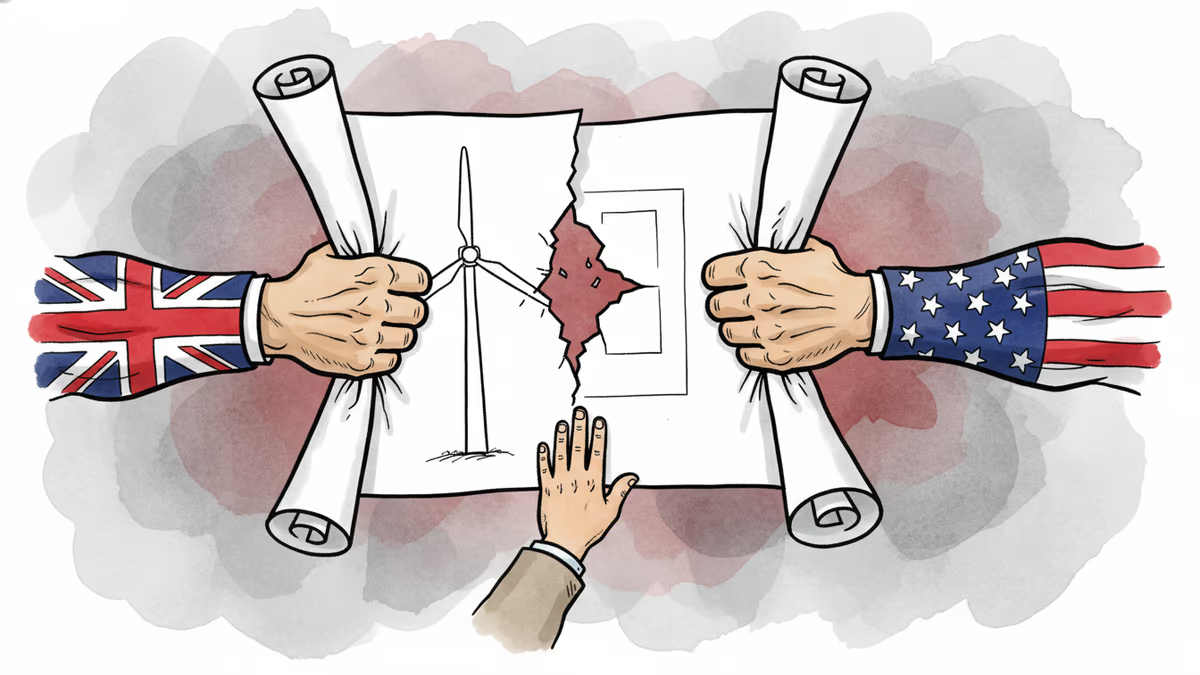
Britain rejected a £1.5 billion Chinese wind turbine plant in Scotland. The reason given was national security—but the real pressure may have come from Washington.

Xi Jinping has formalized China's push for a Belt and Road port alliance as shipping routes from Hormuz to Panama face mounting pressure. What does this mean for global trade architecture?
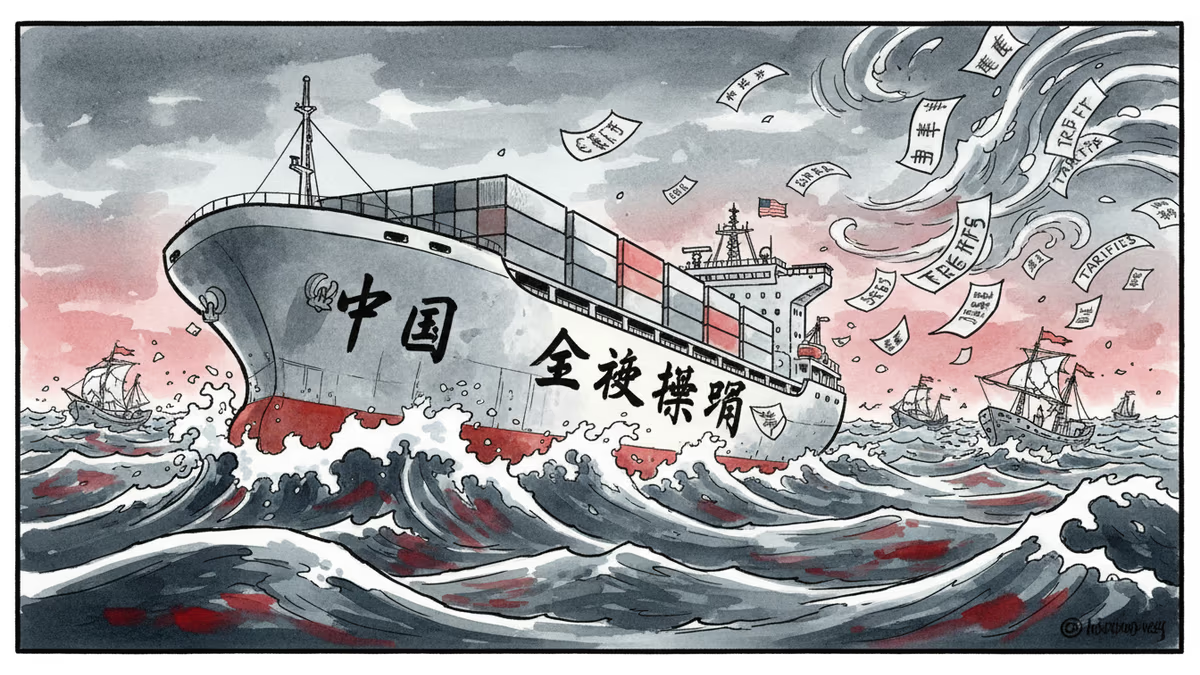
China's exports soared 21.8% in January-February 2026, defying high base effects and US tariff pressure. What does this mean for global trade, investors, and the tariff war narrative?
Analysts say China's CIPS payment system is routing yuan transactions outside SWIFT's visibility, potentially understating the currency's global role. What does this mean for dollar dominance?
Britain rejected a £1.5 billion Chinese wind turbine plant in Scotland. The reason given was national security—but the real pressure may have come from Washington.
Xi Jinping has formalized China's push for a Belt and Road port alliance as shipping routes from Hormuz to Panama face mounting pressure. What does this mean for global trade architecture?
China's exports soared 21.8% in January-February 2026, defying high base effects and US tariff pressure. What does this mean for global trade, investors, and the tariff war narrative?
Thoughts
Share your thoughts on this article
Sign in to join the conversation