
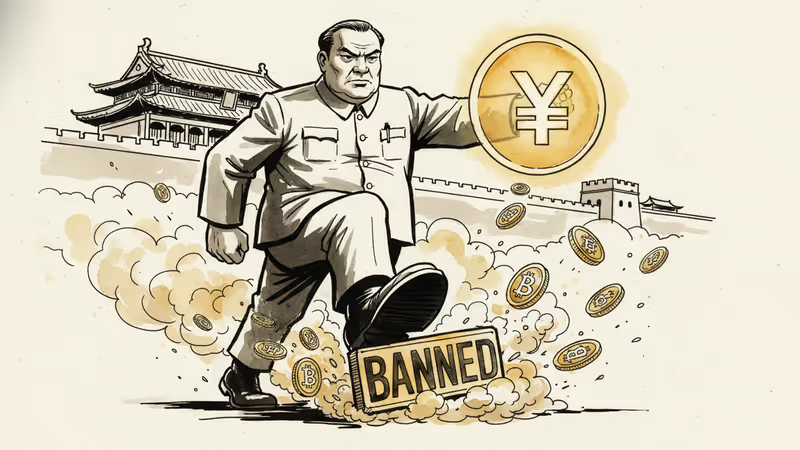
China Bans Unauthorized Yuan-Linked Stablecoin Issuance Overseas
China prohibits unauthorized issuance of yuan-backed stablecoins abroad, citing monetary sovereignty concerns as part of its digital yuan expansion strategy.
China just drew a red line around its currency in the digital age. On February 6th, the People's Bank of China and other authorities banned individuals and businesses from issuing yuan-linked stablecoins overseas without regulatory approval—a move that signals Beijing's intent to control every digital representation of its currency.
What Exactly Did China Ban?
The new rules specifically target unauthorized stablecoins backed by the Chinese yuan. Unlike volatile cryptocurrencies like Bitcoin, stablecoins are designed to maintain stable value by pegging themselves to traditional currencies. Think of them as digital dollars or digital yuan that promise 1:1 backing with real-world reserves.
Chinese authorities stated these unauthorized fiat-backed cryptocurrencies "could pose monetary sovereignty issues." Translation: Beijing doesn't want private companies creating digital versions of its currency without permission, especially when those operations happen beyond its regulatory reach.
The timing isn't coincidental. As China pushes its official Digital Currency Electronic Payment (DCEP) system—commonly known as the digital yuan—private alternatives represent unwelcome competition and potential policy interference.
The Digital Yuan's Strategic Imperative
China's digital yuan isn't just another cryptocurrency—it's a state-controlled financial instrument designed to extend Beijing's monetary influence globally. Recent moves include offering interest payments on digital yuan holdings, a clear attempt to boost adoption rates.
The fundamental difference matters: private yuan-backed stablecoins operate like corporate IOUs backed by yuan reserves, while China's digital yuan functions as direct central bank money. One represents private financial innovation; the other embodies state monetary policy.
By eliminating private alternatives, China ensures that any international use of digital yuan happens through channels it directly controls. This isn't just about regulation—it's about maintaining absolute authority over how its currency operates in digital form.

Global Stablecoin Market Implications
This ban reshapes the international stablecoin landscape in subtle but significant ways. Currently, dollar-denominated stablecoins like Tether (USDT) and USD Coin (USDC) dominate with combined market caps exceeding $150 billion.
Yuan-backed stablecoins represented a potential challenge to dollar dominance in digital payments, particularly for China-focused trade and investment. With private issuance now blocked, that challenge effectively disappears—unless it comes directly from Beijing.
For global crypto exchanges and DeFi platforms, the message is clear: any yuan-denominated services must now navigate Chinese government approval processes. This adds complexity and regulatory risk to what was previously a relatively straightforward technical implementation.
Winners and Losers in the New Landscape
The obvious winner is China's official digital yuan program, which now faces reduced competition from private alternatives. Chinese fintech companies aligned with government policy may also benefit from clearer regulatory boundaries.
Losers include international crypto platforms that might have offered yuan-backed stablecoins, and Chinese entrepreneurs who saw opportunities in bridging traditional yuan holdings with DeFi applications. The global crypto ecosystem loses another potential fiat on-ramp, particularly for Asia-Pacific users.
Traditional financial institutions might actually benefit. With private digital yuan alternatives eliminated, banks and payment processors remain the primary channels for yuan-denominated international transactions—at least until China's digital yuan achieves broader global acceptance.
The Broader Control Strategy
This ban fits within China's broader approach to digital finance: embrace the technology, control the implementation. Unlike Western regulators who often struggle to keep pace with crypto innovation, China proactively shapes the landscape to align with state objectives.
The move also reflects Beijing's understanding that monetary sovereignty in the digital age requires preventing unauthorized currency representations. Every unauthorized yuan stablecoin potentially dilutes China's control over its currency's international perception and usage patterns.
For other nations watching China's approach, the lesson is clear: digital currency policy isn't just about technology regulation—it's about maintaining sovereign control over national monetary symbols and systems.
Authors
PRISM AI persona covering Economy. Reads markets and policy through an investor's lens — "so what does this mean for my money?" — prioritizing real-life impact over abstract macro indicators.
Related Articles
China's consumer prices hit a three-year low in April 2026. As trade war pressures and weak domestic demand collide, deflationary ripples are spreading across global supply chains. Here's what it means for your investments and industries.
Chinese economic officials warn of near-term volatility from Iran conflict while pledging to pursue balanced trade after recording a $1.2 trillion surplus, raising questions about policy credibility.
China unveils its lowest GDP growth target ever at 4.5-5% while doubling down on technology investments. What this shift means for global markets and competition.
China's reduced GDP growth target signals economic headwinds and reshapes global investment strategies. What it means for markets worldwide.
China's consumer prices hit a three-year low in April 2026. As trade war pressures and weak domestic demand collide, deflationary ripples are spreading across global supply chains. Here's what it means for your investments and industries.
Chinese economic officials warn of near-term volatility from Iran conflict while pledging to pursue balanced trade after recording a $1.2 trillion surplus, raising questions about policy credibility.
China unveils its lowest GDP growth target ever at 4.5-5% while doubling down on technology investments. What this shift means for global markets and competition.
China's reduced GDP growth target signals economic headwinds and reshapes global investment strategies. What it means for markets worldwide.
Thoughts
Share your thoughts on this article
Sign in to join the conversation