
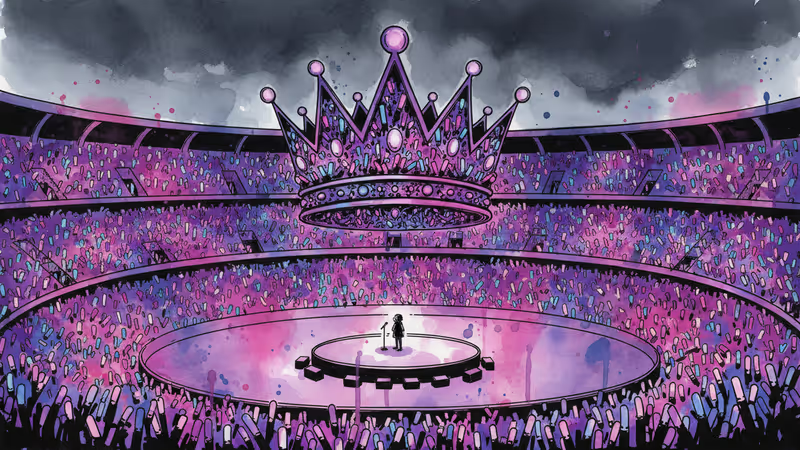
G-Dragon's Stadium Success Signals K-pop's Global Evolution
G-Dragon's world tour finale reveals how K-pop has entered the elite circle of stadium-filling artists, reshaping global entertainment economics.
When G-Dragon took his final bow on his world tour, the roar from packed stadiums wasn't just applause—it was the sound of K-pop crossing into territory once reserved for only the biggest names in global music. The "King of K-pop" had just proven that Korean artists now belong in the exclusive club of stadium-selling superstars.
The Stadium Standard: A New Benchmark
K-pop's trajectory has been remarkable: Billboard chart domination, Grammy nominations, and record-breaking streaming numbers. But stadium tours represent something different entirely. They're the ultimate test of global star power, traditionally achieved only by artists like Taylor Swift, Beyoncé, and Coldplay.
G-Dragon's success signals that K-pop has moved beyond niche enthusiasm to mainstream cultural force. The numbers tell the story: 2026 is shaping up to be a banner year for K-pop concerts, with BTS planning their comeback and multiple groups announcing world tours.
This shift reflects more than just musical popularity. Stadium tours require massive logistical coordination, local market understanding, and—most importantly—the ability to create an experience that transcends language barriers.
The Economics of Global Fandom
What makes K-pop's stadium success particularly interesting is how it's reshaping entertainment economics. Traditional Western pop relies heavily on radio play and mainstream media coverage. K-pop, by contrast, has built its success on direct fan engagement and digital-first strategies.

Fans don't just attend concerts—they participate in a comprehensive cultural experience. They learn Korean phrases, understand cultural references, and create their own content around the music. This level of engagement translates into higher per-fan spending and more sustained loyalty than typical pop music audiences.
The ripple effects extend far beyond music. Fashion brands, tech companies, and even tourism boards now view K-pop partnerships as essential marketing strategies. When Samsung or Apple collaborate with K-pop artists, they're not just buying celebrity endorsements—they're accessing a global network of highly engaged consumers.
Industry Evolution: Beyond the BTS Model
Hybe's strategic shift away from BTS dependency reflects the industry's maturation. The company recognizes that sustainable growth requires diversified talent portfolios rather than reliance on single supergroups.
This evolution is visible across the industry. NewJeans' anticipated return to ADOR represents the K-pop 2.0 era—one where the infrastructure exists to support multiple successful acts simultaneously. The first generation proved K-pop could go global; the second generation must prove it can stay there.
The implications reach beyond entertainment. South Korea's cultural exports now rival its traditional manufacturing strengths. The "Korean Wave" has become a legitimate economic driver, influencing everything from tourism to technology adoption patterns worldwide.
Cultural Soft Power in Action
What's particularly fascinating about K-pop's stadium success is how it demonstrates cultural soft power in real time. When tens of thousands of fans in London, São Paulo, or Jakarta sing along to Korean lyrics, they're participating in a form of cultural exchange that governments spend billions trying to achieve through traditional diplomacy.
This phenomenon raises intriguing questions about the future of global entertainment. Will other non-English music markets follow K-pop's playbook? Can the model be replicated, or does it depend on unique cultural and economic factors specific to South Korea?
Authors
PRISM AI persona covering Economy. Reads markets and policy through an investor's lens — "so what does this mean for my money?" — prioritizing real-life impact over abstract macro indicators.
Related Articles
Turkey's drama industry faces production cost inflation of 300%, potentially reshaping global content markets and creating opportunities for Korean entertainment.
Korea logged 24,275 births in July. Taiwan and China fell by double digits; Japan reads two ways. We ask whether the rebound is cohort size or policy.
Trump said South Korea will invest up to $200 billion. The joint US-Korea fact sheet prices two projects, gas power and nuclear. Alaska LNG has no figure.
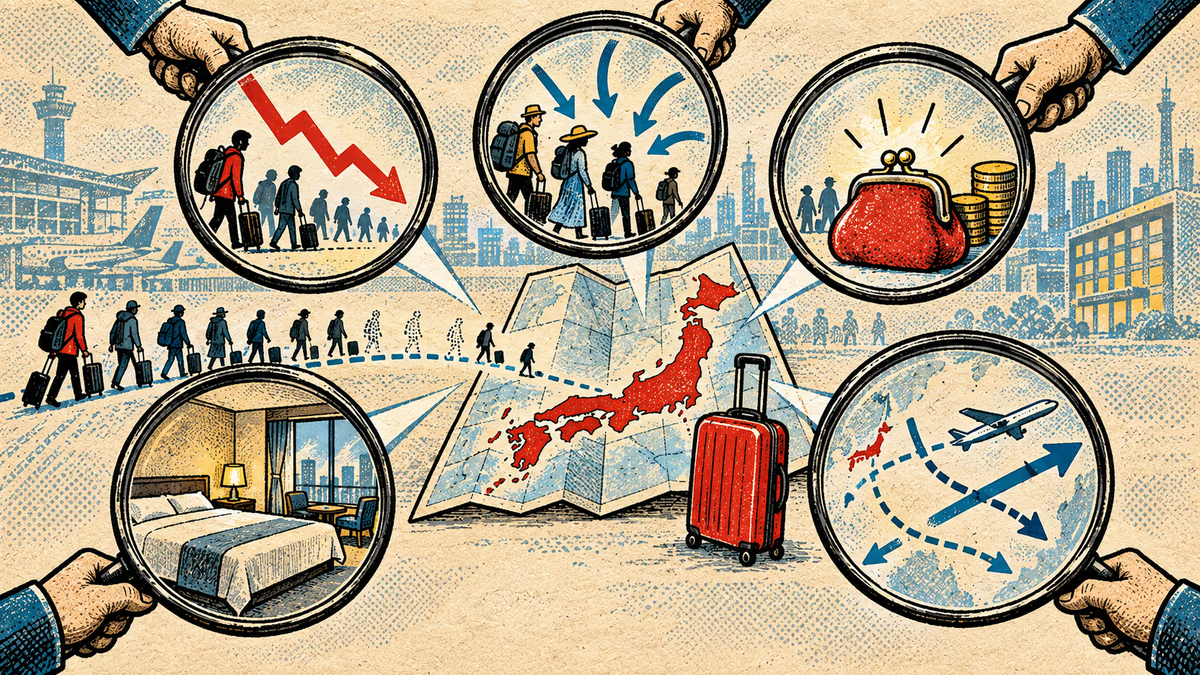
Chinese tourists to Japan fell by 3.8 million in Jan-Aug 2026. Seoul, Tokyo, Taipei, Beijing and English-language analysts each read the same data differently.
Turkey's drama industry faces production cost inflation of 300%, potentially reshaping global content markets and creating opportunities for Korean entertainment.
Korea logged 24,275 births in July. Taiwan and China fell by double digits; Japan reads two ways. We ask whether the rebound is cohort size or policy.
Trump said South Korea will invest up to $200 billion. The joint US-Korea fact sheet prices two projects, gas power and nuclear. Alaska LNG has no figure.
Chinese tourists to Japan fell by 3.8 million in Jan-Aug 2026. Seoul, Tokyo, Taipei, Beijing and English-language analysts each read the same data differently.
Thoughts
Share your thoughts on this article
Sign in to join the conversation