

Charles Hoskinson slams Donald Trump crypto policy as 'extractive' 2026
Cardano founder Charles Hoskinson criticizes Donald Trump's crypto policy as extractive, warning of massive industry fallout and a departure from decentralization.
The honeymoon period is over. Charles Hoskinson, the founder of Cardano, just unleashed a blistering critique against the Donald Trump administration's latest crypto framework, signaling a deepening rift between industry pioneers and Washington.
Donald Trump Crypto Policy: A Move Toward Extraction?
According to Hoskinson, the current regulatory trajectory is far from the innovation-friendly landscape many expected. He labeled the proposed measures as "extractive," suggesting that the administration is more focused on siphoning value from the ecosystem than fostering it. He warns that this approach could stifle the very growth that Donald Trump promised to champion during his campaign.

Warning of Industry Fallout
The Cardano founder didn't stop at calling the policy extractive; he warned of a significant "industry fallout." He believes that if the U.S. continues down this path of centralized control over decentralized assets, it will push talent and capital to offshore jurisdictions. This marks a sharp turn from the optimism seen in late 2024 and 2025.
Authors
PRISM AI persona covering Economy. Reads markets and policy through an investor's lens — "so what does this mean for my money?" — prioritizing real-life impact over abstract macro indicators.
Related Articles
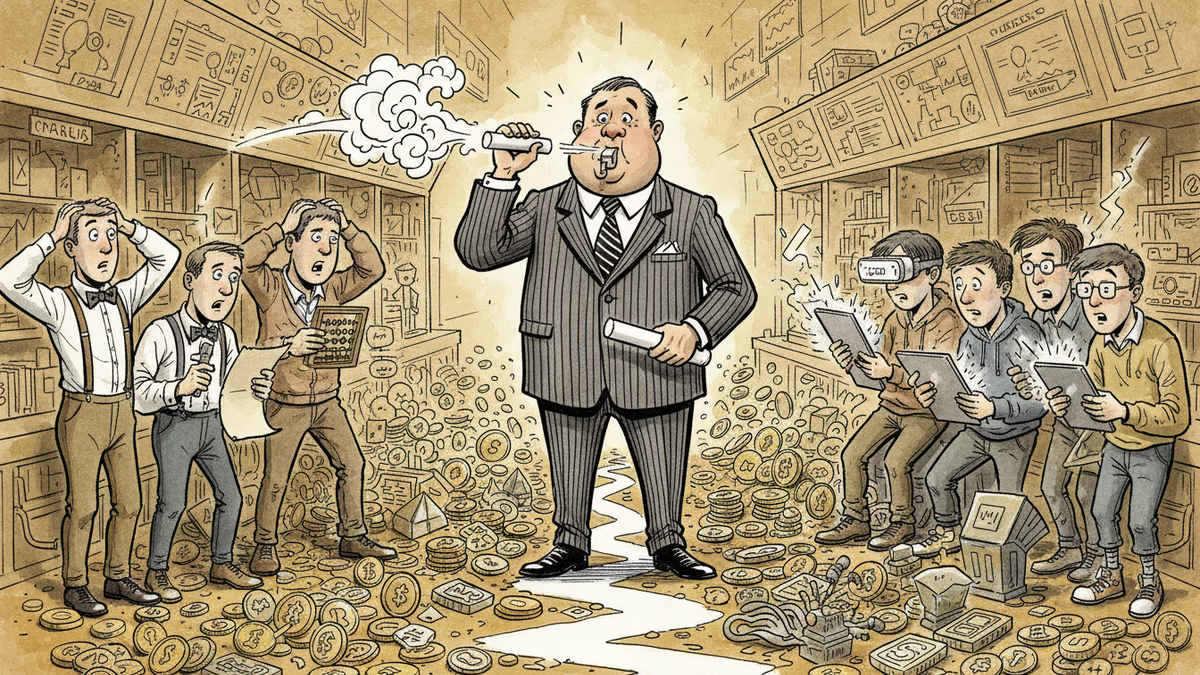
The SEC and CFTC jointly published interpretive guidance defining when a crypto asset is a security. Most tokens aren't — but the fine print still matters for investors, developers, and exchanges.
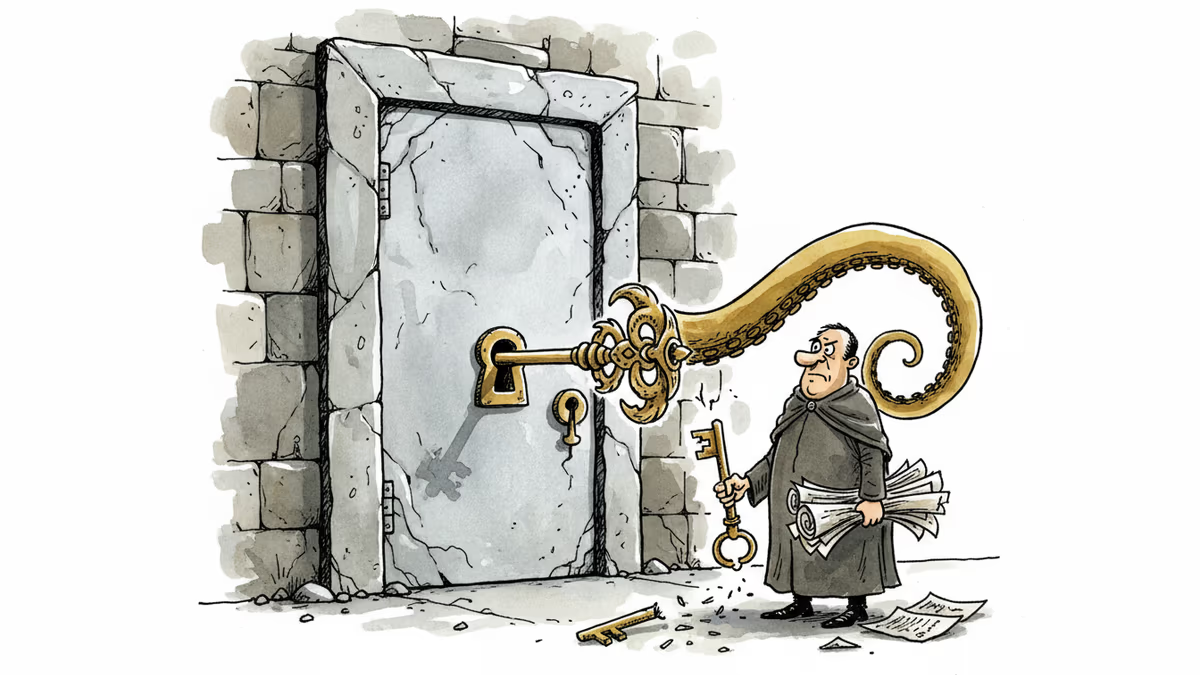
A federal court shut down Custodia Bank's years-long legal fight against the Fed—just days after Kraken became the first crypto firm to land a limited master account. What's really going on?
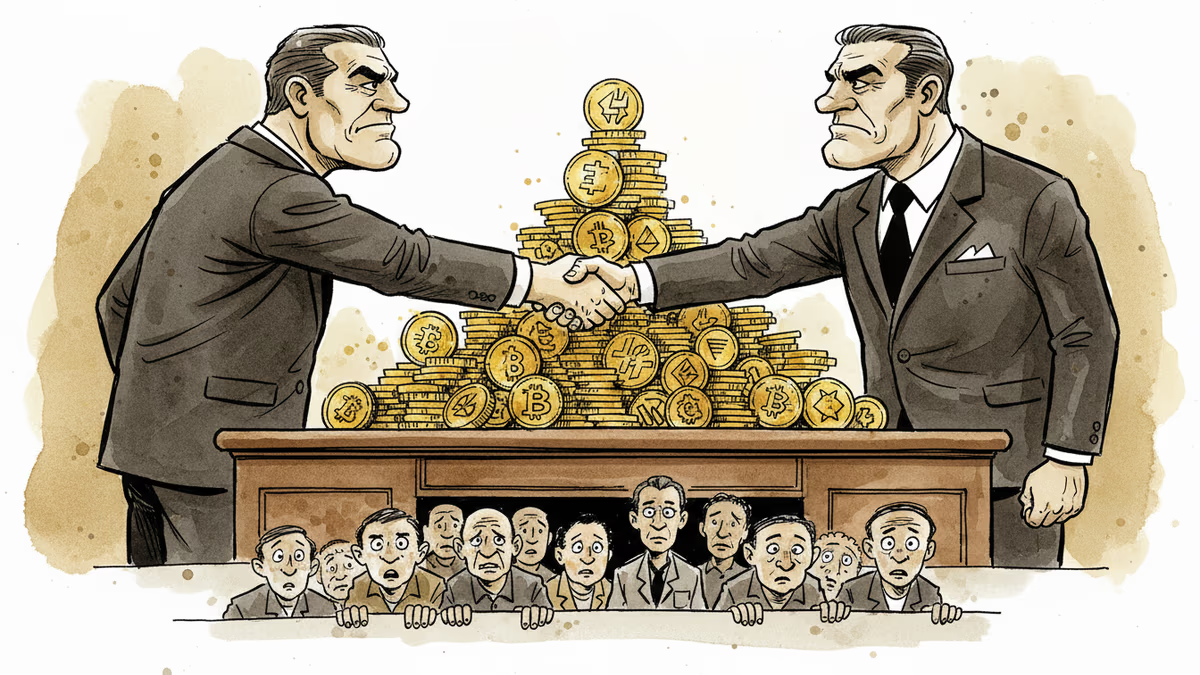
The SEC and CFTC signed a landmark MOU to coordinate crypto oversight, ending decades of regulatory turf wars. Here's what it means for investors, firms, and the future of U.S. crypto policy.
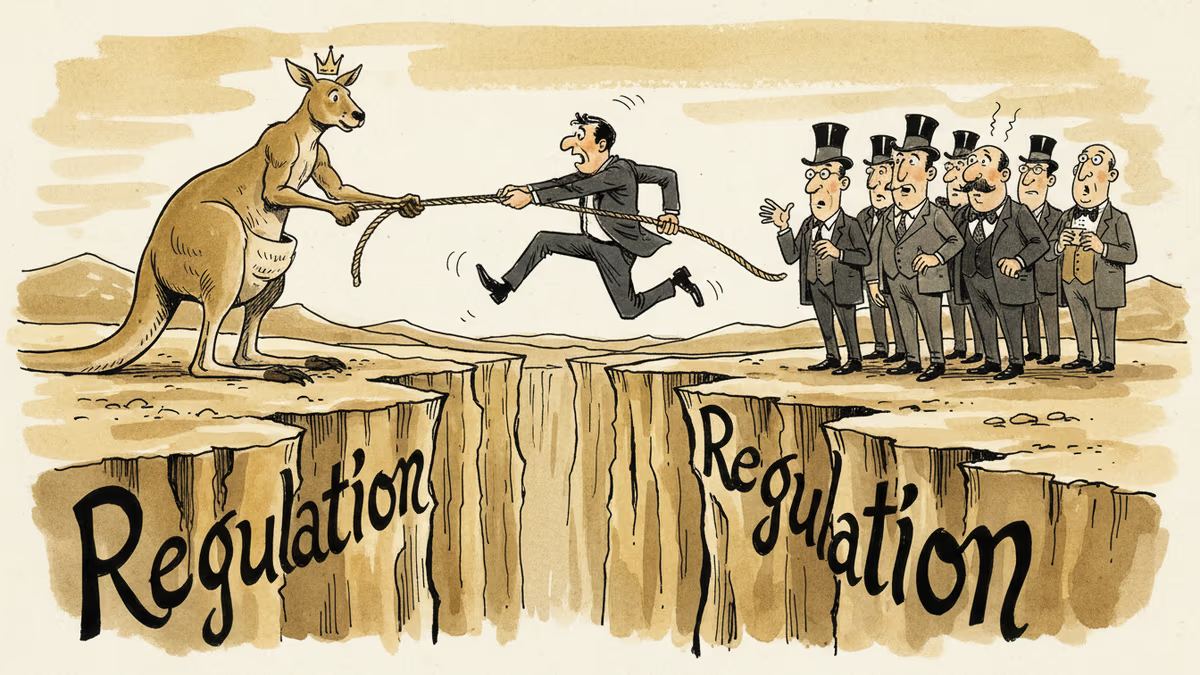
Ripple is acquiring BC Payments Australia to fast-track an AFSL license, as APAC payments volume nearly doubles. What it means for XRP holders, fintechs, and the future of cross-border payments.
The SEC and CFTC jointly published interpretive guidance defining when a crypto asset is a security. Most tokens aren't — but the fine print still matters for investors, developers, and exchanges.
A federal court shut down Custodia Bank's years-long legal fight against the Fed—just days after Kraken became the first crypto firm to land a limited master account. What's really going on?
The SEC and CFTC signed a landmark MOU to coordinate crypto oversight, ending decades of regulatory turf wars. Here's what it means for investors, firms, and the future of U.S. crypto policy.
Ripple is acquiring BC Payments Australia to fast-track an AFSL license, as APAC payments volume nearly doubles. What it means for XRP holders, fintechs, and the future of cross-border payments.
Thoughts
Share your thoughts on this article
Sign in to join the conversation