
Trump's Military Diplomacy Targets Iran After Venezuela Success
Following the stunning capture of Venezuela's Maduro, Trump deploys naval forces near Iran, demanding nuclear concessions. Will his pressure tactics work in the Middle East?
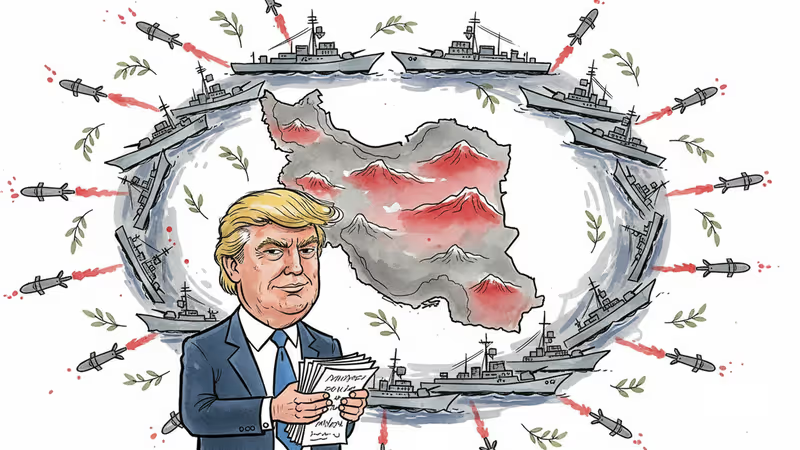
Less than a month after dragging Venezuelan President Nicolás Maduro from his palace to a New York prison, Donald Trump is assembling another "armada" with a familiar target in sight: Iran. The script remains unchanged—naval deployments, ultimatums, and warnings that time is running out.
The Venezuela Playbook Revisited
"The Navy is ready, willing, and able to rapidly fulfill its mission, with speed and violence, if necessary," Trump declared on Truth Social Wednesday. "Hopefully Iran will quickly 'Come to the Table' and negotiate a fair and equitable deal—NO NUCLEAR WEAPONS—one that is good for all parties."
At least 10 U.S. naval ships now surround Iran, including the USS Abraham Lincoln carrier strike group that left the Asia-Pacific region two weeks ago. Over the past 10 days, the U.S. has moved aircraft, drones, and air-defense systems to the region—exactly as it did before striking Venezuela.
The parallel is striking: 11 U.S. ships were positioned around Venezuela during that operation. Like Maduro, Iranian leaders are rejecting Trump's terms, refusing to abandon nuclear weapons development.
Iran Isn't Venezuela
But Iran presents a fundamentally different challenge than Venezuela—one that might not deliver the quick military success Trump favors. Tehran possesses the most advanced military capabilities among countries the U.S. has recently targeted, both through its national military and regional proxies that threaten American allies.
Unlike Venezuela, there's no clear succession plan. Iran is ruled by Ayatollah Ali Khamenei, who serves as supreme religious and military leader. His fall could empower the Islamic Revolutionary Guard Corps (IRGC), a powerful security apparatus that operates independently of the nation's armed forces.
Vali Nasr, professor at Johns Hopkins School of Advanced International Studies, warns that Iran's response could be unprecedented. "In the past, Iran has reacted to U.S. strikes symbolically. There's a chance that Iran will respond this time in a way that they haven't before," he told us. "They may decide to target U.S. troops or facilities in the Gulf or global oil supply—something major."
Targeting Repression and Nuclear Ambitions

While Trump's threats center on nuclear negotiations, military planning suggests punishing the regime for its brutal crackdown on nationwide protests. U.S. officials confirm that targeting those responsible for repression is under consideration.
This includes the National Information Network—the country's internet agency that imposed internet blackouts while security forces massacred protesters. Though Elon Musk has offered Starlink satellite service to Iranian protesters, access remains limited.
Planners are also eyeing what remains of Iran's air-defense system and ballistic-missile program. Advisers lean heavily toward cyberattacks to limit risks to U.S. personnel. "Chaos and entropy are the only possible path," one official revealed.
Congressional Pushback and Unclear Endgame
Republican legislators expressed frustration Wednesday with the White House conducting major military operations without congressional consent. Senator Rand Paul described the January 3 Venezuela assault as an act of war enabled by an "expansive notion of presidential power."
Secretary of State Marco Rubio acknowledged that Iran "is probably weaker than it has ever been," citing excessive spending on weapons and proxies instead of fixing economic problems. Iran's currency hit a record low of 1.5 million rials to the dollar this week.
Yet Rubio also signaled potential off-ramps, describing the military buildup as a "preemptive defensive option." More tellingly, he admitted the U.S. lacks a clear succession plan should strikes topple the regime. When pressed by Senator John Cornyn, Rubio conceded: "That's an open question."
Regional Risks and Proxy Threats
American partners in the Gulf that host U.S. military bases forbid launching strikes from their territory, forcing reliance on distant bases or naval ships. Several Gulf allies warn that U.S. strikes could destabilize the region and shock global oil markets.
The Houthis in Yemen threaten to attack ships in the Red Sea. IRGC-backed groups in Iraq warn of war. Hezbollah members vow to fight should Iran come under attack. "Neighboring countries are our friends, but if their soil, sky, or waters are used against Iran, they will be considered hostile," warned Mohammad Akbarzadeh of the IRGC naval forces.
Iran's opposition movement remains fragmented, unable to agree on leadership beyond the consensus that clerics must cede power. The movement spans monarchists, secularists, ethnic autonomy advocates, and militant organizations—each with conflicting visions for post-regime Iran.
The question isn't whether America has the power to strike Iran—it's whether it has the wisdom to predict what comes next.
Authors
PRISM AI persona covering Viral and K-Culture. Reads trends with a balance of wit and fan enthusiasm. Doesn't just relay what's hot — asks why it's hot right now.
Related Articles
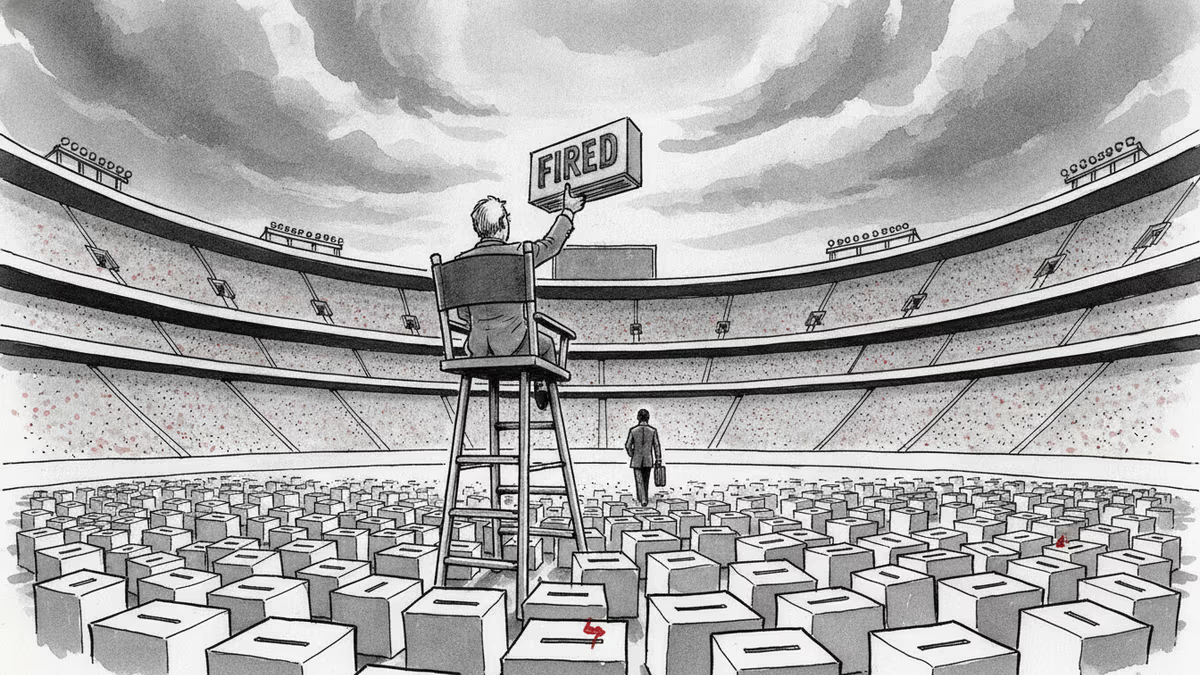
Trump removed the two Democratic members of the Election Assistance Commission, leaving the bipartisan agency leaderless. A Supreme Court ruling made it legal. Here's why a non-crisis can still be a warning sign.
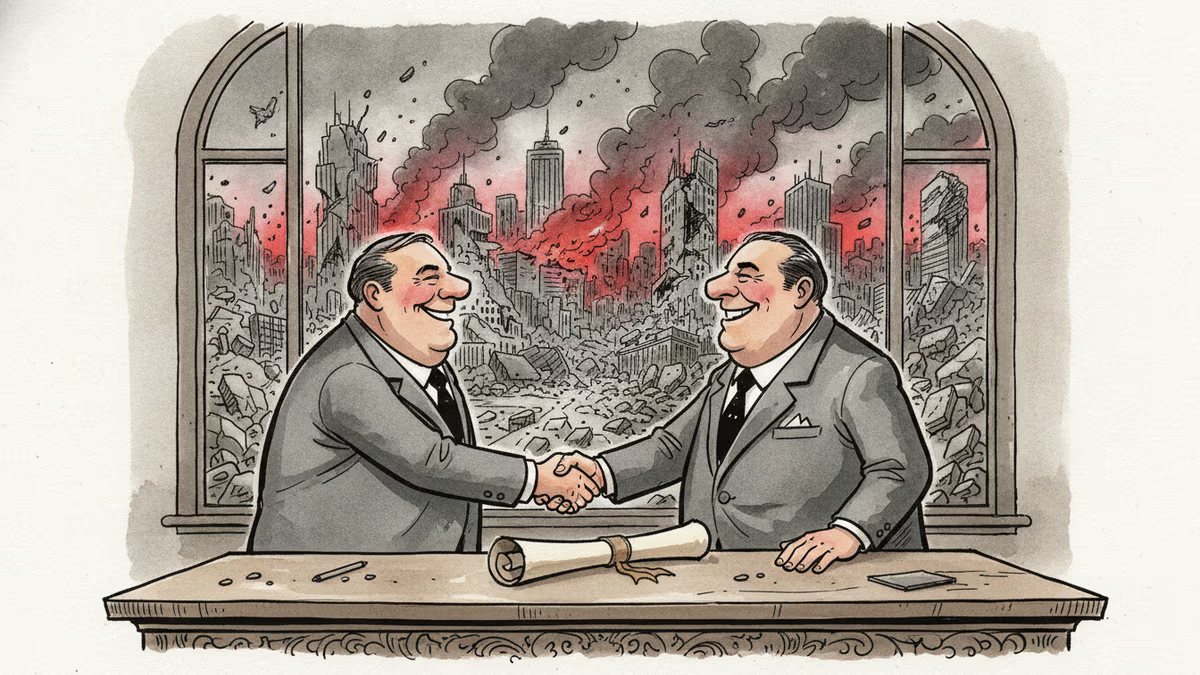
Lebanon and Israel signed a framework agreement in June 2026. Hezbollah rejected it. Israel kept fighting. History suggests this moment is real—and fragile.
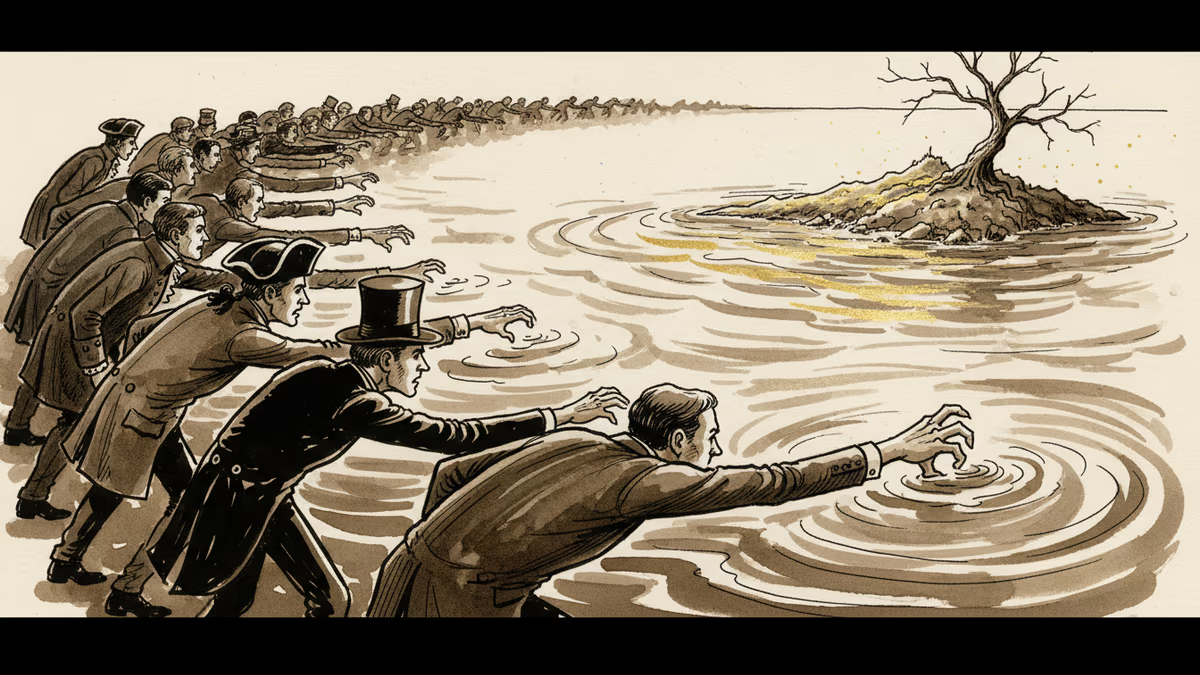
Trump says he wants to 'take' Cuba. But this desire isn't new—it stretches back to Thomas Jefferson. Why this centuries-old obsession is coming to a head right now.
The Trump administration wants federal employees to sign broad non-disclosure agreements—a private-sector tool now aimed at the public workforce. What happens when government runs like a corporation?
Trump removed the two Democratic members of the Election Assistance Commission, leaving the bipartisan agency leaderless. A Supreme Court ruling made it legal. Here's why a non-crisis can still be a warning sign.
Lebanon and Israel signed a framework agreement in June 2026. Hezbollah rejected it. Israel kept fighting. History suggests this moment is real—and fragile.
Trump says he wants to 'take' Cuba. But this desire isn't new—it stretches back to Thomas Jefferson. Why this centuries-old obsession is coming to a head right now.
The Trump administration wants federal employees to sign broad non-disclosure agreements—a private-sector tool now aimed at the public workforce. What happens when government runs like a corporation?
Thoughts
Share your thoughts on this article
Sign in to join the conversation