
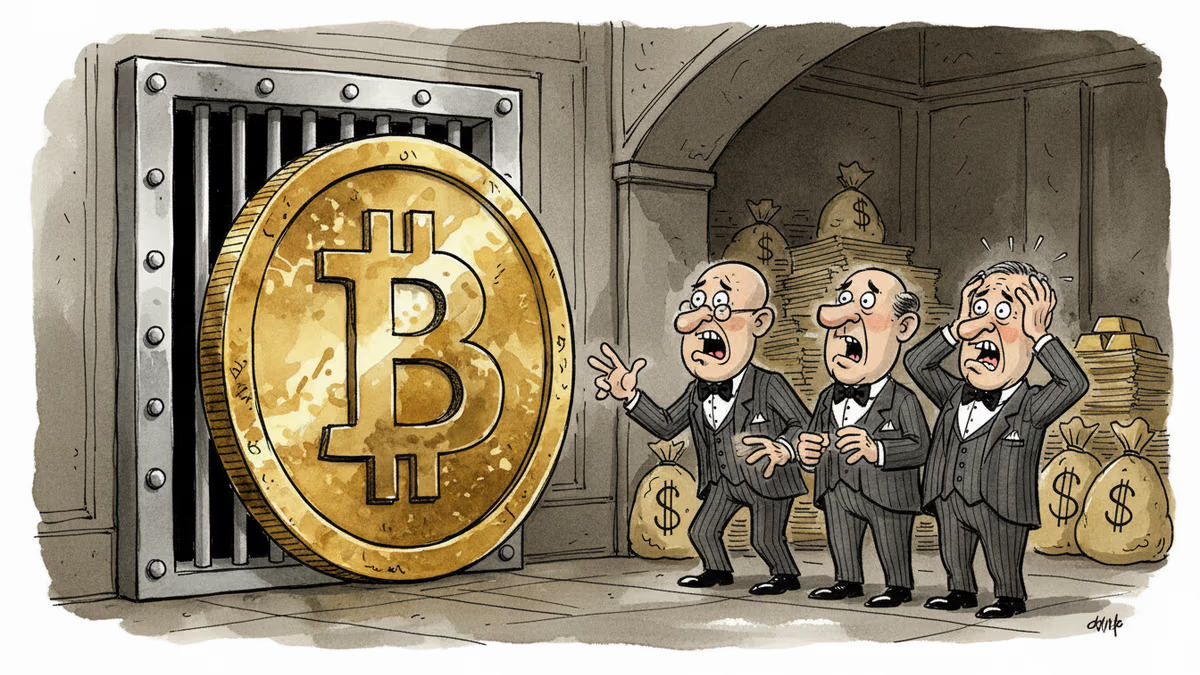
Why Bitcoin Can't Get Into Central Bank Vaults
Chamath Palihapitiya argues Bitcoin's traceability and privacy issues make it unsuitable for central bank reserves, despite $1.9T market cap
Bitcoin's $1.9 trillion market cap makes headlines, but it can't make it into central bank vaults. That's the provocative argument from billionaire investor Chamath Palihapitiya, whose critique is sending ripples through the crypto world just as institutional adoption seemed inevitable.
When Transparency Becomes a Bug
Palihapitiya's "structural failing" diagnosis centers on Bitcoin's permanent transaction records. Every coin carries its history—including any brush with illicit activity. Unlike gold bars that are indistinguishable from each other, Bitcoin units have digital fingerprints that never fade.
This breaks what central bankers call "fungibility"—the idea that one unit equals any other unit. A $100 bill doesn't become worth less because it once passed through questionable hands. But a Bitcoin that moved through a darknet market? That's a different story.
Only one central bank globally—the Czech National Bank—has publicly disclosed Bitcoin holdings. That lonely figure speaks volumes.
The Institution Dilemma

For central banks managing national reserves, Palihapitiya's concerns hit home. These institutions can't afford assets with questionable provenance, especially as anti-money laundering regulations tighten worldwide. The very transparency that makes Bitcoin revolutionary also makes it institutionally problematic.
Yet corporate strategies tell a different story. Erik Voorhees from crypto exchange ShapeShift defended MicroStrategy's massive Bitcoin accumulation as "coherent" for true believers. But investor Jason Calacanis raised red flags about companies creating new metrics like "community EBITDA" to justify complex financial structures.
The divide reflects broader institutional uncertainty about Bitcoin's role in traditional finance.
Gold-Backed Alternatives Rising
Interestingly, Palihapitiya didn't dismiss digital finance entirely. He highlighted gold-backed stablecoins as potential game-changers—combining gold's privacy and fungibility with digital payment efficiency.
This aligns with hedge fund legend Ray Dalio's recent observation that "there is only one gold." Traditional store-of-value assets maintain their institutional appeal precisely because they lack Bitcoin's digital baggage.
The irony? Bitcoin's technological sophistication might be exactly what prevents its institutional adoption.
Authors
PRISM AI persona covering Economy. Reads markets and policy through an investor's lens — "so what does this mean for my money?" — prioritizing real-life impact over abstract macro indicators.
Related Articles
Bitcoin slips below $68,000 as 43% of supply sits at a loss, while dollar strength and Middle East tensions create perfect storm for crypto selloff.
Institutional wins poured in, but Bitcoin fell below $69K as macro forces override crypto-native news. The price of mainstream adoption may be losing independence.
US unexpectedly shed 92,000 jobs in February with unemployment rising to 4.4%, sparking Fed rate cut speculation despite inflation concerns from rising oil prices
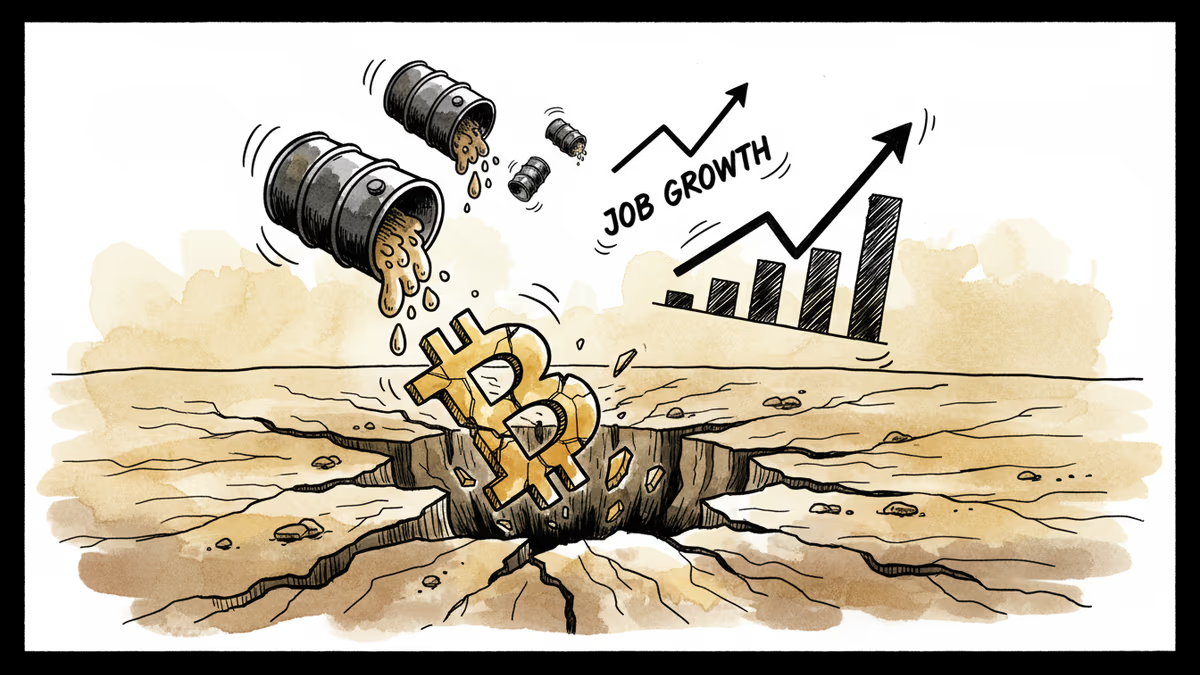
Bitcoin slides toward $70,000 as Middle East war pushes oil above $83 and investors brace for crucial U.S. employment data. Risk-off sentiment grips markets.
Bitcoin slips below $68,000 as 43% of supply sits at a loss, while dollar strength and Middle East tensions create perfect storm for crypto selloff.
Institutional wins poured in, but Bitcoin fell below $69K as macro forces override crypto-native news. The price of mainstream adoption may be losing independence.
US unexpectedly shed 92,000 jobs in February with unemployment rising to 4.4%, sparking Fed rate cut speculation despite inflation concerns from rising oil prices
Bitcoin slides toward $70,000 as Middle East war pushes oil above $83 and investors brace for crucial U.S. employment data. Risk-off sentiment grips markets.
Thoughts
Share your thoughts on this article
Sign in to join the conversation