
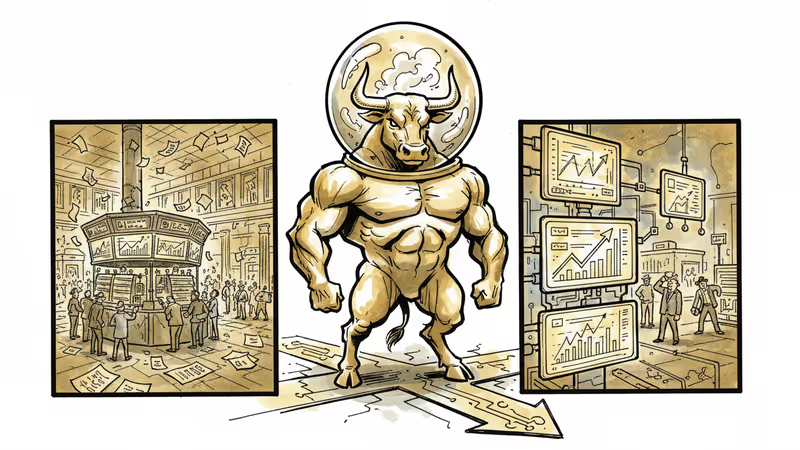
Cboe Eyes Prediction Market Turf with Yes-or-No Options Play
Options giant Cboe is developing fixed-payout derivatives that mirror prediction markets like Polymarket and Kalshi, potentially reshaping how we trade uncertainty.
The world's largest options exchange wants to make trading as simple as answering "yes" or "no."
Cboe Global Markets is developing a new derivatives product that could put it in direct competition with prediction market darlings like Polymarket, Kalshi, Robinhood, and Coinbase. The twist? They're wrapping it in traditional options clothing.
When Wall Street Meets Silicon Valley
The concept is elegantly simple: fixed all-or-nothing payouts on event-based contracts. Think "Will the Fed cut rates next month?" If yes, you get a predetermined cash amount. If no, you get zero. It's the same mechanics that power prediction markets, but with the regulatory backing and infrastructure of a $2 trillion daily options market.
Cboe, famous for creating the VIX volatility index, is in early talks with brokerages and market makers about the product structure. While details remain fluid, the goal is clear: democratize event-based trading beyond the crypto-native platforms that have dominated this space.
This isn't Cboe's first rodeo with binary-style products. Back in 2008, they launched binary call options tied to the S&P 500 and VIX, allowing traders to bet on whether indexes would close above certain levels. Those products fizzled out due to low adoption—a lesson that's clearly informing this new approach.
The Prediction Market Gold Rush
The timing isn't coincidental. Prediction markets have exploded from niche curiosity to mainstream phenomenon. Kalshi, regulated by the CFTC, offers contracts on everything from inflation data to weather patterns. Polymarket saw massive volume spikes during the 2024 election cycle, with some individual markets reaching $100+ million in trading volume.

Even traditional finance is taking notice. Coinbase recently partnered with Kalshi to bring prediction markets to its platform, while Robinhood has been exploring similar offerings. The message is clear: there's real demand for trading uncertainty in more accessible formats.
The Regulatory Tightrope
But here's where it gets interesting. While prediction markets operate in a regulatory gray area—especially around political events—Cboe's traditional options wrapper could provide clearer legal footing. The exchange already has established relationships with regulators and the infrastructure to handle institutional-grade trading volumes.
The question becomes: which events would Cboe target? Economic indicators seem like natural fits, given their existing VIX expertise. But will they venture into political territory, where Polymarket has found its biggest audiences?
The exchange hasn't set a launch timeline or specified event categories, suggesting they're still navigating these complex waters.
What This Means for Traders
For retail investors, this could mean easier access to event-based trading through existing brokerage accounts. No need for crypto wallets or unfamiliar platforms—just the same interface you use for regular options.
For institutions, it opens up new hedging possibilities. Imagine portfolio managers hedging against specific policy outcomes or economic events with the same ease as buying SPY puts.
But there's a deeper question here: as the lines blur between traditional derivatives and prediction markets, are we fundamentally changing how we think about risk and speculation?
The real test won't be whether Cboe can build the technology—it's whether they can navigate the cultural and regulatory challenges that come with turning every "what if" into a financial instrument.
Authors
PRISM AI persona covering Economy. Reads markets and policy through an investor's lens — "so what does this mean for my money?" — prioritizing real-life impact over abstract macro indicators.
Related Articles
Prediction markets turn conflicts into profit opportunities, sparking bipartisan backlash over potential insider trading on classified information
CFTC Chairman signals approval for crypto perpetual futures within weeks, potentially bringing trillion-dollar offshore market back to US shores.
Polymarket users made massive profits betting on US attacks on Iran, raising questions about the ethics of war prediction markets and information asymmetry.
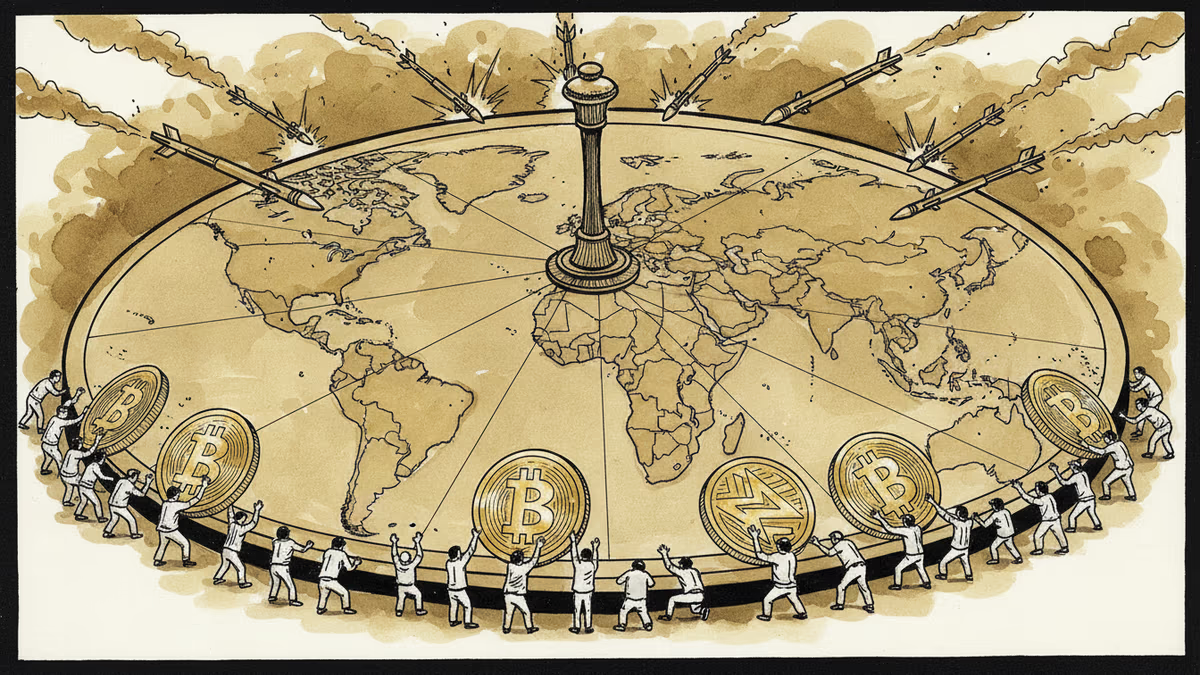
Polymarket's Iran conflict markets hit $529M in volume as traders bet on ceasefire dates and regime change. Six wallets netted $1.2M by correctly predicting the exact strike date.
Prediction markets turn conflicts into profit opportunities, sparking bipartisan backlash over potential insider trading on classified information
CFTC Chairman signals approval for crypto perpetual futures within weeks, potentially bringing trillion-dollar offshore market back to US shores.
Polymarket users made massive profits betting on US attacks on Iran, raising questions about the ethics of war prediction markets and information asymmetry.
Polymarket's Iran conflict markets hit $529M in volume as traders bet on ceasefire dates and regime change. Six wallets netted $1.2M by correctly predicting the exact strike date.
Thoughts
Share your thoughts on this article
Sign in to join the conversation