
When Farmers Say 'That's a Weed,' AI Now Learns Instantly
Carbon Robotics' new Large Plant Model, trained on 150 million plant images, enables farmers to identify and eliminate any weed in real-time without retraining robots.
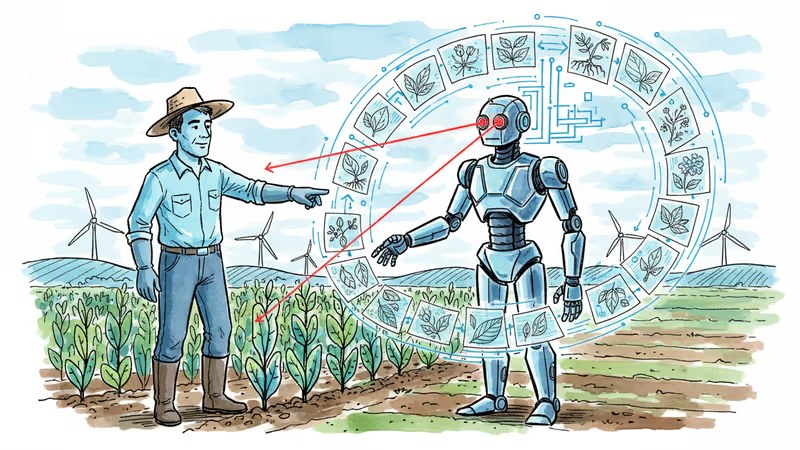
A farmer points to an unfamiliar plant and says, "That's a weed—kill it." The robot instantly learns and starts targeting that species with laser precision. This isn't science fiction; it's happening right now across 100+ farms in 15 countries.
Carbon Robotics unveiled its Large Plant Model (LPM) on Monday, an AI system trained on 150 million photos that can recognize any plant species instantly. For the first time, farmers can teach weed-killing robots to target new threats without waiting for retraining cycles.
From 24 Hours to Instant Recognition
The breakthrough solves a persistent bottleneck in agricultural robotics. Previously, whenever a new weed species appeared—or even the same weed in different soil conditions—Carbon Robotics needed to create new data labels and retrain their machines. This process took 24 hours every single time.
"The farmer can live in real time and say, 'Hey, this is a new weed. I want you to kill this,'" CEO Paul Mikesell explained. "There's no new labeling or retraining because the Large Plant Model understands, at a much deeper level, what it's looking at and the type of plant."
The Seattle-based company's LaserWeeder robots now update through software patches, allowing farmers to designate targets simply by selecting photos in the user interface.
The $185 Million Bet on Laser Farming

Carbon Robotics, founded in 2018, started developing LPM shortly after shipping their first machines in 2022. Mikesell brought neural network expertise from previous roles at Uber and Meta's Oculus VR division to tackle agriculture's automation challenges.
The company has raised over $185 million from investors including Nvidia NVentures, Bond, and Anthos Capital—a significant vote of confidence in precision agriculture's future.
"We have enough data now that we should be able to look at any picture and decide what kind of plant that is, what species it is, what it's related to, what its structure is like, without having ever even seen that particular plant before," Mikesell said.
Beyond Weeds: The Knowledge Revolution
This isn't just about robots killing weeds—it's about digitizing agricultural wisdom. For generations, distinguishing crops from weeds required experienced eyes and local knowledge. Now that expertise can be captured, standardized, and shared globally through AI.
The implications extend far beyond farming efficiency. As climate change alters growing conditions and invasive species spread, farmers need adaptive tools that can respond to new threats immediately. Traditional agricultural education and extension services simply can't keep pace with these rapid changes.
The farmer's pointing finger may seem simple, but it represents a profound shift in how we transfer knowledge from human to machine—and ultimately, who controls the future of food production.
Authors
Related Articles
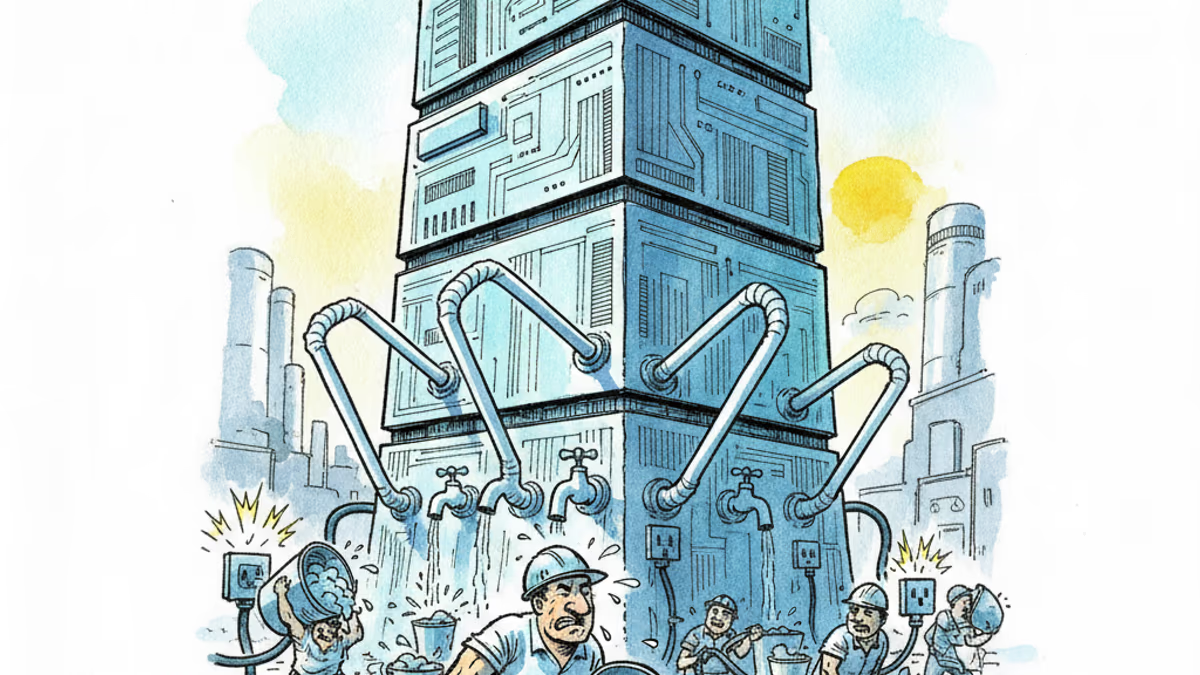
Samsung and SK unveiled a chip and AI investment package worth thousands of trillions of won on June 29. The headline number swings wildly by outlet, but the real contest isn't capital — it's water and power.

Viral videos show 2026 graduates jeering executives who praise AI at commencement ceremonies. It's not just rudeness — it's a signal about who pays for technological optimism.

Filipino virtual assistants using AI to ghost-manage LinkedIn profiles for executives is now a structured industry. 30 comments a day, fake engagement rings, and a platform struggling to tell real from fabricated.
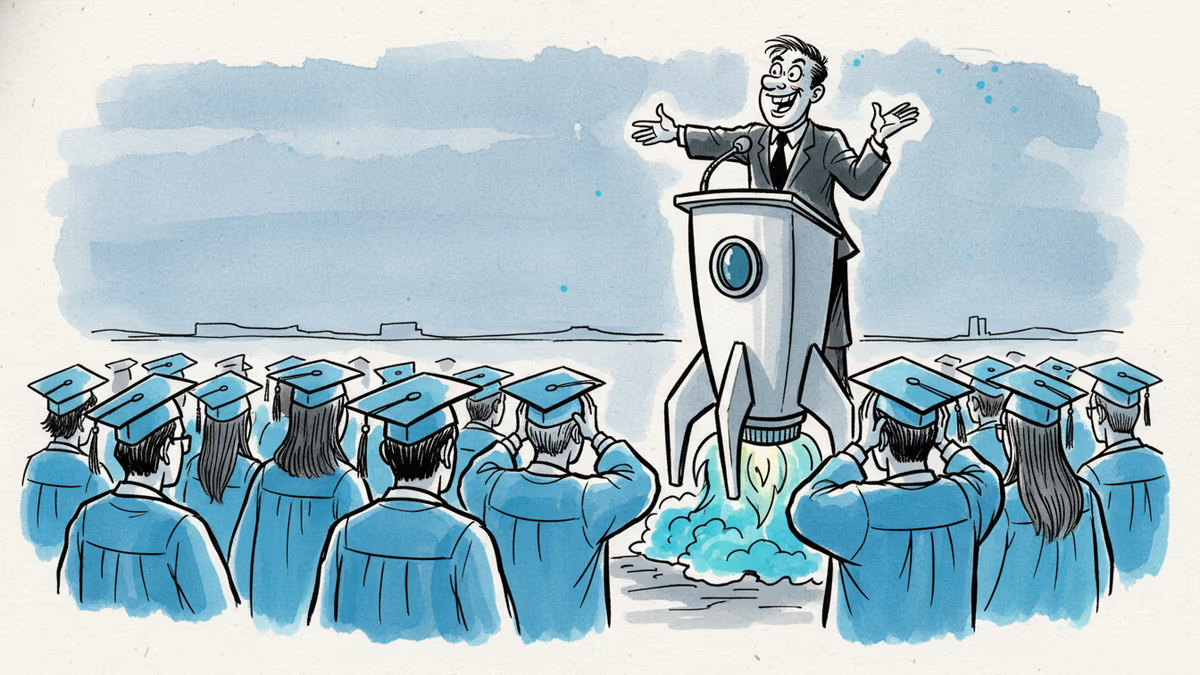
Two commencement speakers learned the hard way that AI enthusiasm doesn't land well with today's graduates. The backlash reveals a widening gap between tech optimism and Gen Z's economic reality.
Samsung and SK unveiled a chip and AI investment package worth thousands of trillions of won on June 29. The headline number swings wildly by outlet, but the real contest isn't capital — it's water and power.
Viral videos show 2026 graduates jeering executives who praise AI at commencement ceremonies. It's not just rudeness — it's a signal about who pays for technological optimism.
Filipino virtual assistants using AI to ghost-manage LinkedIn profiles for executives is now a structured industry. 30 comments a day, fake engagement rings, and a platform struggling to tell real from fabricated.
Two commencement speakers learned the hard way that AI enthusiasm doesn't land well with today's graduates. The backlash reveals a widening gap between tech optimism and Gen Z's economic reality.
Thoughts
Share your thoughts on this article
Sign in to join the conversation