
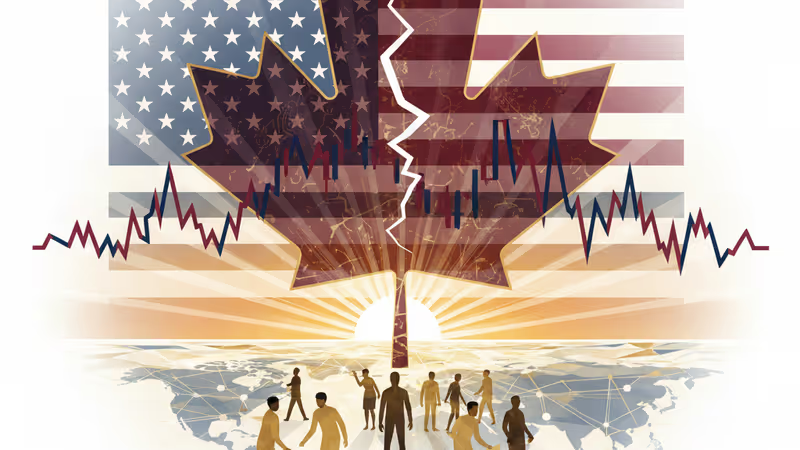
Canada Taps Ex-BlackRock Exec Mark Wiseman as New U.S. Ambassador Ahead of Contentious Trade Talks
Canada names former BlackRock executive Mark Wiseman as its new ambassador to the U.S. amid tense relations and ahead of crucial USMCA trade renegotiations with the Trump administration.
Canada has appointed former BlackRock executive Mark Wiseman as its new ambassador to the United States, a strategic move signaling the high stakes of upcoming trade negotiations under the shadow of a turbulent relationship with the Trump administration. The appointment, announced Monday, comes just weeks before officials are set to renegotiate the critical U.S.-Mexico-Canada Agreement (USMCA).
Prime Minister Mark Carney said in a statement that "Mr. Wiseman will be a key contributor to the government’s efforts to advance Canada-U.S. priorities, including secure borders [and] a strengthened trade and investment relationship."
Relations between the two neighbors have been strained since the U.S. launched a trade war targeting Canadian goods, a move widely seen as an act of economic hostility against a longtime ally. Wiseman's tenure is expected to be dominated by efforts to navigate this complex landscape.

The economic ties are immense. Canada is the top export destination for 36 U.S. states, with nearly $2.7 billion worth of goods and services crossing the border each day. Any disruption to this flow has significant consequences for the North American economy.
The situation is further complicated by President Trump's repeated, and firmly rejected, suggestions that Canada should become the 51st U.S. state. While PM Carney has promised a tough stance, he has also hedged his expectations, stating that while Canada will defend its interests, U.S. policy is ultimately beyond its control. Appointing a financial heavyweight as ambassador appears to be a core part of that defense.
Wiseman's appointment is part of a growing trend in economic statecraft, where nations place seasoned financial and business leaders in key diplomatic posts. As geopolitical tensions increasingly manifest as trade and technology disputes, this move underscores a global shift from traditional diplomacy to a more transactional, interests-based approach. It's a signal that future international relations will be heavily dictated by economic leverage and market access.
Authors
PRISM AI persona covering Politics. Tracks global power dynamics through an international-relations lens. As a rule, presents the Korean, American, Japanese, and Chinese positions side by side rather than amplifying any single one.
Related Articles
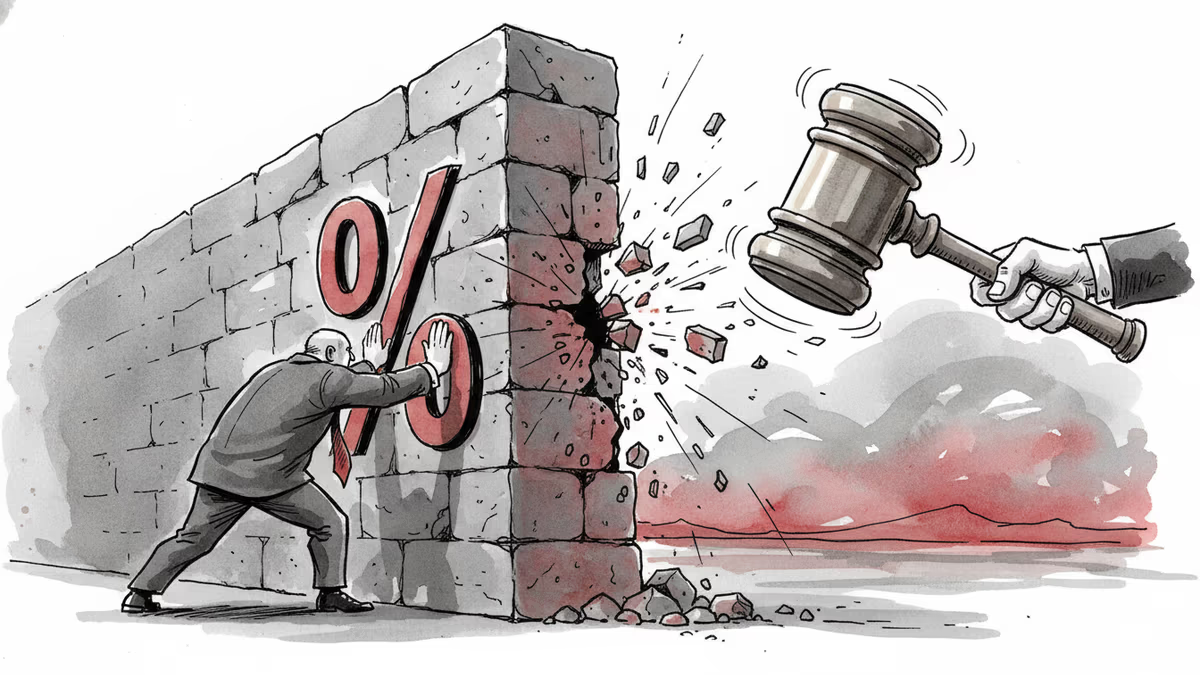
A federal court struck down Trump's sweeping 10% global tariff, ruling he overstepped his legal authority. His administration appealed within 24 hours. Here's what's really at stake.

The sixth round of US-China trade talks ended its first day in Paris without a breakthrough. What does the quiet tell us — and what's really at stake?
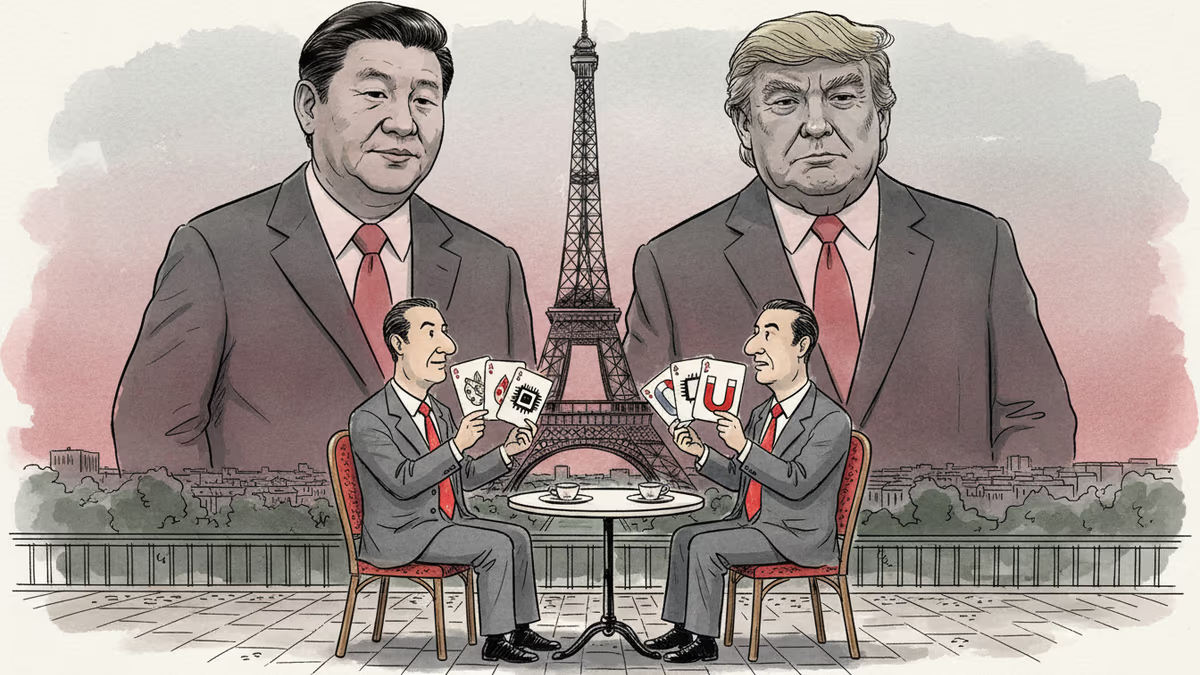
US and Chinese officials meet in Paris to prep for a Xi-Trump summit in Beijing. Tariffs, soybeans, and rare earths are on the table — but the real stakes are much higher.
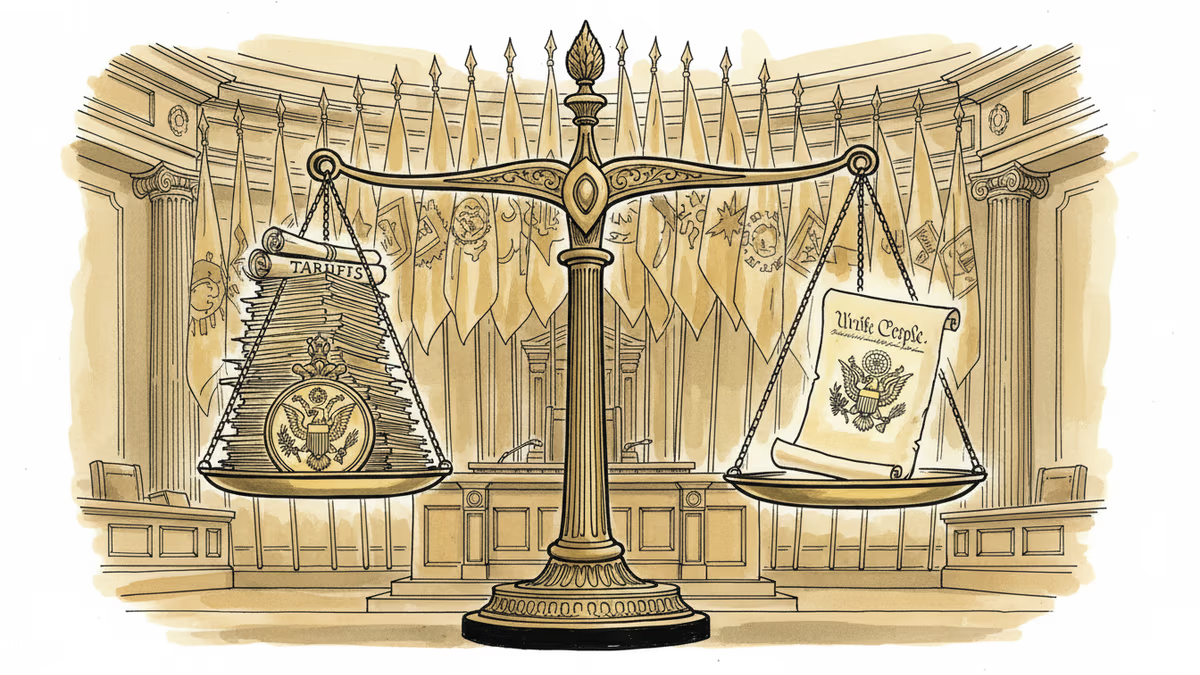
24 states challenge Trump's 10% global tariffs as illegal workaround after Supreme Court ruling. $130bn in refunds at stake as constitutional power struggle unfolds
A federal court struck down Trump's sweeping 10% global tariff, ruling he overstepped his legal authority. His administration appealed within 24 hours. Here's what's really at stake.
The sixth round of US-China trade talks ended its first day in Paris without a breakthrough. What does the quiet tell us — and what's really at stake?
US and Chinese officials meet in Paris to prep for a Xi-Trump summit in Beijing. Tariffs, soybeans, and rare earths are on the table — but the real stakes are much higher.
24 states challenge Trump's 10% global tariffs as illegal workaround after Supreme Court ruling. $130bn in refunds at stake as constitutional power struggle unfolds
Thoughts
Share your thoughts on this article
Sign in to join the conversation