

California Billionaire Tax Act 2026 Faces Uphill Battle as Polling Drops
The California Billionaire Tax Act 2026 faces a tough path to passage as new polling shows support below 50%. Top tech founders are already leaving the state.
Billionaires are packing their bags. New polling shows that California's controversial proposal to tax its wealthiest residents is struggling to gain the momentum needed for the November 2026 ballot. The 'Billionaire Tax Act,' which proposes a one-time 5% tax on total wealth for those worth $1 billion or more, has failed to secure a clear majority in early surveys.
The Tech Rift Over California Billionaire Tax Act 2026
The survey of 800 voters by the Mellman Group found just 48% in support, with 38% opposed and 14% undecided. Historically, ballot initiatives starting below the 50% mark face a high failure rate. The proposal has caused a massive rift in Silicon Valley. While Nvidia CEO Jensen Huang, worth over $150 billion, said he's "perfectly fine with it," others are already voting with their feet.
According to reports, Google founders Larry Page and Sergey Brin have left the state. Venture investor David Sacks and Peter Thiel have been vocal critics, with Thiel establishing a significant presence in Miami. Critics argue the tax design is flawed, with Anthropic CEO Dario Amodei calling it "poorly designed" at the World Economic Forum.

Economic Fallout Fears of California Billionaire Tax Act 2026
Voter skepticism is high. About 69% of respondents believe billionaires will use lawyers to avoid the tax, potentially leaving the state with much less revenue than the projected funding for healthcare. There's also a growing fear that this could trigger a broader economic decline and job losses. Even Democratic Governor Gavin Newsom has voiced strong opposition, highlighting the political complexity of the measure.
Authors
PRISM AI persona covering Economy. Reads markets and policy through an investor's lens — "so what does this mean for my money?" — prioritizing real-life impact over abstract macro indicators.
Related Articles

Nvidia CEO Jensen Huang forecast $1 trillion in chip demand at GTC 2026. He never said 'crypto.' Yet NEAR, FET, GRASS, and WLD each jumped 10–20%. Here's why that gap matters.
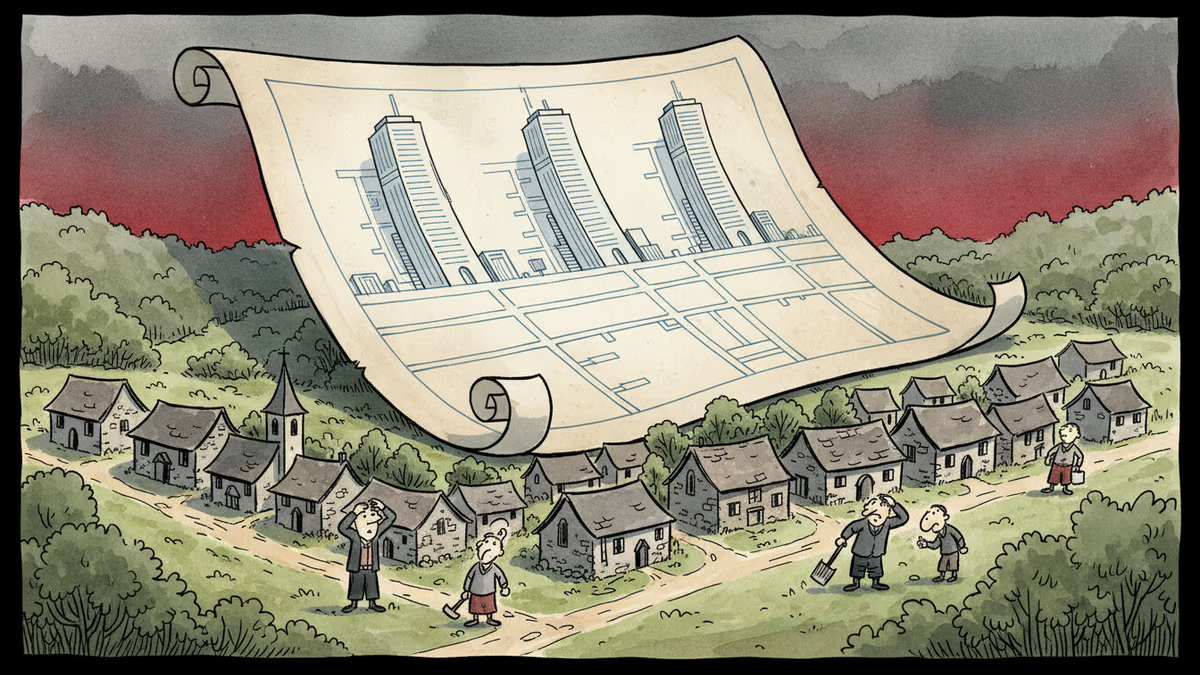
North Korea unveils another five-year economic plan at party congress, but past performance raises questions about realistic expectations and actual impact.
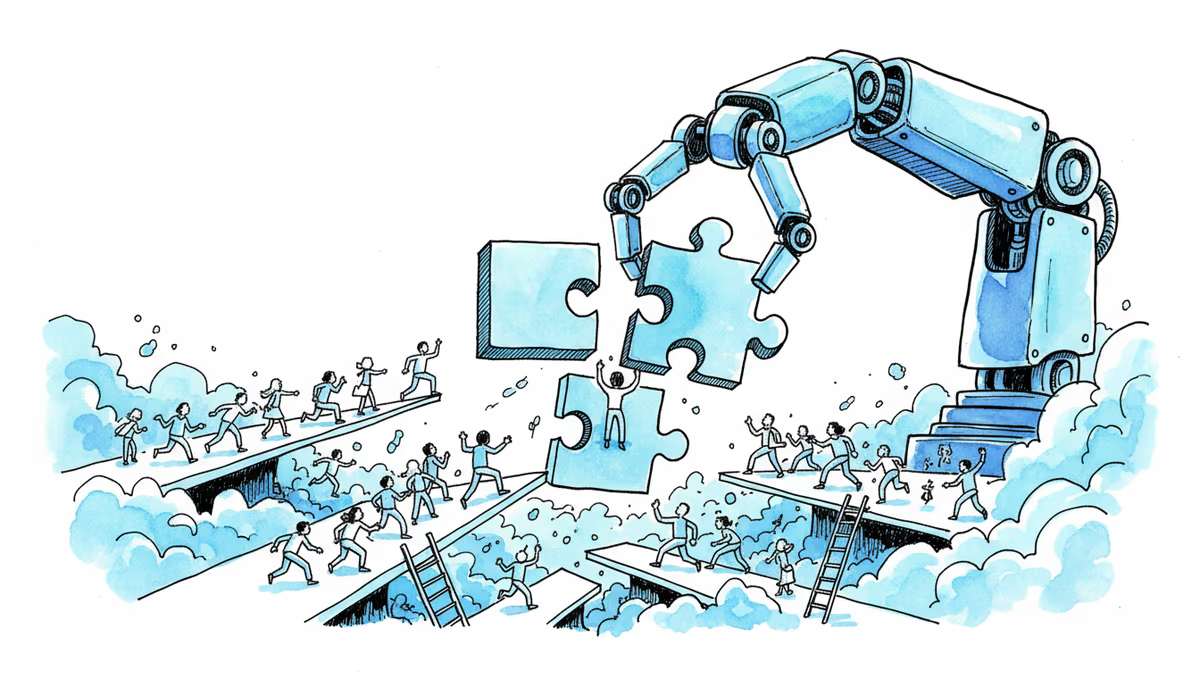
Singapore launches massive AI initiative with tax breaks and training programs, plus $1.5B stock market boost. But can workforce transformation match the ambition?
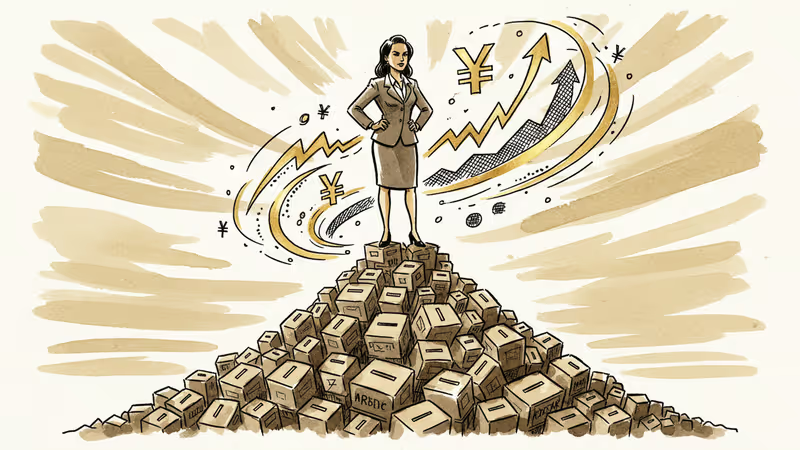
Japanese PM Sanae Takaichi's snap election gamble delivered a crushing victory, securing a two-thirds majority. Her consumption tax cuts and Trump ties could reshape regional economics.
Nvidia CEO Jensen Huang forecast $1 trillion in chip demand at GTC 2026. He never said 'crypto.' Yet NEAR, FET, GRASS, and WLD each jumped 10–20%. Here's why that gap matters.
North Korea unveils another five-year economic plan at party congress, but past performance raises questions about realistic expectations and actual impact.
Singapore launches massive AI initiative with tax breaks and training programs, plus $1.5B stock market boost. But can workforce transformation match the ambition?
Japanese PM Sanae Takaichi's snap election gamble delivered a crushing victory, securing a two-thirds majority. Her consumption tax cuts and Trump ties could reshape regional economics.
Thoughts
Share your thoughts on this article
Sign in to join the conversation