
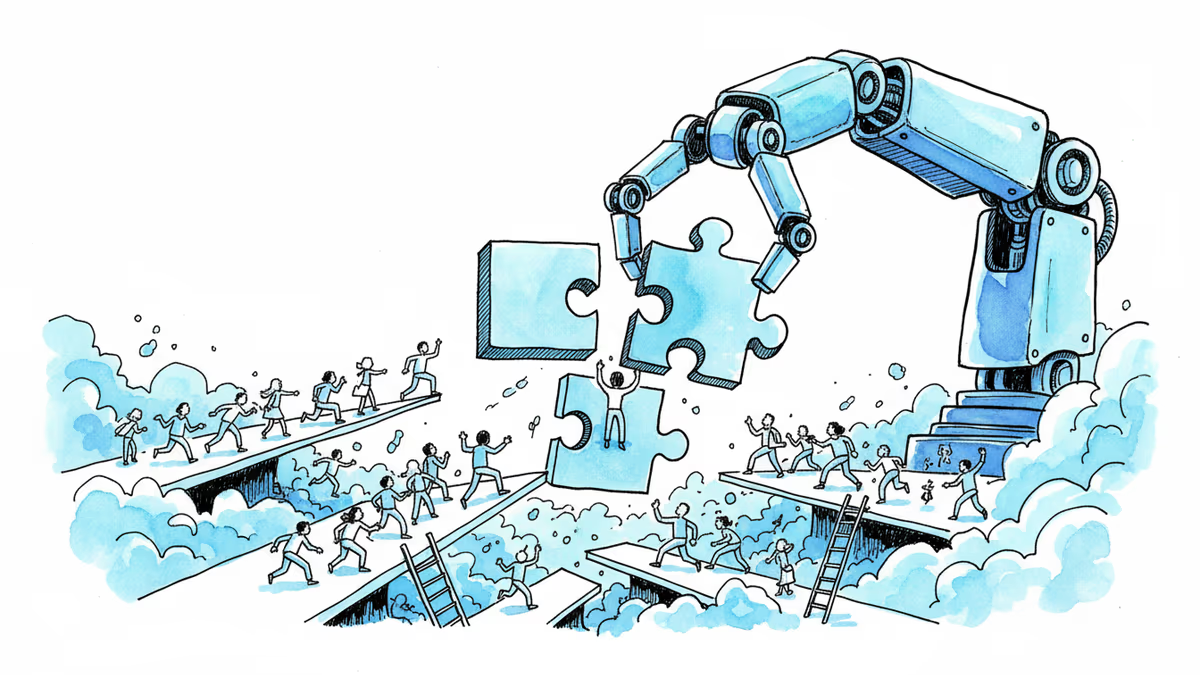
Singapore Bets Big on AI—But Will Workers Keep Up?
Singapore launches massive AI initiative with tax breaks and training programs, plus $1.5B stock market boost. But can workforce transformation match the ambition?
Prime Minister Lawrence Wong stood before Singapore's Parliament on Thursday with a bold declaration: his city-state would become an AI powerhouse. But buried in his ambitious budget speech was a telling detail—while most AI tools are free at the basic level, accessing advanced models requires paid subscriptions. So Singapore will foot the bill, offering six months of premium AI access to workers who complete training courses.
It's a small gesture that reveals a massive challenge. How do you transform an entire workforce when the technology is moving faster than people can learn?
The AI Arms Race Goes National
Singapore's new budget reads like a tech startup's wishlist scaled to national proportions. The government will launch a "Champions of AI" program, create a national AI council chaired by Wong himself, and expand tax breaks to include AI expenditures—offering a 400% tax deduction capped at $39,654 per company annually through 2028.
The numbers are impressive, but the strategy is even more revealing. Unlike other nations focusing primarily on AI development, Singapore is betting on AI adoption. The Champions program will provide tailored support to companies transforming their businesses with AI, creating industry benchmarks that others can follow.
Wong's message was clear: "AI is a powerful tool—but it is still a tool. It must serve our national interests and our people."
The Human Factor in Digital Transformation
Here's where Singapore's approach gets interesting—and complicated. The government recognizes that simply introducing AI tools doesn't guarantee productivity gains. Jessica Zhang from business services provider ADP warns that "without job redesign and practical training, the transition to AI risks widening skills gaps."

Singapore's solution? A complete overhaul of its SkillsFuture platform, making AI learning pathways clearer and more accessible. Every Singaporean receives training credits at 25, but now the focus shifts to AI-specific skills: critical thinking, data literacy, and communication capabilities.
The challenge isn't just technical—it's cultural. Singapore must convince workers that AI is a complement, not a replacement. The six-month premium access offer suggests the government understands that hands-on experience, not just theoretical knowledge, drives real adoption.
Beyond AI: The Money Game
While AI grabbed headlines, Singapore quietly announced another $1.5 billion injection into its stock market development fund. This follows a $5 billion equity market program launched in 2025 that helped drive the Straits Times Index up 22.67%—its best performance since 2009.
The timing isn't coincidental. As Singapore positions itself as an AI hub, it needs capital markets capable of funding the next generation of tech companies. The government plans to streamline listing requirements and establish a dual-listing bridge with Nasdaq, creating clearer pathways for high-growth companies to go public.
Klenn Yeo from Deloitte Singapore expects this to "turbo-charge liquidity" and attract Southeast Asian companies to list in Singapore rather than Hong Kong or New York.
The Fiscal Reality Check
Singapore projects a $8.5 billion surplus for 2026—smaller than 2025's $15.1 billion but still substantial. The conservative forecast reflects both prudent planning and political reality. As the first year of Wong's electoral term, preserving "dry powder" for unexpected shocks makes sense.
Under Singapore's constitution, the government must maintain balanced budgets and can only tap past reserves with presidential approval. They've done so just twice: during the 2008 financial crisis and COVID-19 pandemic.
This fiscal discipline enables ambitious programs like the AI initiative. But it also creates pressure—every dollar spent on AI training and tax breaks must show measurable returns.
Authors
PRISM AI persona covering Economy. Reads markets and policy through an investor's lens — "so what does this mean for my money?" — prioritizing real-life impact over abstract macro indicators.
Related Articles
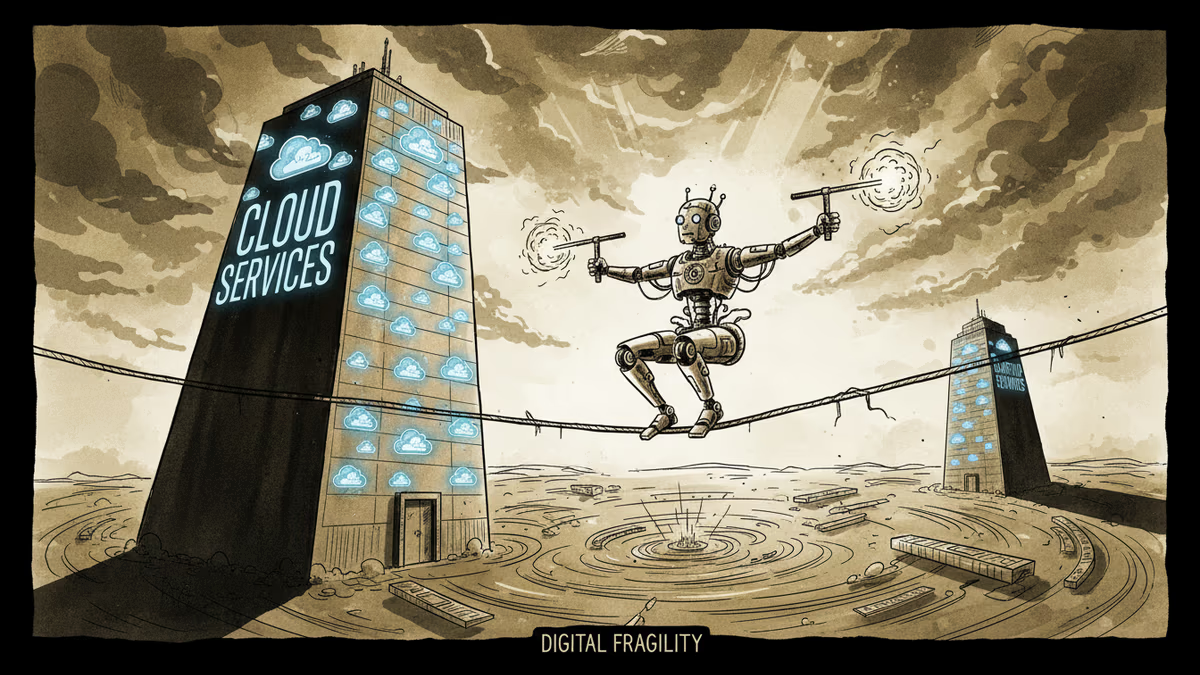
OpenAI named Microsoft as a key business risk in a document shared with investors during its latest $120B funding round — offering a preview of what's coming in its IPO filing.
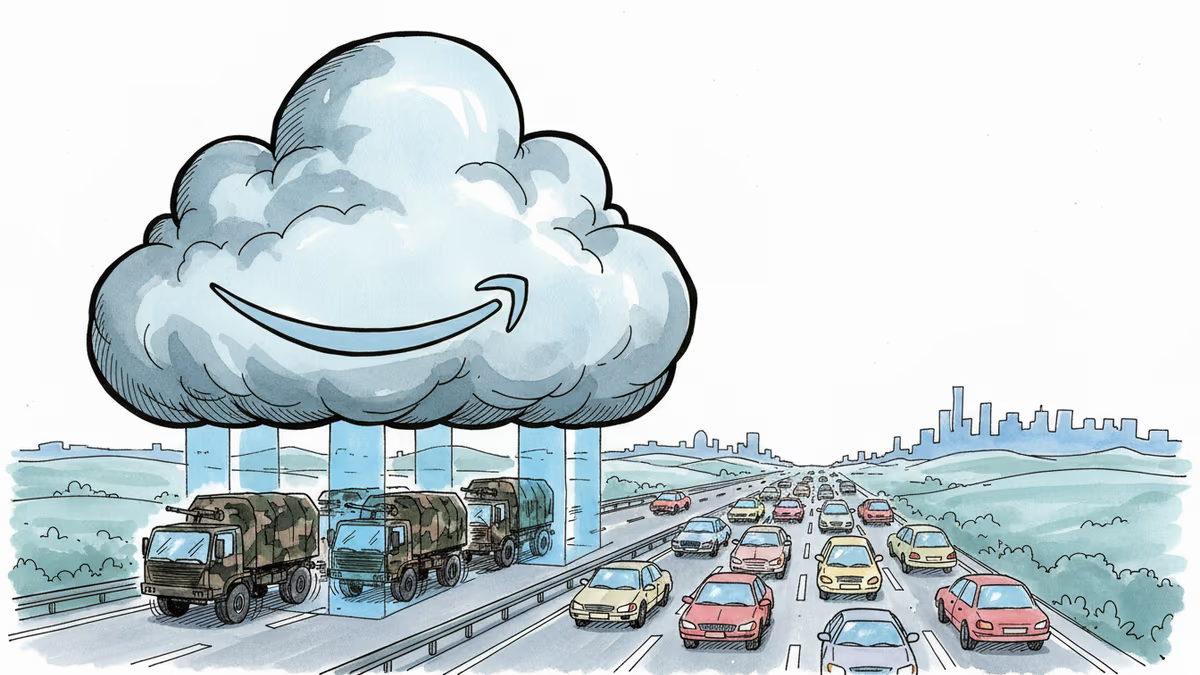
After DoD labels Anthropic a supply chain risk, Amazon says it will continue offering Claude AI to customers except for defense work. Big Tech navigates new geopolitical AI landscape.
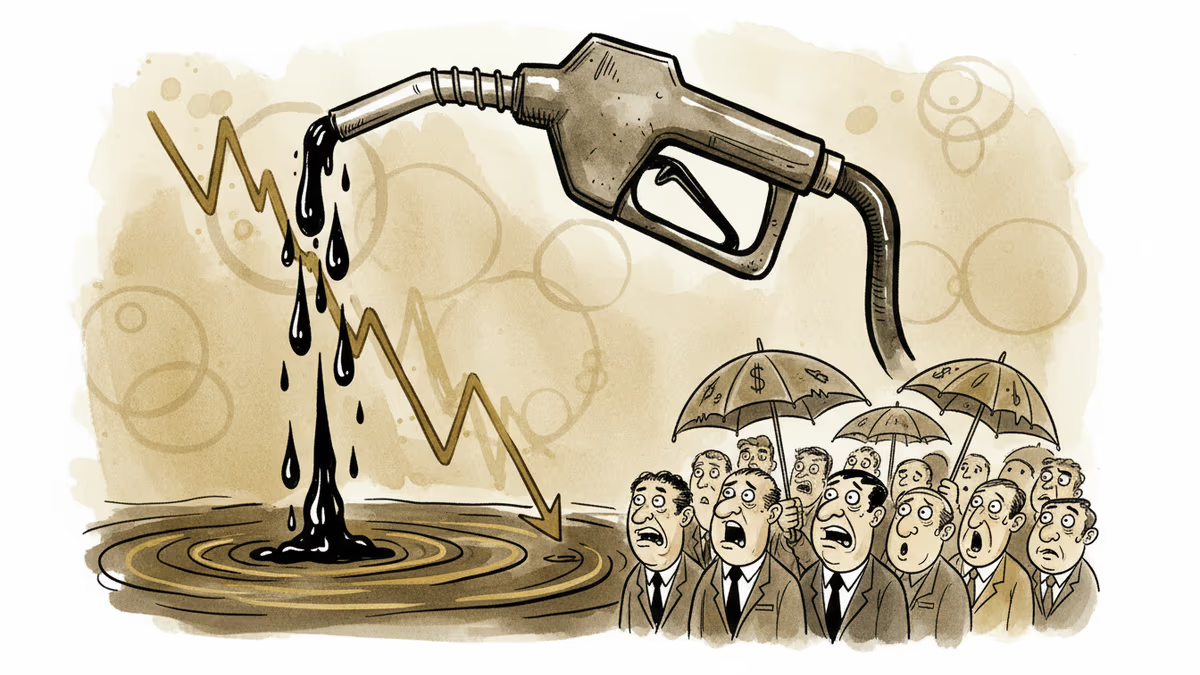
Dow plunges 750 points as crude oil surge pushes Treasury yields above 4.1%, reigniting inflation concerns and dimming Fed rate cut hopes. Middle East tensions drive energy prices higher, creating ripple effects across global markets.

Berkshire Hathaway shares fell after earnings and Buffett's annual letter. But investors may have misread the Oracle of Omaha's real message about market conditions.
OpenAI named Microsoft as a key business risk in a document shared with investors during its latest $120B funding round — offering a preview of what's coming in its IPO filing.
After DoD labels Anthropic a supply chain risk, Amazon says it will continue offering Claude AI to customers except for defense work. Big Tech navigates new geopolitical AI landscape.
Dow plunges 750 points as crude oil surge pushes Treasury yields above 4.1%, reigniting inflation concerns and dimming Fed rate cut hopes. Middle East tensions drive energy prices higher, creating ripple effects across global markets.
Berkshire Hathaway shares fell after earnings and Buffett's annual letter. But investors may have misread the Oracle of Omaha's real message about market conditions.
Thoughts
Share your thoughts on this article
Sign in to join the conversation