
When AI Stole Spider-Man: Hollywood's Copyright Awakening
ByteDance's AI video tool Seedance 2.0 faces cease-and-desist letters from Disney and Paramount after users generated copyrighted characters. Is this the beginning of AI's copyright reckoning?
Three Cease-and-Desist Letters in 48 Hours
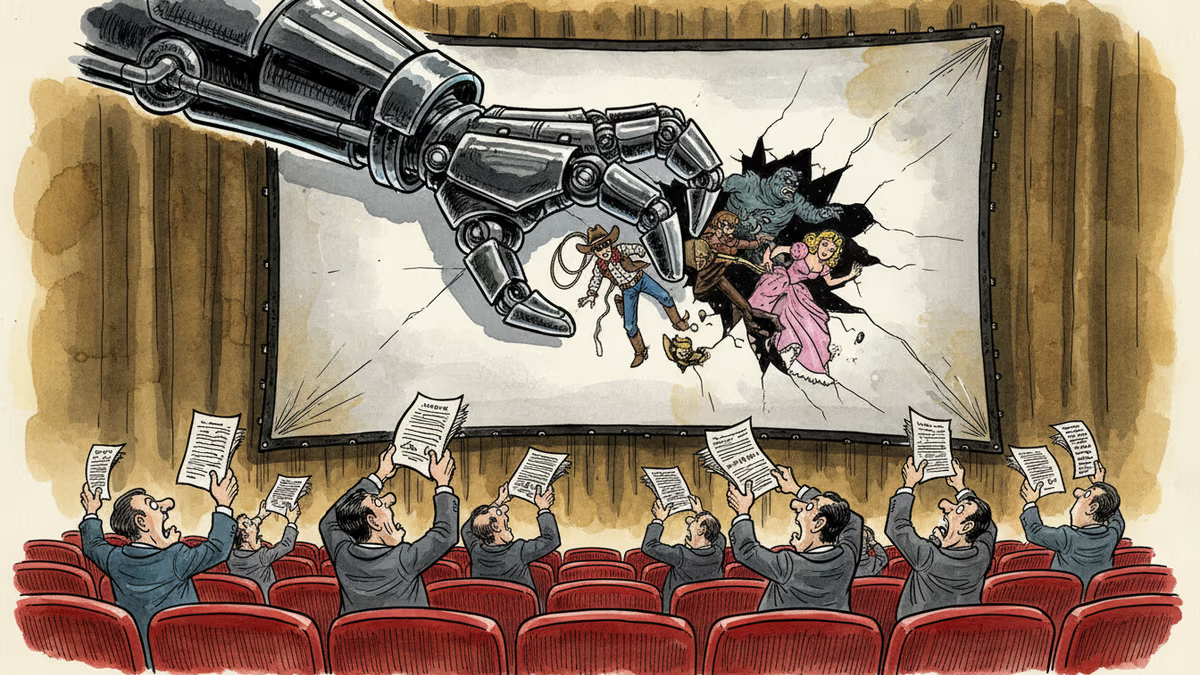
ByteDance launched Seedance 2.0 on a Tuesday. By Thursday, three major studios had lawyers drafting cease-and-desist letters. The reason? Users were generating Spider-Man swinging through Times Square, Darth Vader in coffee shops, and SpongeBob in dramatic soap opera scenes.
Disney was particularly incensed, accusing ByteDance of "hijacking" their characters and treating them like "free public domain clip art." Paramount called it "widespread and immediate infringement." The studios weren't wrong—social media was flooded with thousands of AI-generated videos featuring their most valuable intellectual property.
ByteDance's Technical Dilemma
ByteDance scrambled to respond, promising to add safeguards against generating iconic characters and celebrity deepfakes. But here's the problem: AI models can't easily "unsee" what they've learned. Even with filters, creative users find workarounds. Type "web-slinging hero in red and blue" instead of "Spider-Man," and you might still get something remarkably familiar.
The company faces a classic AI dilemma. Make the filters too strict, and the tool becomes useless. Too loose, and lawyers keep calling. There's no perfect middle ground when your AI has ingested decades of copyrighted content during training.
Hollywood vs. Silicon Valley: The Real Battle
This isn't just about copyright—it's about fundamentally different worldviews colliding.
Hollywood's perspective: "We've invested billions creating these characters over decades. Having them replicated instantly and freely undermines the entire creative economy. Where's the incentive to create original content?"

Silicon Valley's counter: "Technology democratizes creativity. Why should a few studios control how people express themselves? AI tools are paintbrushes, not piracy."
Both sides have valid points, which makes resolution so complex. Disney spent $4 billion acquiring Marvel partly for Spider-Man's commercial value. If AI can generate infinite Spider-Man content, what did they really buy?
The Regulatory Response Spectrum
Countries are taking wildly different approaches. The EU is moving toward strict liability—if your AI generates copyrighted content, you're responsible. California is considering similar legislation.
China prefers "self-regulation," protecting companies like ByteDance while they compete globally. The UK is exploring a middle path: legal AI training on copyrighted works, but restrictions on commercial output.
Each approach reflects different values: European consumer protection, American innovation balance, Chinese industrial policy, British pragmatism.
The Creator Economy's Inflection Point
For individual creators, this raises existential questions. If AI can generate Marvel-quality superhero content, why hire human animators? But if AI is banned from using existing characters, how do creators build on cultural references everyone understands?
Some see opportunity. Independent filmmakers could create Marvel-style content without Disney's budget. Others see extinction—why pay humans when AI works for electricity?
The answer might reshape not just Hollywood, but how we think about ownership, creativity, and culture itself.
Authors
Related Articles
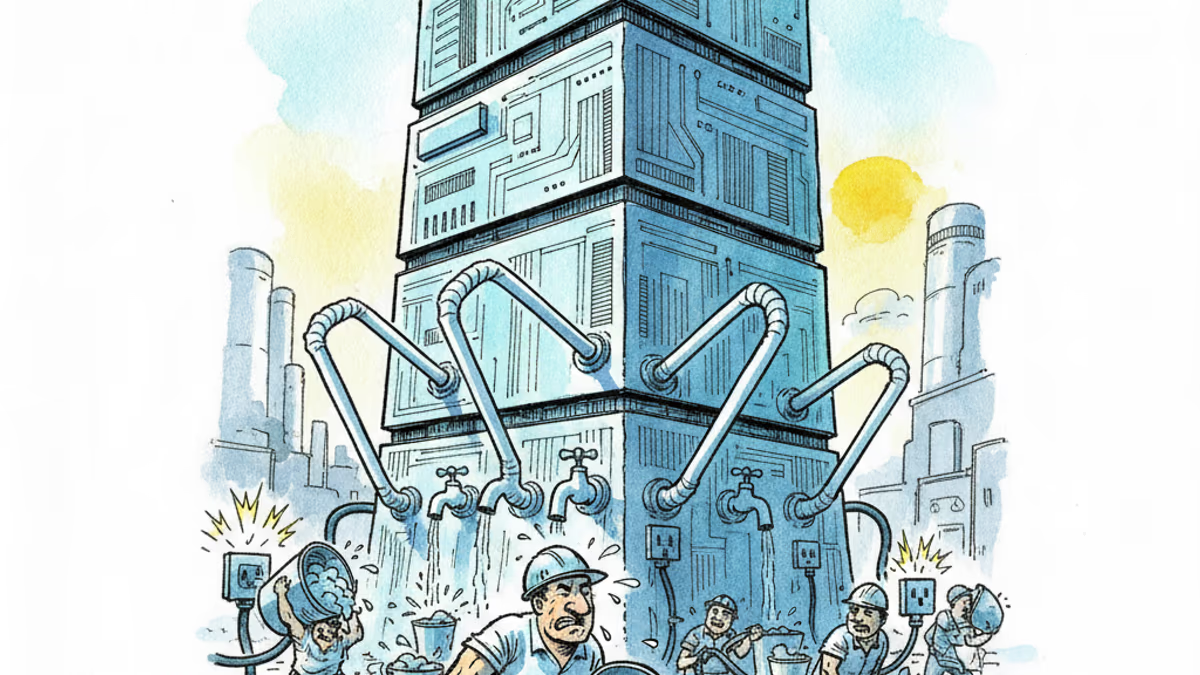
Samsung and SK unveiled a chip and AI investment package worth thousands of trillions of won on June 29. The headline number swings wildly by outlet, but the real contest isn't capital — it's water and power.
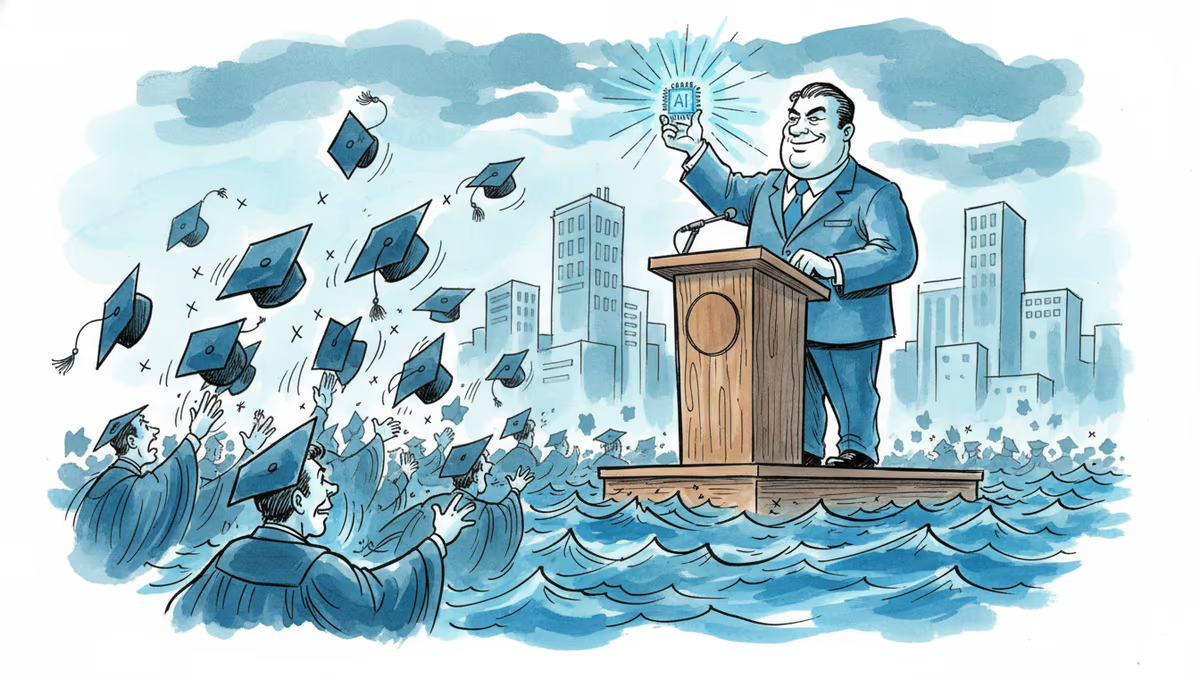
Viral videos show 2026 graduates jeering executives who praise AI at commencement ceremonies. It's not just rudeness — it's a signal about who pays for technological optimism.
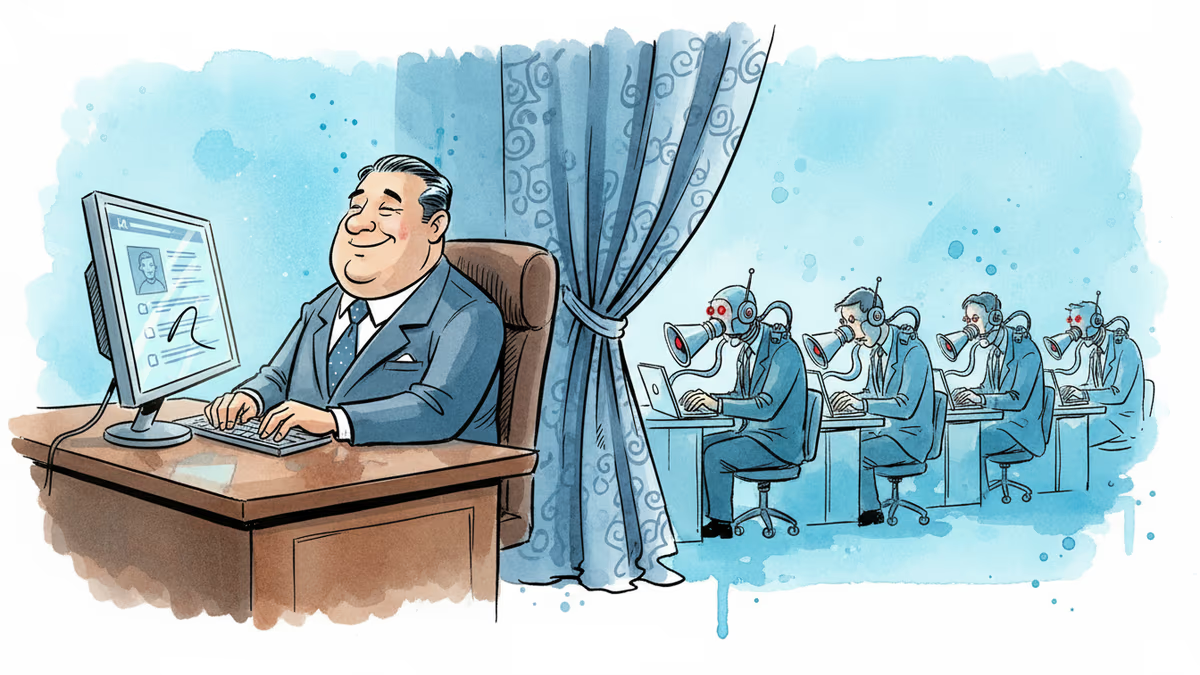
Filipino virtual assistants using AI to ghost-manage LinkedIn profiles for executives is now a structured industry. 30 comments a day, fake engagement rings, and a platform struggling to tell real from fabricated.
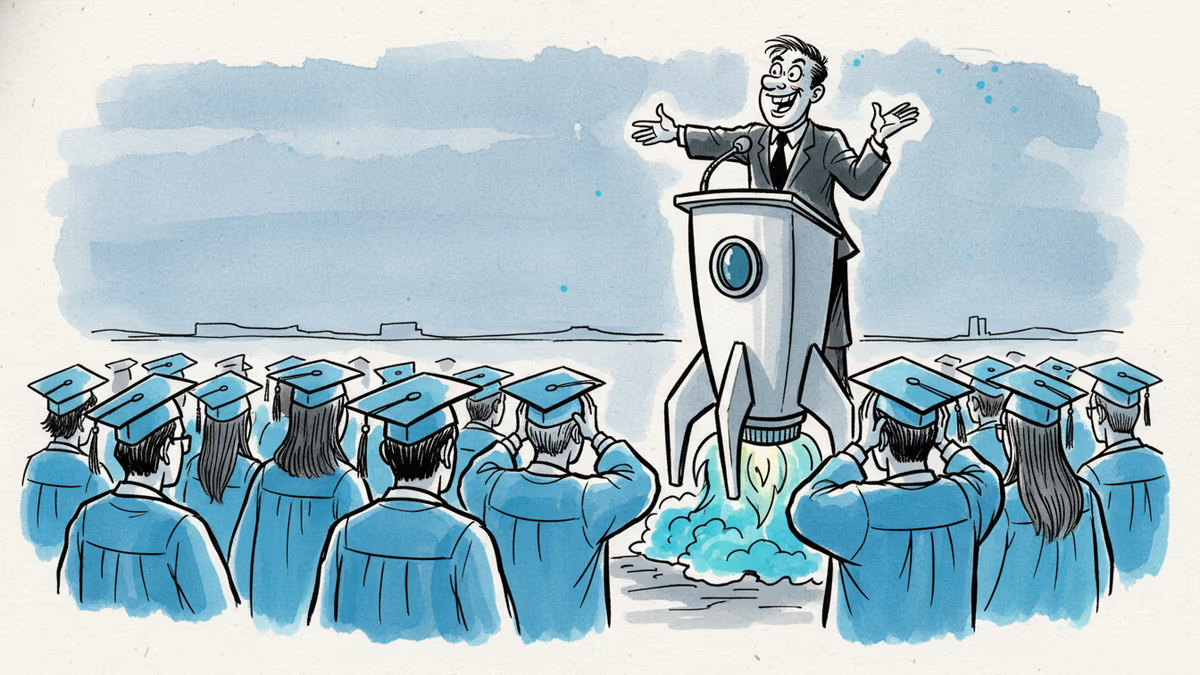
Two commencement speakers learned the hard way that AI enthusiasm doesn't land well with today's graduates. The backlash reveals a widening gap between tech optimism and Gen Z's economic reality.
Samsung and SK unveiled a chip and AI investment package worth thousands of trillions of won on June 29. The headline number swings wildly by outlet, but the real contest isn't capital — it's water and power.
Viral videos show 2026 graduates jeering executives who praise AI at commencement ceremonies. It's not just rudeness — it's a signal about who pays for technological optimism.
Filipino virtual assistants using AI to ghost-manage LinkedIn profiles for executives is now a structured industry. 30 comments a day, fake engagement rings, and a platform struggling to tell real from fabricated.
Two commencement speakers learned the hard way that AI enthusiasm doesn't land well with today's graduates. The backlash reveals a widening gap between tech optimism and Gen Z's economic reality.
Thoughts
Share your thoughts on this article
Sign in to join the conversation