
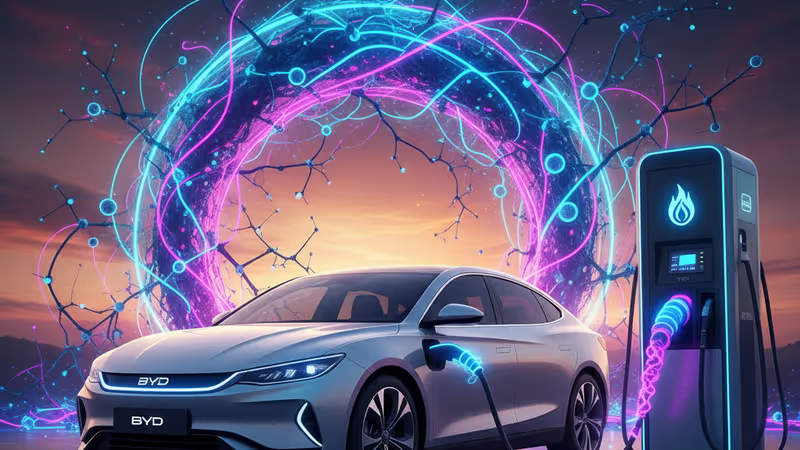
BYD Brazil Flex-Fuel Plug-in Hybrid: A Strategic Pivot to Conquer South America
BYD launches the world's first BYD Brazil flex-fuel plug-in hybrid, blending gasoline and ethanol flexibility with electric efficiency to lead the South American market.
It doesn't matter if it's gas or ethanol. According to Nikkei, BYD is set to launch the world's first flexible-fuel plug-in hybrid vehicle (PHV) specifically designed for the Brazil market. This move, reported on January 3, 2026, signals a major offensive in South America's largest automobile hub.
The Tech Behind BYD Brazil Flex-Fuel Plug-in Hybrid
The new vehicle is engineered to operate effectively with any ratio of gasoline and ethanol. Brazil has long relied on ethanol derived from sugarcane, making fuel flexibility a crucial factor for consumer adoption. By integrating this with their plug-in hybrid system, BYD addresses the lack of widespread charging infrastructure while offering a greener alternative to traditional combustion engines.

A Strategic Foothold in South America
Chinese automakers are increasingly focusing on localization to bypass global trade barriers and meet regional needs. BYD's initiative in Brazil is more than just a product launch; it's a deep dive into the local energy ecosystem. As domestic sales in China face plateaus, the Brazil market offers a fresh growth engine for the EV giant.
Authors
Related Articles
Mercedes-AMG's new GT 4-door coupe packs three YASA axial flux motors producing 1,153 hp and 1,475 lb-ft of torque. Here's what it means for the EV performance race—and who actually wins.
Elon Musk confirmed on Tesla's Q1 2026 earnings call that Hardware 3 vehicles will never receive unsupervised Full Self-Driving — locking out millions who paid for the feature.
CATL's third-gen Shenxing LFP battery claims charging speeds nearly 5x faster than Hyundai or Porsche's best 800V systems. Here's what that really means.
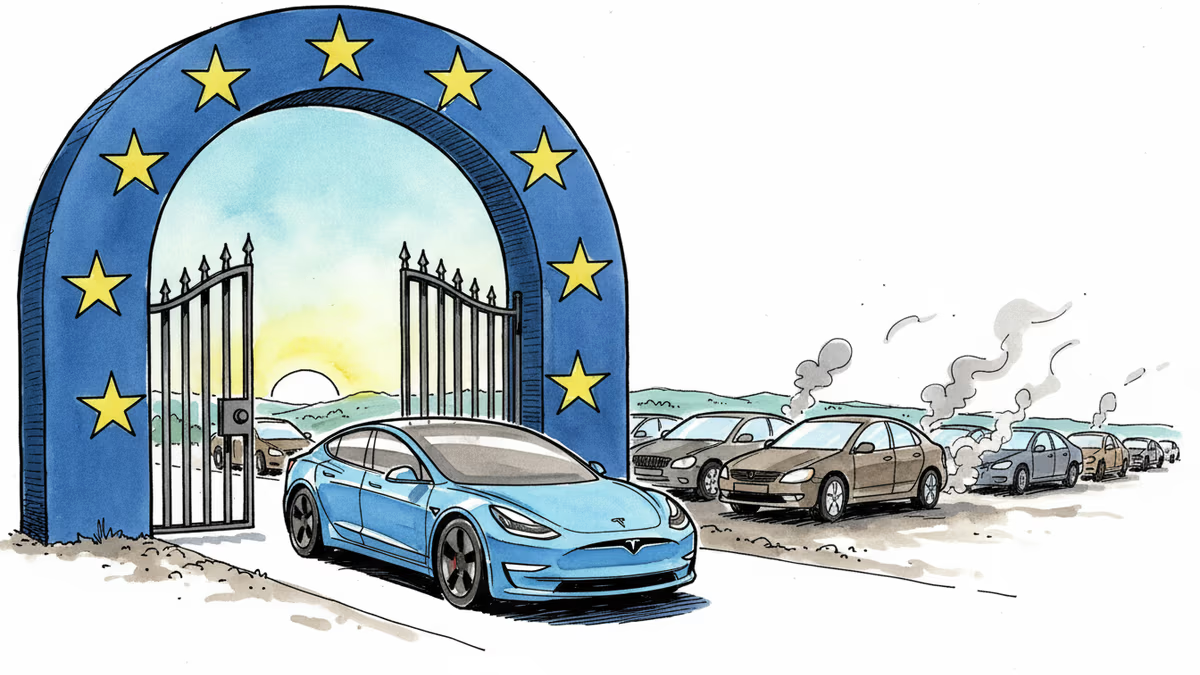
The Netherlands became the first European country to officially approve Tesla's FSD Supervised. With EU's type-approval framework, this could ripple across 27 member states fast.
Mercedes-AMG's new GT 4-door coupe packs three YASA axial flux motors producing 1,153 hp and 1,475 lb-ft of torque. Here's what it means for the EV performance race—and who actually wins.
Elon Musk confirmed on Tesla's Q1 2026 earnings call that Hardware 3 vehicles will never receive unsupervised Full Self-Driving — locking out millions who paid for the feature.
CATL's third-gen Shenxing LFP battery claims charging speeds nearly 5x faster than Hyundai or Porsche's best 800V systems. Here's what that really means.
The Netherlands became the first European country to officially approve Tesla's FSD Supervised. With EU's type-approval framework, this could ripple across 27 member states fast.
Thoughts
Share your thoughts on this article
Sign in to join the conversation