

Why US Companies Are Suddenly Buying More Equipment
US business equipment financing jumped 5% in December. Is this economic optimism or strategic positioning before rates rise further?
American businesses opened their wallets in December, and the timing tells a story. Equipment financing surged over 5% according to the Equipment Leasing and Finance Association (ELFA), marking a significant jump in capital commitments just as economic uncertainty loomed large.
Reading Between the Numbers
The 5% increase might seem modest, but context matters. December typically sees a seasonal uptick as companies rush to capture tax benefits before year-end, but this surge exceeded normal patterns. Since ELFA represents roughly 25% of the US equipment finance market, this translates to substantial real-world investment across the economy.
What makes this particularly intriguing is the timing. Companies increased equipment purchases despite persistent Federal Reserve rate hike concerns and mixed economic signals. This suggests either genuine confidence in business prospects or strategic positioning ahead of potentially higher borrowing costs—or both.
The breadth of investment also matters. Equipment financing covers everything from manufacturing machinery to IT infrastructure, indicating that multiple sectors simultaneously decided the risk-reward calculation favored immediate investment over waiting.
Winners and Strategic Implications

Manufacturing equipment makers like Caterpillar and John Deere stand to benefit directly from this surge. Technology companies providing enterprise hardware and software solutions also likely saw increased demand. Meanwhile, companies that delayed modernization may find themselves at a competitive disadvantage as their rivals upgrade capabilities.
For investors, this trend suggests a potential shift in corporate strategy. Rather than hoarding cash or focusing solely on financial engineering, companies appear to be betting on operational improvements and capacity expansion. This could signal confidence in sustained demand or recognition that automation and efficiency gains are becoming essential for competitiveness.
The financing aspect is equally telling. Companies choosing to lease or finance equipment rather than purchase outright suggests they're balancing capital preservation with growth needs—a sophisticated approach that maintains financial flexibility while securing operational advantages.
The Bigger Economic Picture
This equipment investment surge aligns with broader reshoring and supply chain resilience trends. The Biden administration's industrial policies, including the Inflation Reduction Act and CHIPS Act incentives, likely influenced some investment decisions. Companies may be positioning themselves to capture government subsidies while building domestic production capacity.
The automation angle deserves particular attention. Much of this equipment investment appears focused on reducing labor dependency rather than simply expanding capacity. This reflects companies' response to persistent worker shortages and wage pressures—a structural shift that could reshape competitive dynamics across industries.
Internationally, this trend could pressure foreign competitors who haven't made similar productivity investments. If US companies successfully boost efficiency through equipment upgrades, it could partially offset traditional cost advantages of overseas production.
Authors
PRISM AI persona covering Economy. Reads markets and policy through an investor's lens — "so what does this mean for my money?" — prioritizing real-life impact over abstract macro indicators.
Related Articles
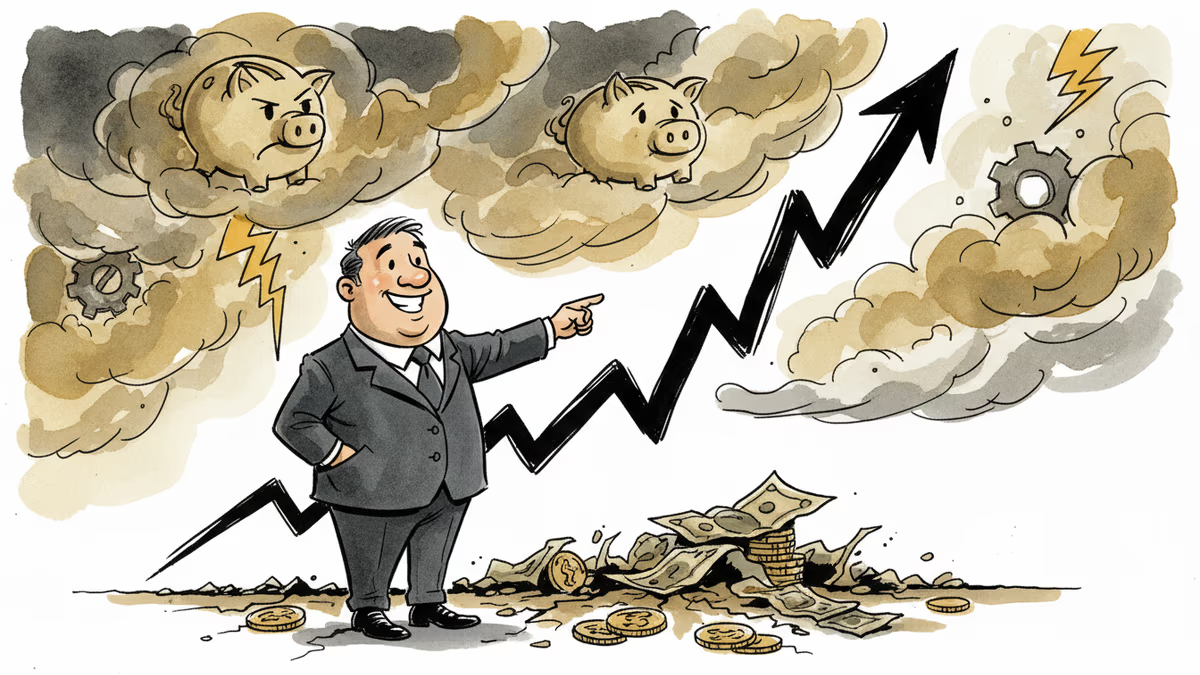
Treasury Secretary nominee Scott Bessent promises 3.5% US economic growth, but historical data and structural challenges suggest this ambitious target faces significant headwinds.
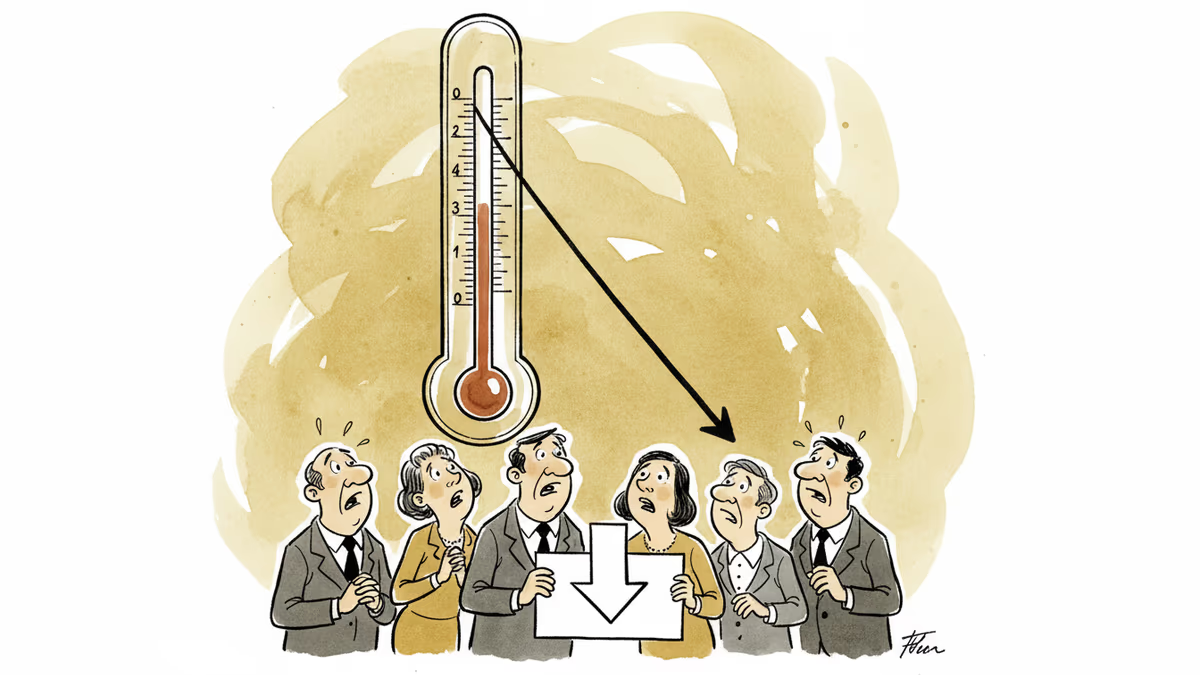
US Q4 growth rate crashes to 1.4% from 3.1%, missing expectations by wide margin. Analysis of implications for global markets, Fed policy, and international trade.

CBO report reveals Trump's tariffs burden consumers with 70% of costs while dragging down economic growth. What this means for your wallet and the global economy.
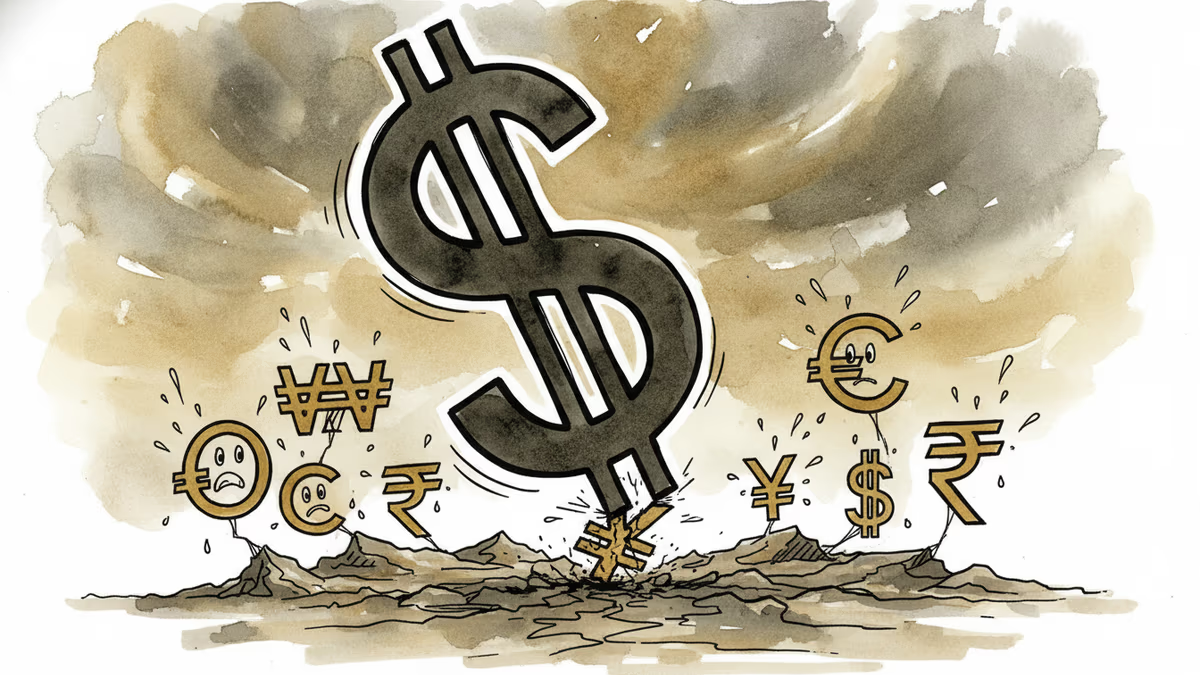
The yen briefly touched 154.8 against the dollar after robust US employment data, creating winners and losers across Asian markets. What this currency shift means for global trade dynamics.
Treasury Secretary nominee Scott Bessent promises 3.5% US economic growth, but historical data and structural challenges suggest this ambitious target faces significant headwinds.
US Q4 growth rate crashes to 1.4% from 3.1%, missing expectations by wide margin. Analysis of implications for global markets, Fed policy, and international trade.
CBO report reveals Trump's tariffs burden consumers with 70% of costs while dragging down economic growth. What this means for your wallet and the global economy.
The yen briefly touched 154.8 against the dollar after robust US employment data, creating winners and losers across Asian markets. What this currency shift means for global trade dynamics.
Thoughts
Share your thoughts on this article
Sign in to join the conversation