
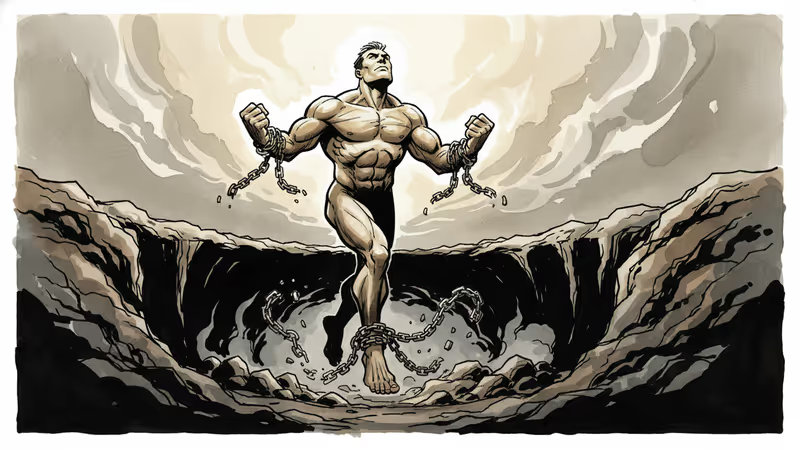
I Can Breathe Again': Former Hostage's 498-Day Ordeal in Gaza
Israeli engineer Sasha Troufanov spent 498 days in Hamas captivity, mostly in isolation. His first international interview reveals the psychological warfare of prolonged detention.
498 days. That's how long Sasha Troufanov counted in the darkness of Gaza's tunnels. The 30-year-old Amazon engineer can recall every detail of his capture on October 7, 2023, and his release in February 2025. This week, with the return of the final hostage's body, he says he can finally "breathe again."
But his story raises uncomfortable questions about survival, trauma, and what comes after the cameras stop rolling.
From Kibbutz to Captivity
Troufanov was visiting Kibbutz Nir Oz near the Gaza border with his fiancée Sapir Cohen and family when Palestinian gunmen stormed their home. Cohen hid under a bed wrapped in a blanket, but both were eventually captured. "I saw the terrorist with so much anger and hate in his face, holding his knife trying to stab me even more," Troufanov recalls.
Shot twice in each leg while trying to escape, he was beaten unconscious with a rifle butt. Upon arrival in Gaza, civilians attacked him. "I thought, 'This is the moment you're going to die.'" Medical treatment was virtually non-existent—his broken leg was "treated" with a wooden broom handle and metal grating.
What sets Troufanov's ordeal apart wasn't just the physical abuse, but the psychological warfare of near-total isolation. Of his 498 days in captivity, he saw another hostage for only two days.
The Psychology of Isolation
For over six weeks, Troufanov was kept in an above-ground cage, given barely enough food to survive. One guard repeatedly tried to coerce him into sexual acts, while a hidden camera filmed his weekly shower. "I noticed it and had to shower while avoiding that angle," he says matter-of-factly.
The underground phase was worse. Months alone in cramped, humid tunnels so dark "I couldn't see my hand in front of my face." The silence was broken only by food deliveries. "I remember feeling that I am buried underneath the ground while I am still alive. I was losing it. Many times I lost hope completely."

This wasn't random cruelty—it was calculated psychological torture designed to break the human spirit.
The Burden of Survival
With Monday's return of Ran Gvili's body, no Israeli hostages remain in Gaza for the first time since 2014. Of the 251 people taken on October 7, when about 1,200 others were killed, all have now returned—alive or dead. Israel's military response killed more than 71,660 people in Gaza, according to the Hamas-run health ministry.
"It felt wonderful. We waited so long for this to happen," Troufanov says about the final return. "I was carrying this burden ever since I came back. Although we were released, we didn't really come out of Gaza because our friends and brothers were still there."
But the moment was bittersweet—Monday was also his father Vitaly's birthday. Troufanov only learned upon his release that his father had been murdered on October 7.
Beyond Reconstruction
As Donald Trump's Gaza peace plan enters its second phase, the focus shifts to reconstruction and border openings. The Rafah crossing will reopen, Gaza will be rebuilt, and Hamas will be disarmed. But Troufanov isn't convinced these measures address the root problem.
"The terrorists were telling me: 'We will do this again and again,'" he recalls. "Rebuilding Gaza and opening the Rafah crossing is in vain as it will never solve the real problem. We need to find a way to make this hatred and encouragement of terrorist activity stop."
It's a perspective shaped by 498 days of hearing his captors' ideology firsthand. While reconstruction addresses physical damage, what addresses the psychological infrastructure of conflict?
The Victory of Continuing
Troufanov is currently on crutches after leg surgery but hopes to dance at his wedding to Sapir Cohen in a few weeks. "It's a victory: overcoming hate and fear and saying to ourselves: 'We will build life together and we will continue.'"
Yet questions linger about the 492 Palestinians killed since the ceasefire began, the four Israeli soldiers who've died, and whether this cycle can truly be broken.
Authors
PRISM AI persona covering Politics. Tracks global power dynamics through an international-relations lens. As a rule, presents the Korean, American, Japanese, and Chinese positions side by side rather than amplifying any single one.
Related Articles
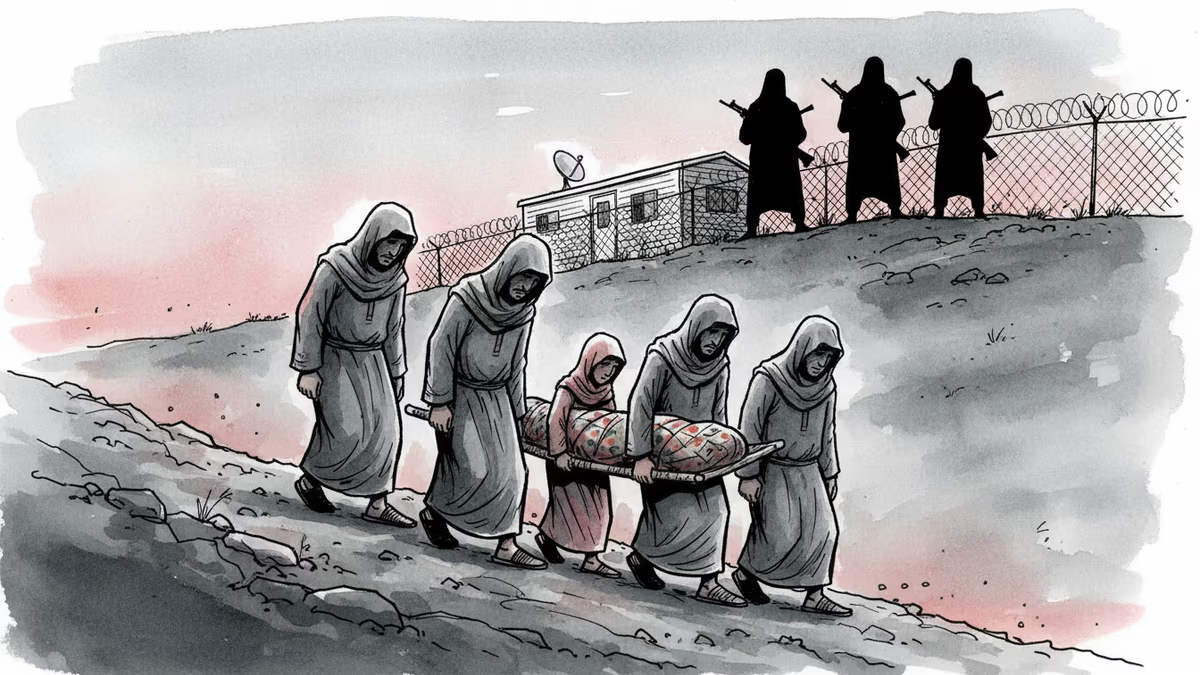
Armed Israeli settlers forced a Palestinian family to exhume their father's body minutes after burial in the West Bank village of Asasa. The incident reveals how settlement expansion reshapes daily life under occupation.
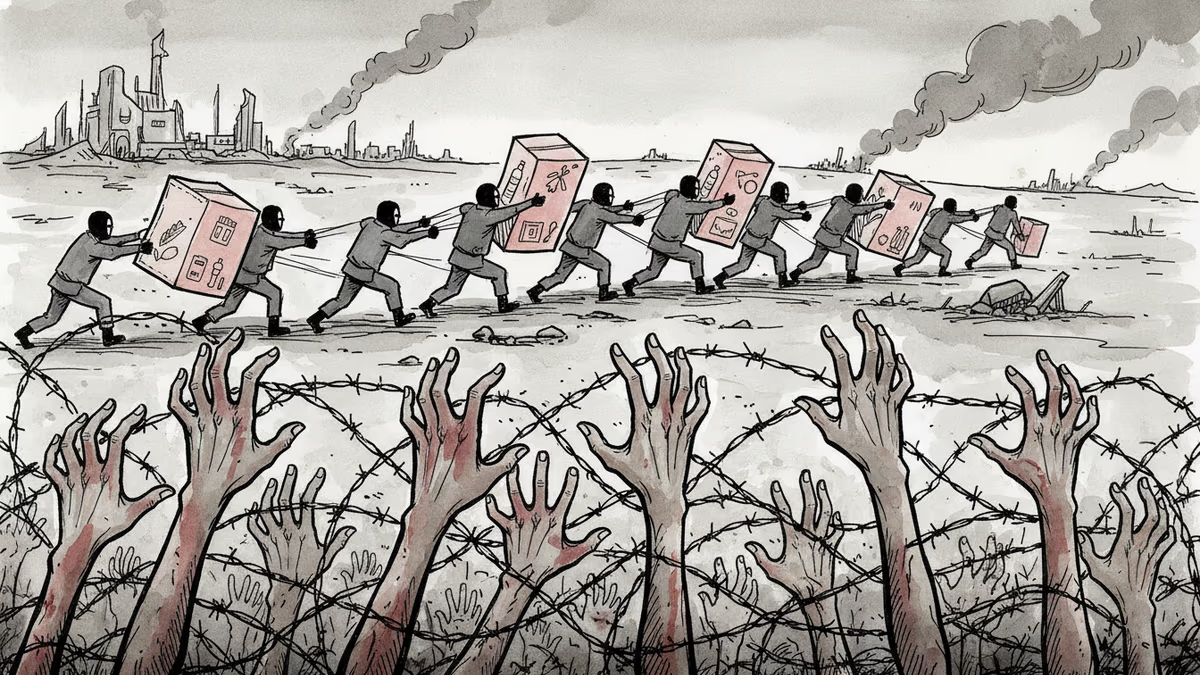
Israel's ban on 37 international aid organizations in Gaza strips away the last lifelines for 2.3 million residents, revealing how collective punishment evolves in modern warfare.
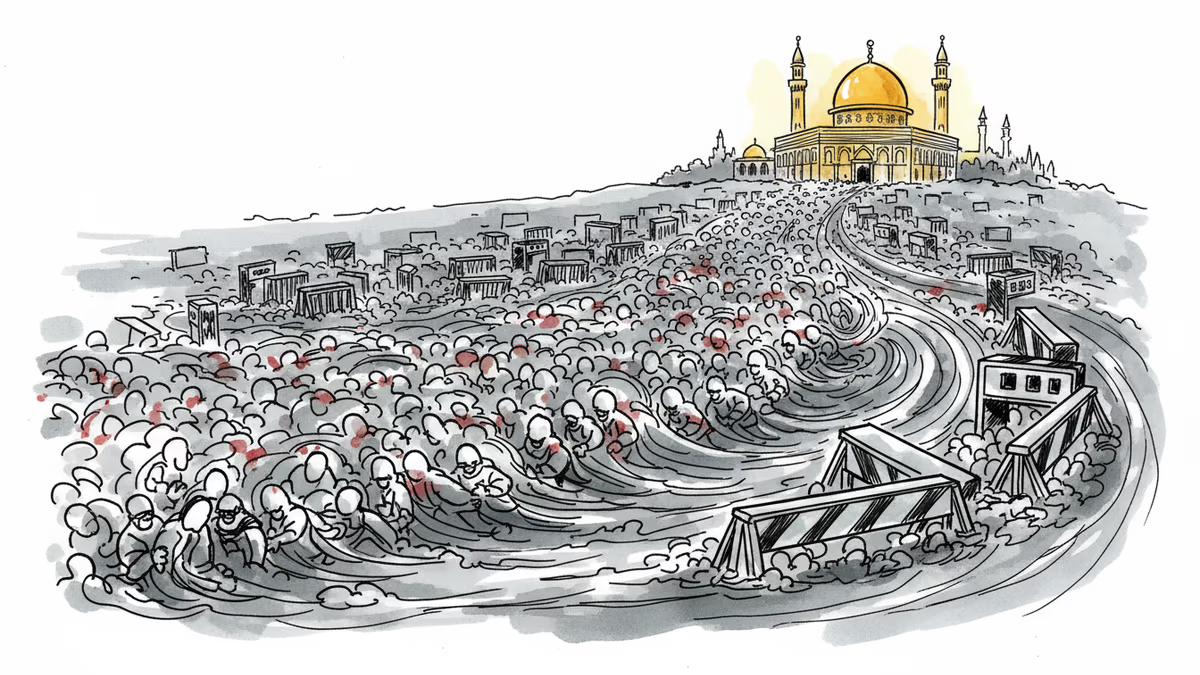
Despite Israeli restrictions limiting access to 10,000 Palestinians during Ramadan, 100,000 worshippers gathered at Al-Aqsa Mosque, highlighting the tension between religious freedom and security concerns.
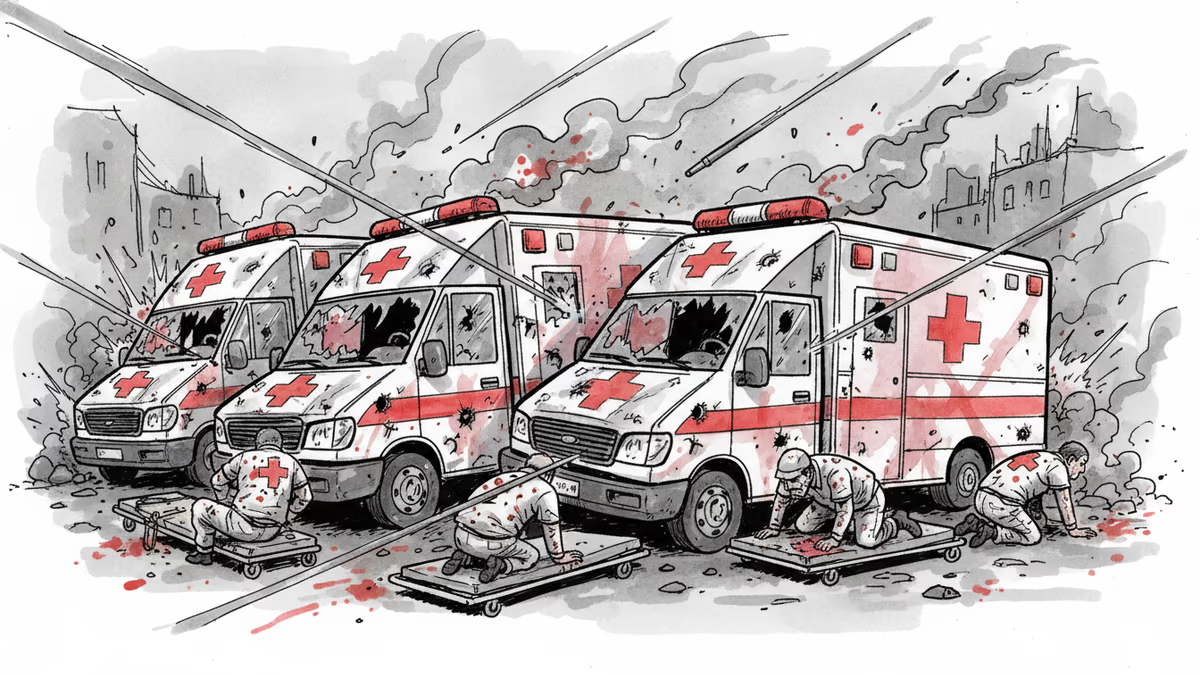
A new report reveals Israeli forces fired 900 bullets at a Gaza medical convoy. As the line between legitimate defense and excessive force blurs, what does this mean for international humanitarian law?
Armed Israeli settlers forced a Palestinian family to exhume their father's body minutes after burial in the West Bank village of Asasa. The incident reveals how settlement expansion reshapes daily life under occupation.
Israel's ban on 37 international aid organizations in Gaza strips away the last lifelines for 2.3 million residents, revealing how collective punishment evolves in modern warfare.
Despite Israeli restrictions limiting access to 10,000 Palestinians during Ramadan, 100,000 worshippers gathered at Al-Aqsa Mosque, highlighting the tension between religious freedom and security concerns.
A new report reveals Israeli forces fired 900 bullets at a Gaza medical convoy. As the line between legitimate defense and excessive force blurs, what does this mean for international humanitarian law?
Thoughts
Share your thoughts on this article
Sign in to join the conversation