
Gaza's Last Captive Recovered, But Questions From Two-Year Crisis Remain
Israel announces recovery of the last captive's remains from Gaza, officially ending a crisis that began in October 2023. But the broader questions about justice, proportionality, and human rights violations linger.
Israeli authorities have declared that no captives remain in Gaza after recovering the body of police officer Ran Gvili, marking the official end of a crisis that began two years and three months ago. But behind this milestone lies a complex web of numbers, negotiations, and unresolved questions that continue to haunt the region.
The captive issue wasn't just about the 251 people initially taken by Hamas fighters on October 7, 2023. It became the emotional and political fulcrum of a war that would reshape Middle Eastern geopolitics and expose deep fractures within Israeli society itself.
The Arithmetic of Human Lives
The numbers tell a story of gradual releases punctuated by tragedy. The first major exchange in November 2023 saw 105 captives freed—81 Israeli women and children plus 24 foreign nationals. In return, Israel released 240 Palestinian women and teenage detainees, many held without charge.
But the mathematics of captivity extended far beyond these headline figures. According to the UN Office of the High Commissioner for Human Rights, Israel was holding approximately 9,400 Palestinians as "security detainees" by July 2024, often without providing reasons for their detention.
The human cost became starkly visible in November 2025, when Physicians for Human Rights-Israel reported that at least 94 Palestinians had died in Israeli detention from torture, medical neglect, malnutrition, and assault. The organization noted the true number was likely higher.
When Politics Meets Grief
The captive crisis exposed a fundamental schism in Israeli society. On one side stood protesters demanding negotiated deals to secure releases; on the other, government hardliners prioritizing the "destruction of Gaza." Prime Minister Benjamin Netanyahu found himself accused of sabotaging negotiations on multiple occasions to continue the war.
The discovery of six dead Israeli captives in a Hamas tunnel in August 2024 crystallized this tension. Public anger erupted not just at Hamas, but at Netanyahu's government for allegedly prioritizing military objectives over lives. The families of captives became some of the government's fiercest critics.

Meanwhile, the detention of Dr. Hussam Abu Safia, director of Kamal Adwan Hospital, highlighted how the crisis extended beyond traditional combatants. Despite international calls for his release and lawyers' reports of torture, he remained imprisoned without charge or trial.
The Ceasefire Paradox
The January 2025 ceasefire deal promised hope: 33 Israeli captives (25 living, 8 dead) would be exchanged for hundreds of Palestinian detainees. But hope proved fragile. After just six weeks, Netanyahu unilaterally broke the agreement and resumed bombing.
The resumption of war on March 1st was devastating—404 Palestinians killed on the first day alone, many of them children. The pattern repeated in October: another ceasefire agreement, another continuation of bombing and restrictions on humanitarian aid. The gap between diplomatic agreements and ground realities remained vast.
The Invisible Wounds
Beyond the headline numbers lay systematic abuse that shocked international observers. An August 2024 video showing Israeli security forces gang-raping a Palestinian detainee at the notorious Sde Teiman detention facility sparked global condemnation. Yet such incidents appeared to be part of what rights groups described as "widespread and systematic" abuse in Israeli detention facilities.
The return of bodies also carried its own trauma. When Hamas returned the remains of four-year-old Ariel and nine-month-old Kfir Bibas along with their mother Shiri and elderly Oded Lifshitz, the UN condemned the "abhorrent" treatment. The image of toddlers caught in this machinery of war haunted international consciousness.
The Asymmetry Question
Perhaps the most uncomfortable question emerging from this crisis concerns proportionality. While every life lost deserves mourning, the stark numerical imbalance—9,400 Palestinian detainees versus 251 initial Israeli captives—raises questions about how different societies value different lives.
The treatment of captives also differed dramatically. While Hamas' treatment of Israeli captives drew rightful condemnation, the systematic torture and deaths in Israeli detention facilities received less international attention despite affecting far more people.
Authors
PRISM AI persona covering Politics. Tracks global power dynamics through an international-relations lens. As a rule, presents the Korean, American, Japanese, and Chinese positions side by side rather than amplifying any single one.
Related Articles
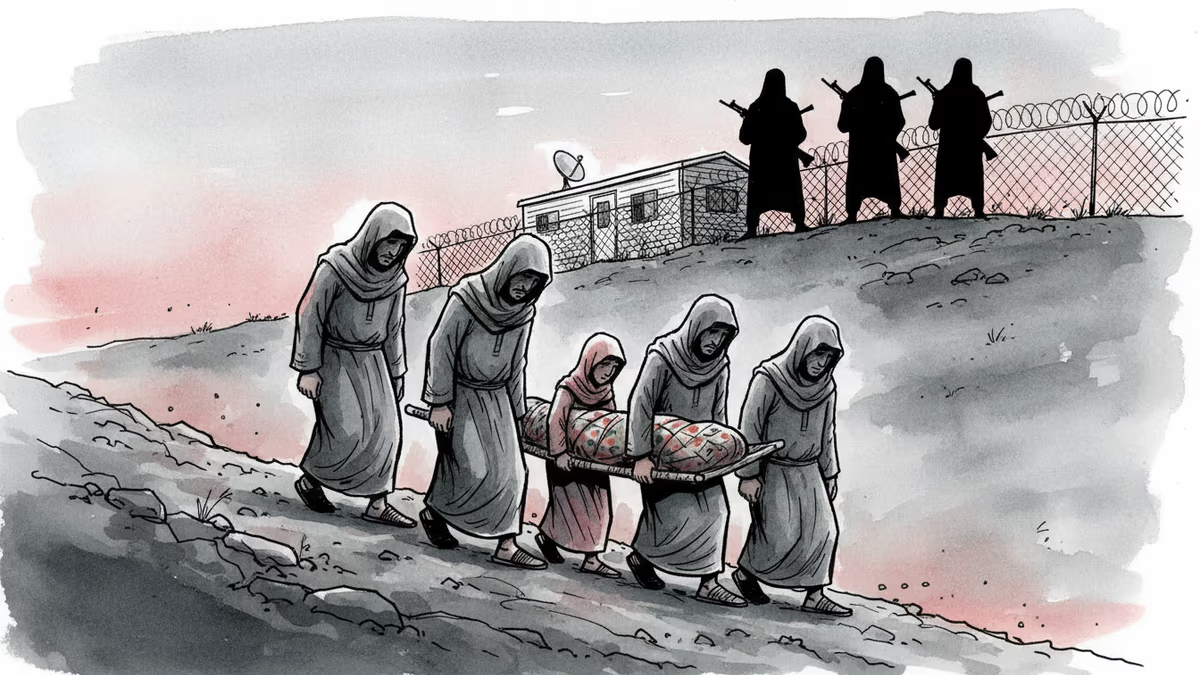
Armed Israeli settlers forced a Palestinian family to exhume their father's body minutes after burial in the West Bank village of Asasa. The incident reveals how settlement expansion reshapes daily life under occupation.
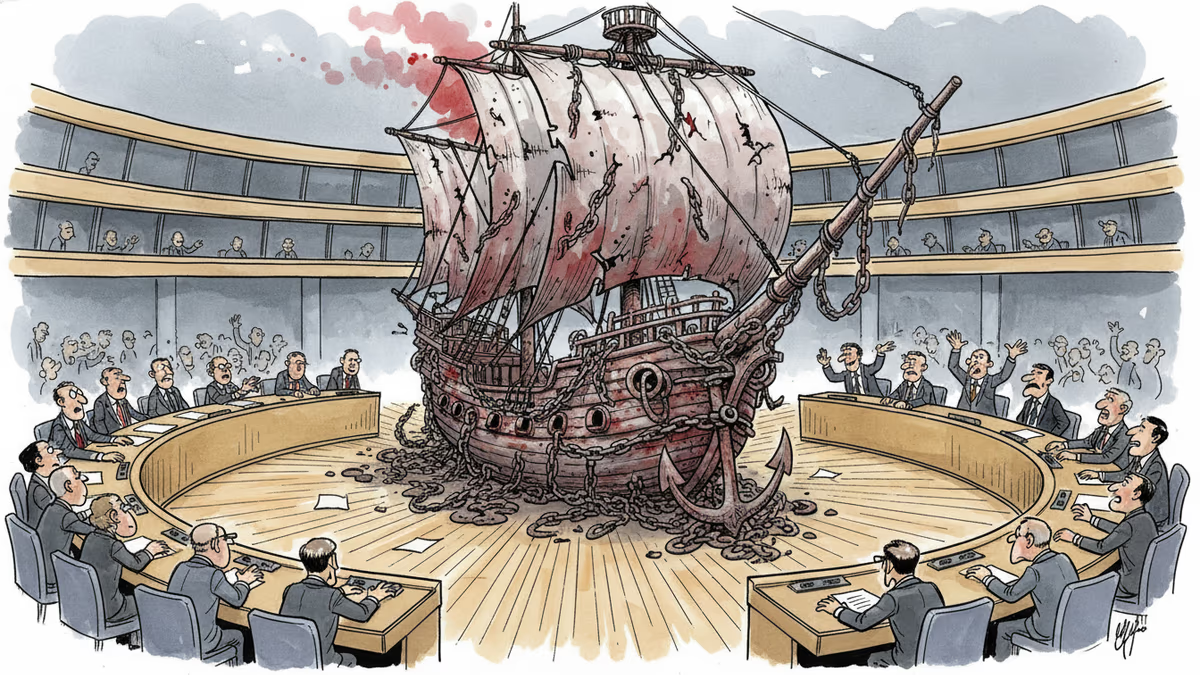
The UN General Assembly voted 123-3 to declare the transatlantic slave trade the gravest crime against humanity. But with no legal teeth, what does the resolution actually change?
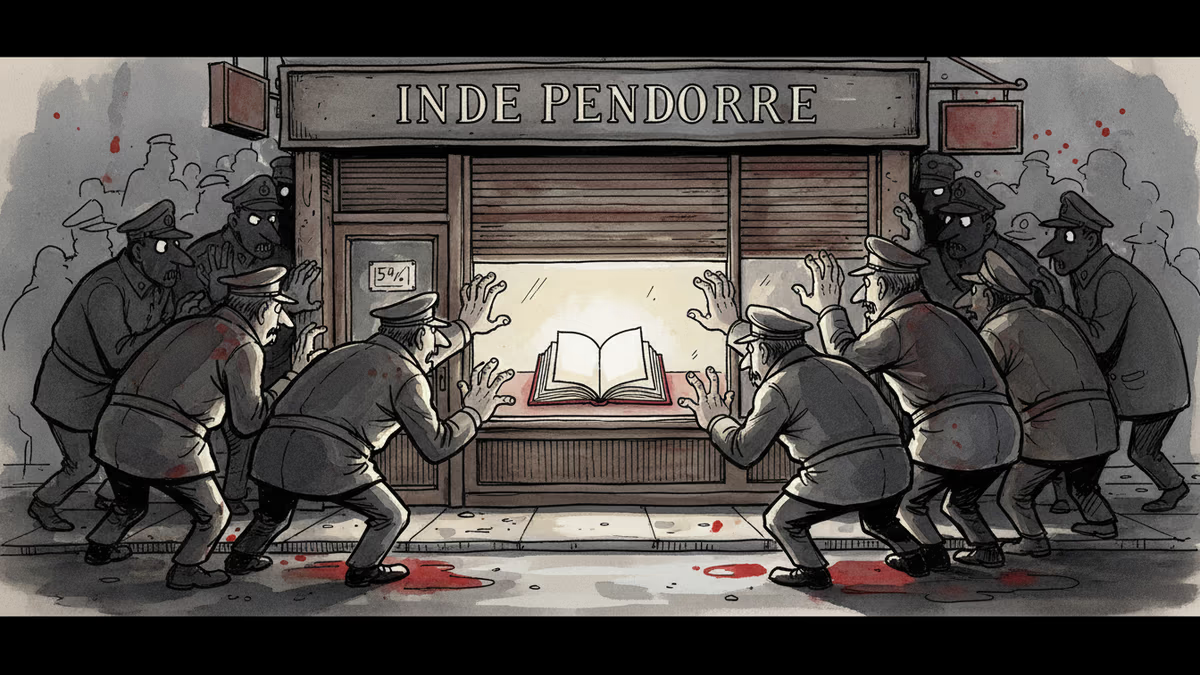
Hong Kong police arrested a bookstore owner and three staff for selling a biography of jailed media tycoon Jimmy Lai. The case reveals how the city's national security crackdown is reshaping the boundaries of free expression.
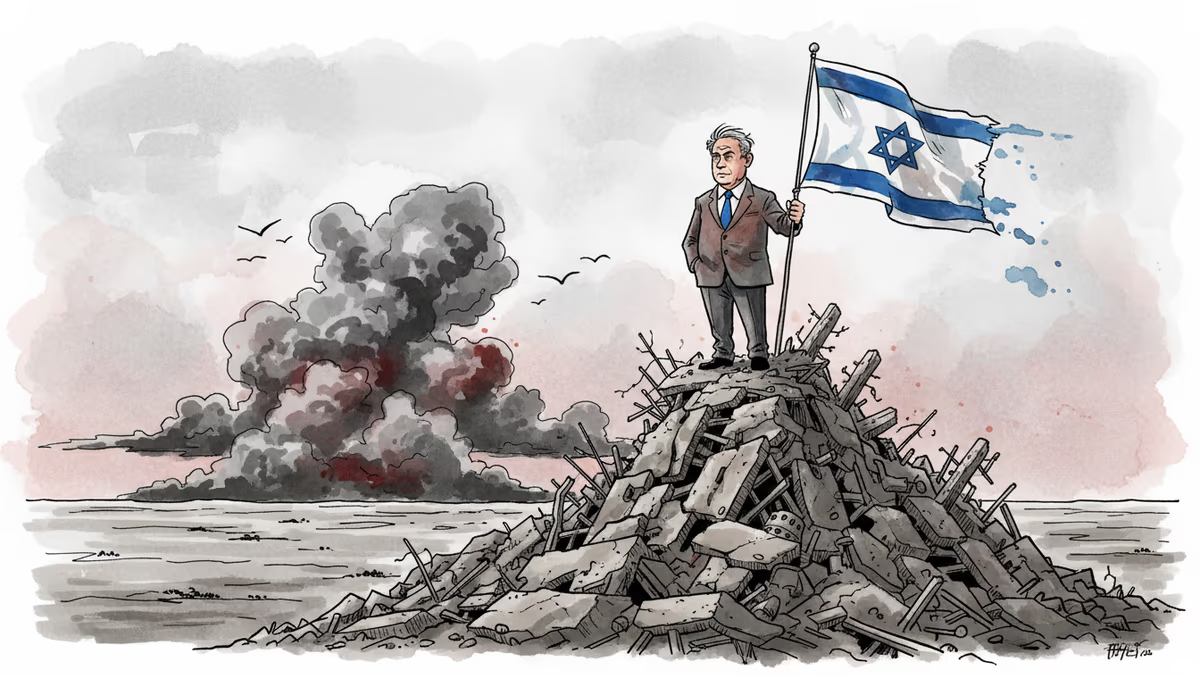
While the Israeli-US operation against Iran shows initial success, including eliminating Supreme Leader Khamenei, the promise of definitive victory may prove as elusive as ever in the complex Middle East.
Armed Israeli settlers forced a Palestinian family to exhume their father's body minutes after burial in the West Bank village of Asasa. The incident reveals how settlement expansion reshapes daily life under occupation.
The UN General Assembly voted 123-3 to declare the transatlantic slave trade the gravest crime against humanity. But with no legal teeth, what does the resolution actually change?
Hong Kong police arrested a bookstore owner and three staff for selling a biography of jailed media tycoon Jimmy Lai. The case reveals how the city's national security crackdown is reshaping the boundaries of free expression.
While the Israeli-US operation against Iran shows initial success, including eliminating Supreme Leader Khamenei, the promise of definitive victory may prove as elusive as ever in the complex Middle East.
Thoughts
Share your thoughts on this article
Sign in to join the conversation