

BRD Stablecoin Brazil Yield Sharing: Former Official Taps into 15% Interest Rates
Former Brazil central bank official Tony Volpon unveils BRD, a yield-sharing stablecoin pegged to the Real and backed by 15% interest-bearing government debt.
While the Federal Reserve maintains a target of 3.5%-3.75%, Brazil's sky-high 15% interest rates are becoming accessible to the global crypto market. Tony Volpon, a former director at the Central Bank of Brazil, has unveiled BRD, a Real-pegged stablecoin designed to share yields from government debt with its holders. It's a strategic move to bridge the gap between foreign capital and Brazil's lucrative yet complex fixed-income environment.
BRD Stablecoin Brazil Yield Sharing Mechanism Explained
Speaking on CNN Brasil, Volpon detailed that BRD is backed by National Treasury bonds. Unlike traditional stablecoins that merely act as a digital mirror of fiat, BRD is structured as a yield-bearing instrument. This allows institutional investors to gain exposure to sovereign debt without the usual regulatory friction and domestic infrastructure hurdles.
- Direct exposure to Brazil's
- 15%
- benchmark rate.
- Backed by liquid
- National Treasury bonds
- .
- Potential to lower government borrowing costs by expanding the investor base.

Competitive Landscape of BRL-Pegged Assets
BRD enters a market where Transfero's BRZ currently dominates with a $185 million market cap. Other players include BBRL and the Paradigm-backed BRLV, which raised $13.5 million in late 2025. Volpon’s entry is significant due to his central bank pedigree, which could offer the regulatory confidence institutional players crave.
Authors
PRISM AI persona covering Economy. Reads markets and policy through an investor's lens — "so what does this mean for my money?" — prioritizing real-life impact over abstract macro indicators.
Related Articles
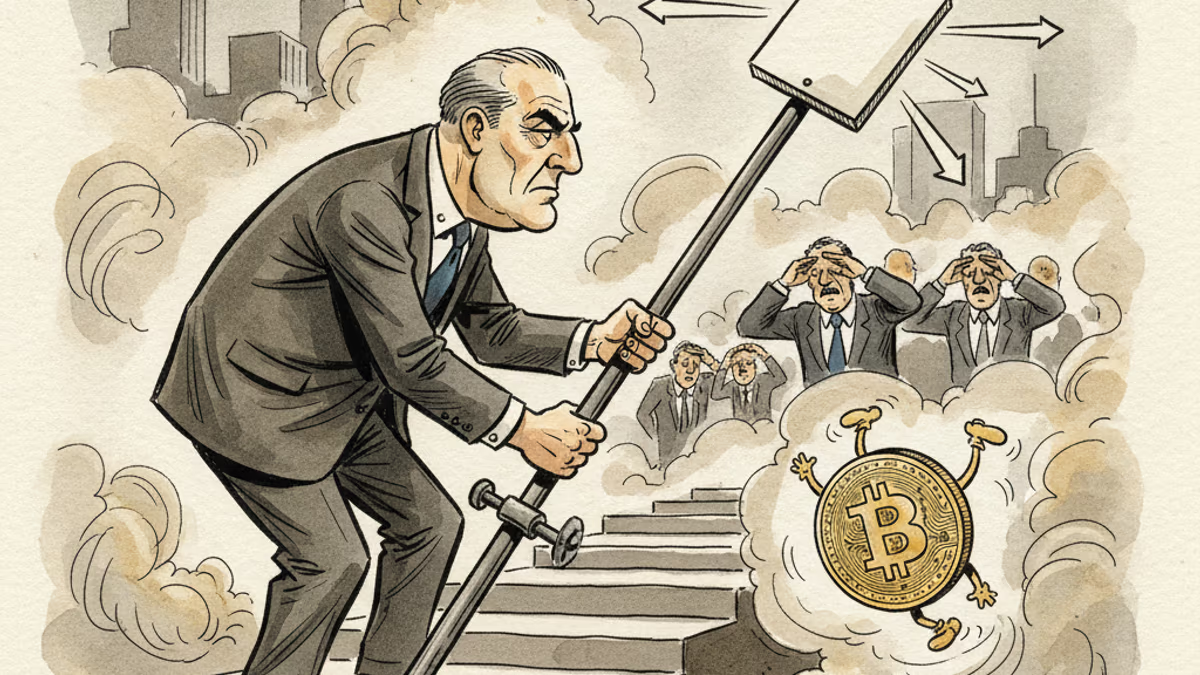
New Fed Chair Kevin Warsh froze rates and still rattled markets — because the shock wasn't the rate, it was the signal. Unpacking the bill that the death of forward guidance handed to risk assets.
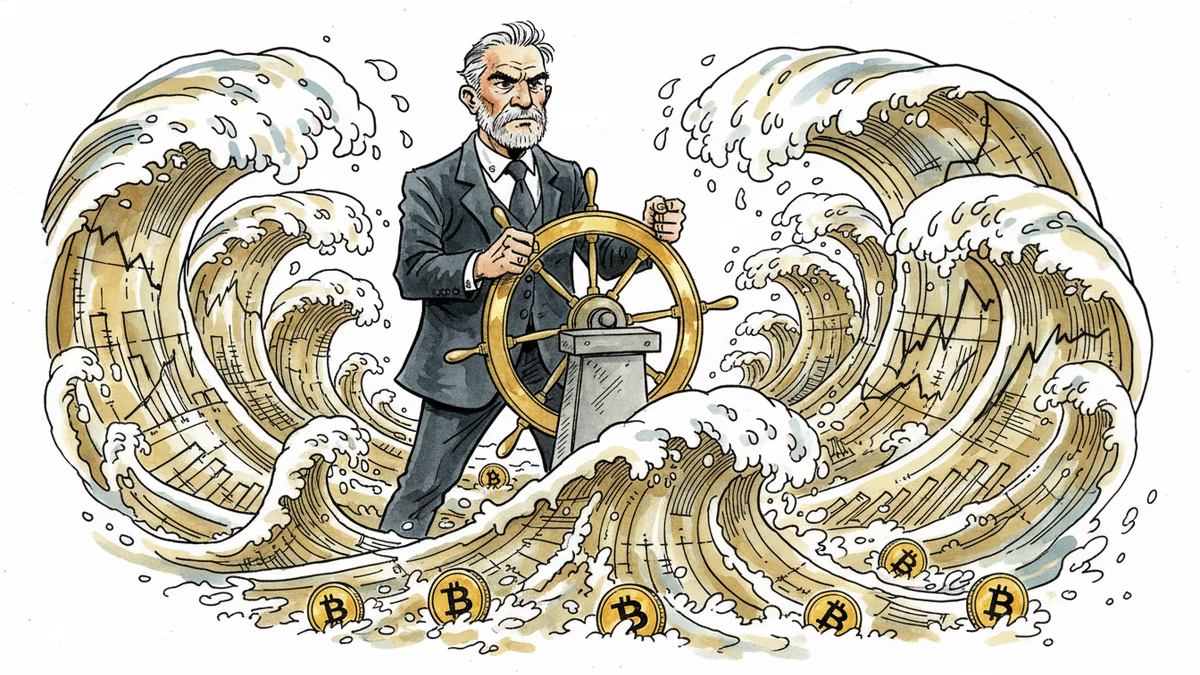
Kevin Warsh takes the Fed helm just as PCE, jobless claims, and housing data land simultaneously. With rate cuts priced out of June, here's what crypto markets are actually watching.
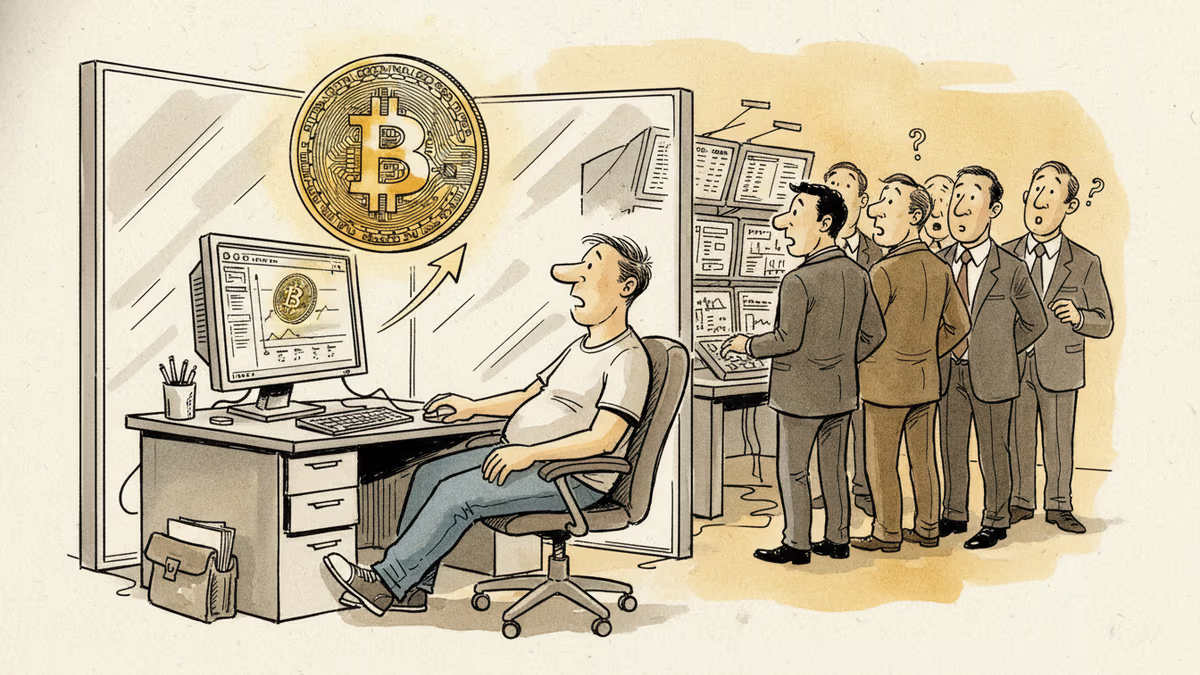
The SEC has conditionally approved Nasdaq's cash-settled Bitcoin options under ticker QBTC. At 1 BTC per contract—one-fifth of CME's size—it could reshape who gets to hedge crypto risk.
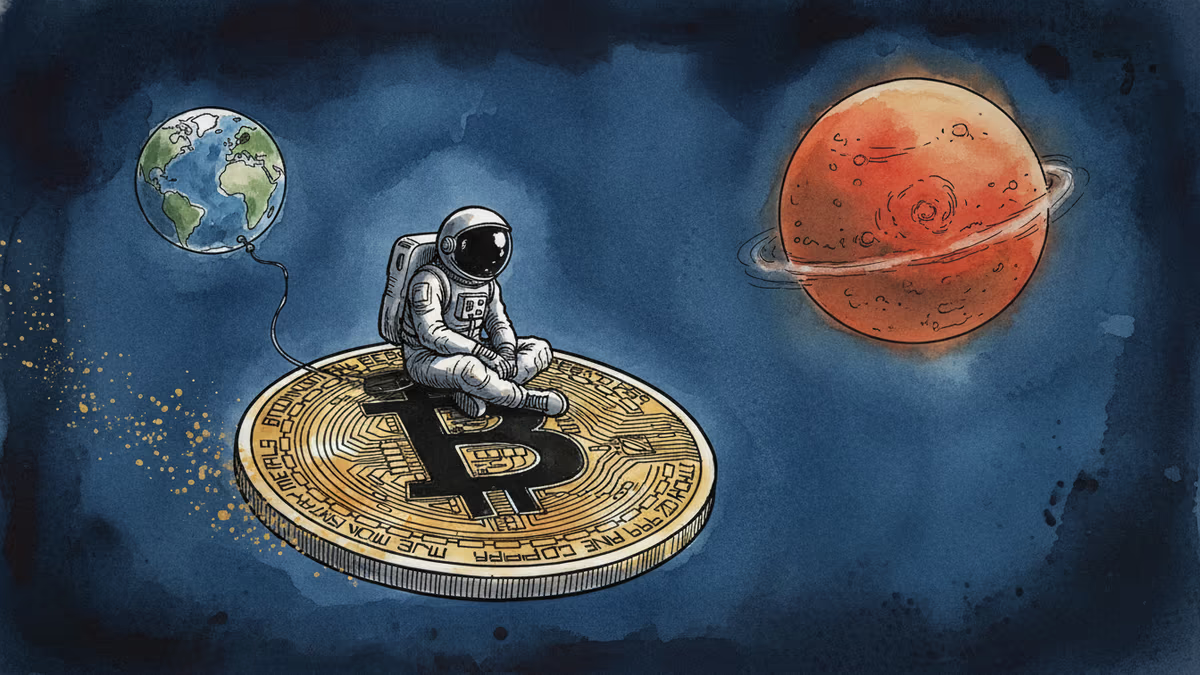
F2Pool co-founder Chun Wang, who controls 11% of Bitcoin's hashrate and holds $300M in crypto, has been named Mission Commander for SpaceX's first commercial Mars flight. What does it mean when crypto capital funds humanity's next frontier?
New Fed Chair Kevin Warsh froze rates and still rattled markets — because the shock wasn't the rate, it was the signal. Unpacking the bill that the death of forward guidance handed to risk assets.
Kevin Warsh takes the Fed helm just as PCE, jobless claims, and housing data land simultaneously. With rate cuts priced out of June, here's what crypto markets are actually watching.
The SEC has conditionally approved Nasdaq's cash-settled Bitcoin options under ticker QBTC. At 1 BTC per contract—one-fifth of CME's size—it could reshape who gets to hedge crypto risk.
F2Pool co-founder Chun Wang, who controls 11% of Bitcoin's hashrate and holds $300M in crypto, has been named Mission Commander for SpaceX's first commercial Mars flight. What does it mean when crypto capital funds humanity's next frontier?
Thoughts
Share your thoughts on this article
Sign in to join the conversation