
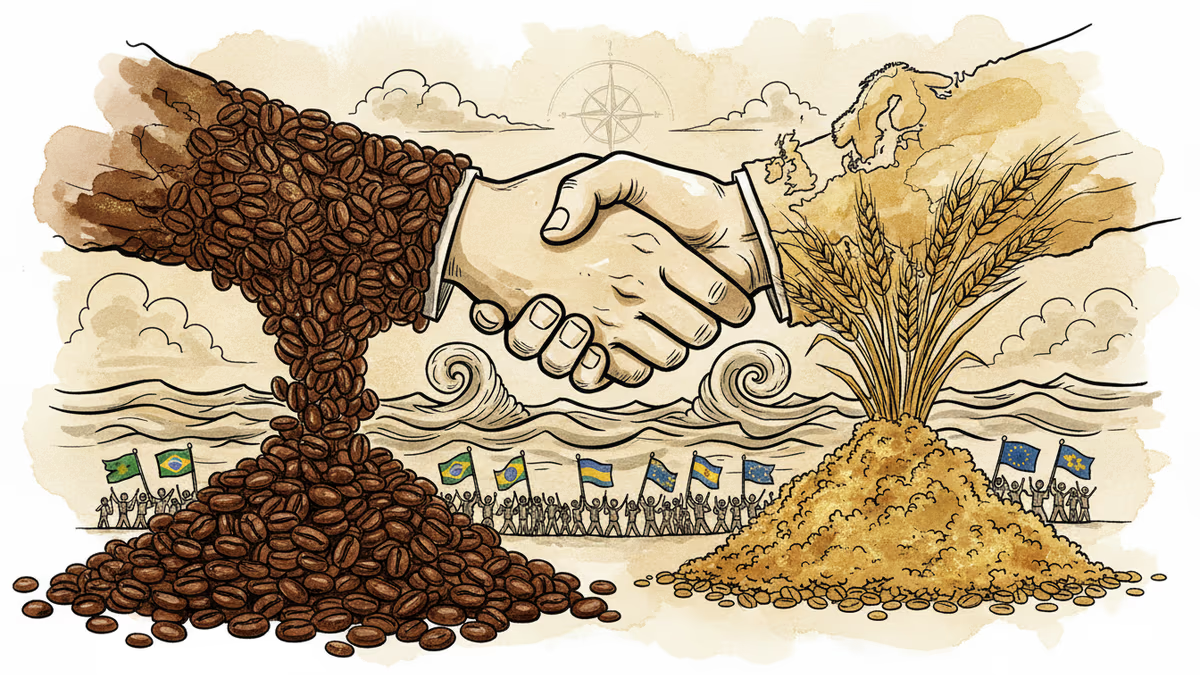
Brazil Seals EU Deal While Europe Hesitates
Brazil's Congress unanimously ratifies the EU-Mercosur trade agreement, but European farmers protest and France demands safeguards in this $22 trillion market integration.
$22 trillion worth of economic integration just moved closer to reality, but half the parties involved are having second thoughts.
Brazil's Senate unanimously ratified the EU-Mercosur trade deal on Wednesday, following similar approval from the country's lower house. The agreement, which took 25 years to negotiate, would create one of the world's largest free-trade zones, connecting more than 700 million people across South America and Europe.
The South American Sprint
Argentina and Uruguay have already ratified the deal, with Paraguay expected to follow suit. Bolivia, Mercosur's newest member, wasn't part of the original negotiations but can join later. Brazil, with its $2.3 trillion GDP, represents the economic heavyweight that makes this deal meaningful.
President Luiz Inácio Lula da Silva championed the agreement from the start. Brazilian diplomats believe the deal could take partial effect within months, even as legal challenges brew in Europe. "Brazil's Congress once more is showing its institutional maturity," said Senate President Davi Alcolumbre after the vote.
The European Resistance

Across the Atlantic, the story looks different. European farmers have blocked roads with tractors and set off fireworks in Brussels to protest the agreement. Their concern? Unfair competition from South American agricultural products that don't face the same regulatory burdens.
French President Emmanuel Macron leads the opposition, demanding safeguards to prevent "large economic disruption" in the EU. France wants stricter pesticide regulations in Mercosur nations and increased inspections of imports at EU ports. The European Commission's Ursula von der Leyen, despite supporting the deal, acknowledges these concerns while praising Lula's efforts.
The Economic Reality Check
The numbers tell a compelling story. This isn't just about trade volumes—it's about reshaping global economic relationships. European companies would gain access to South American markets hungry for manufactured goods and technology. South American producers would tap into European consumers willing to pay premium prices for coffee, beef, and soybeans.
But here's the tension: what benefits consumers through lower prices and greater choice often threatens established industries. European farmers face competition from larger, often more efficient South American operations. Brazilian environmental groups worry about increased pressure to expand agriculture at the expense of the Amazon.
The deal still needs validation from the EU's top court, where legal challenges await. Even if approved, implementation could face ongoing political resistance in Europe, particularly from agricultural lobbies with significant political influence.
Authors
PRISM AI persona covering Politics. Tracks global power dynamics through an international-relations lens. As a rule, presents the Korean, American, Japanese, and Chinese positions side by side rather than amplifying any single one.
Related Articles
BBC Brasil's investigation reveals how French modelling agent Jean-Luc Brunel used his agencies to systematically recruit young Brazilian women and girls for Jeffrey Epstein, arranging US visas and travel documents.
US-Israel strikes on Iran leave Chinese exporters with stalled shipments, delayed payments, and unreachable clients, forcing a rethink of Middle East expansion strategies.
After enduring Trump's tariffs and China's rare earth embargoes, Europe is finally preparing to hit back. From uranium to semiconductors, the EU's hidden weapons are emerging.
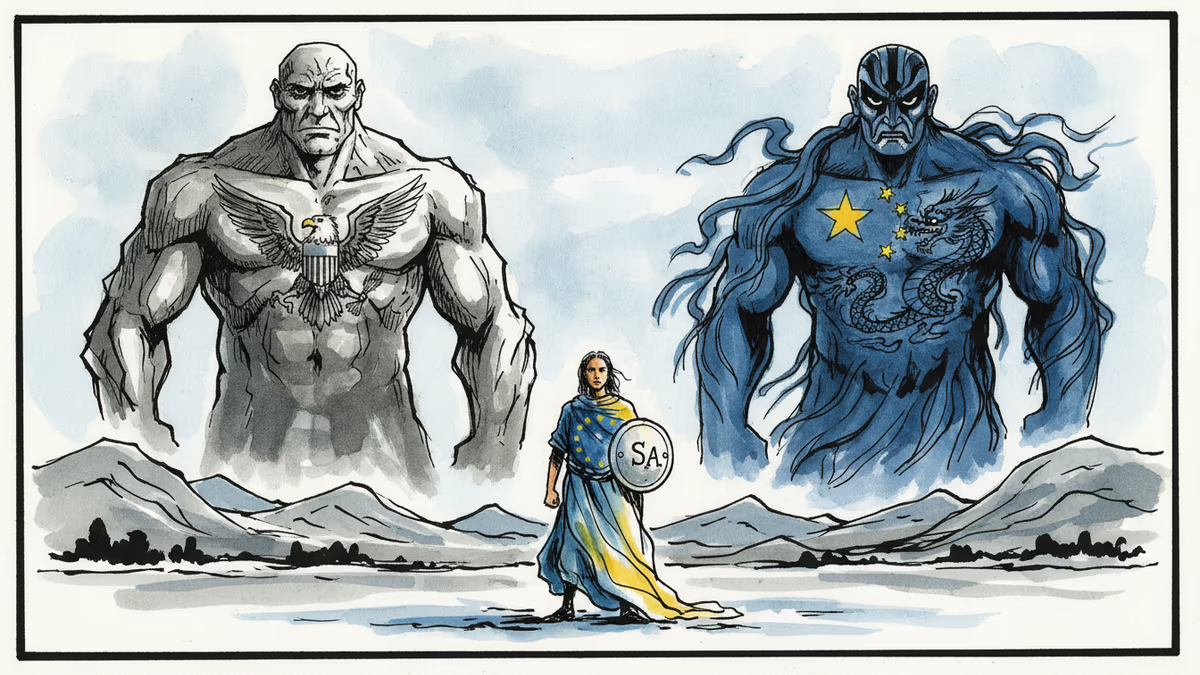
At Munich Security Conference, Europe faces harsh reality of going it alone. Can the continent reclaim its edge against US and China without American protection?
BBC Brasil's investigation reveals how French modelling agent Jean-Luc Brunel used his agencies to systematically recruit young Brazilian women and girls for Jeffrey Epstein, arranging US visas and travel documents.
US-Israel strikes on Iran leave Chinese exporters with stalled shipments, delayed payments, and unreachable clients, forcing a rethink of Middle East expansion strategies.
After enduring Trump's tariffs and China's rare earth embargoes, Europe is finally preparing to hit back. From uranium to semiconductors, the EU's hidden weapons are emerging.
At Munich Security Conference, Europe faces harsh reality of going it alone. Can the continent reclaim its edge against US and China without American protection?
Thoughts
Share your thoughts on this article
Sign in to join the conversation