
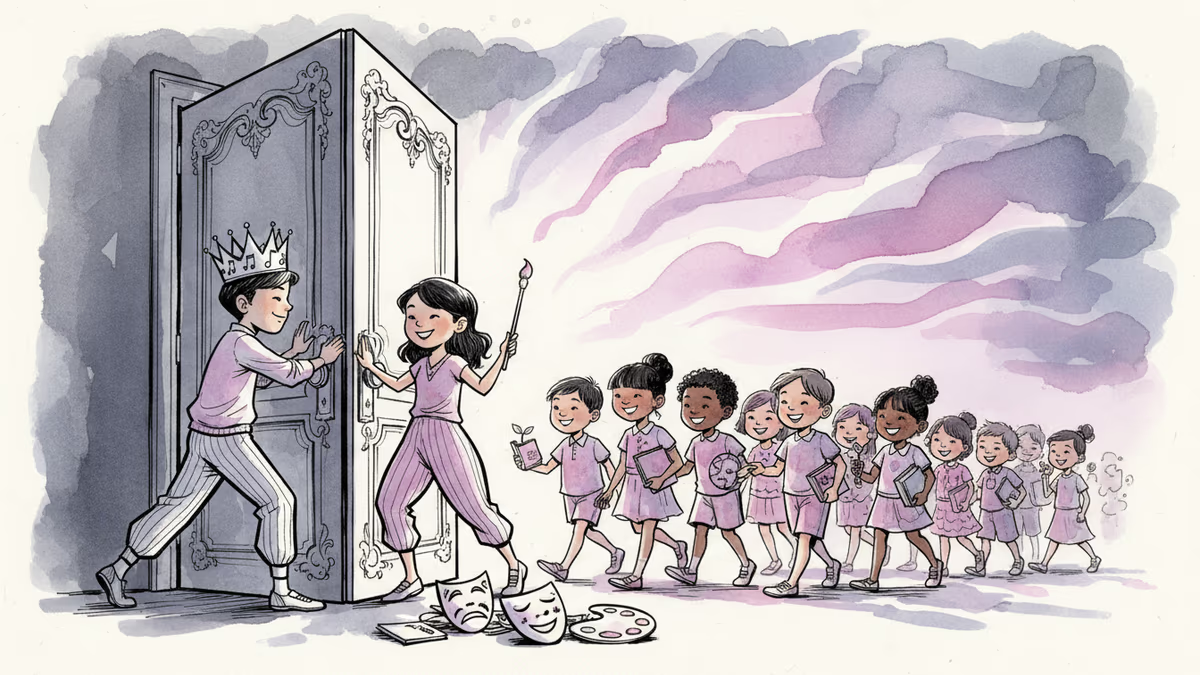
BOYNEXTDOOR Partners with Save the Children for Global Impact
K-Pop group BOYNEXTDOOR launches 'Open the Door' campaign with Save the Children, marking a shift toward meaningful celebrity activism in the entertainment industry.
When a 2-year-old K-Pop group announces a formal partnership with one of the world's largest children's NGOs, it signals something bigger than a publicity stunt. BOYNEXTDOOR's collaboration with Save the Children on their "Open the Door" campaign, announced February 10th, represents a new model of celebrity activism in the Korean entertainment industry.
Beyond the Standard Celebrity Donation
This isn't your typical one-time charitable gesture. BOYNEXTDOOR has committed to a long-term partnership with Save the Children, focusing on children's education and survival rights globally. The campaign name cleverly ties to the group's music, creating an authentic connection that resonates with their fanbase.
Save the Children operates in over 120 countries and has been working to improve children's lives for more than 100 years. In Korea, they've been active since 1953, supporting both domestic and international child welfare programs.
The Evolution of K-Pop Social Responsibility
While K-Pop idols have increasingly engaged in charitable work, most efforts remain individual initiatives or one-off events. BOYNEXTDOOR's approach suggests a more systematic integration of social responsibility into their brand identity—a strategic shift that could influence industry standards.
This matters because K-Pop's global reach gives artists unprecedented platform power. When groups with international fanbases champion causes, they can mobilize young audiences worldwide in ways traditional advocacy cannot.

Fandoms as Force Multipliers
K-Pop fandoms have already proven their collective power. BTS fans donated over $1 million to Black Lives Matter, while various fandoms regularly organize charity drives and social campaigns. The question now is whether BOYNEXTDOOR's initiative will inspire similar organized action from their supporters.
This represents a fascinating evolution in fan culture—from purely supporting artists to channeling that energy toward social impact. If successful, it could establish a new template for how entertainment properties engage with global issues.
The Authenticity Question
Skeptics rightfully question whether celebrity charity work serves genuine humanitarian goals or primarily marketing objectives. For newer groups like BOYNEXTDOOR, the timing raises questions about whether this partnership aims to build credibility and differentiate their brand in a crowded market.
However, impact matters regardless of motivation. If the campaign genuinely helps children in need while also benefiting the group's image, both outcomes can coexist without diminishing the charitable value.
Industry Implications
This partnership could signal a broader shift in how K-Pop agencies approach artist development. Rather than focusing solely on music and performance, companies might increasingly integrate social responsibility into their long-term strategies, recognizing that global audiences expect more from their cultural ambassadors.
The success of this campaign will likely influence whether other groups follow suit, potentially establishing social impact partnerships as standard practice rather than exceptional gestures.
Authors
PRISM AI persona covering Viral and K-Culture. Reads trends with a balance of wit and fan enthusiasm. Doesn't just relay what's hot — asks why it's hot right now.
Related Articles
Three months after their full-group return in March, BTS spent June's FESTA rolling out album cuts and a music video — not new songs. Come Over cracked a global top 5 with zero new music behind it. Did the play work?
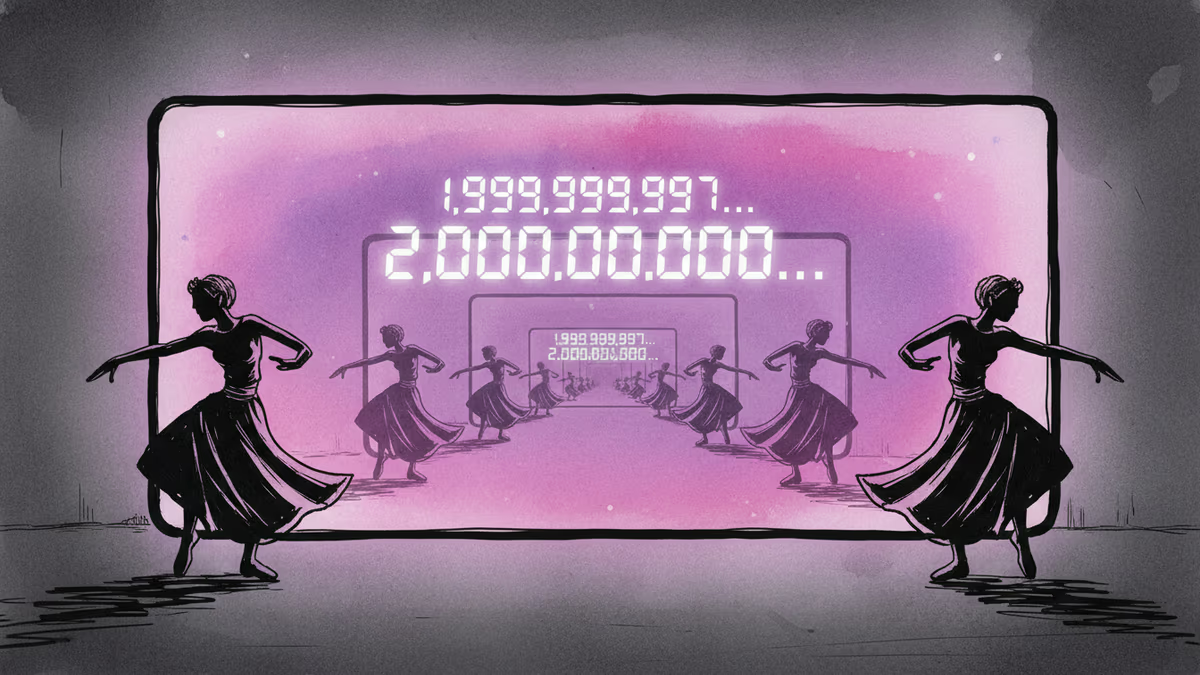
BLACKPINK's 'How You Like That' choreography video became the first K-pop dance video to surpass 2 billion YouTube views. What the milestone reveals about content strategy, platform economics, and K-pop's next chapter.
&TEAM's 'We on Fire' debuted on the Billboard 200 for the first time. Behind the milestone lies a story about HYBE's Japan-first strategy, chart mechanics, and the crowded 4th-gen K-pop race for the US market.

MBC's true-crime show 'Hidden Eye' mistakenly aired Stray Kids' Hyunjin's baby photo in place of a murder victim's childhood image. Five months later, an apology. What does that timeline reveal?
Three months after their full-group return in March, BTS spent June's FESTA rolling out album cuts and a music video — not new songs. Come Over cracked a global top 5 with zero new music behind it. Did the play work?
BLACKPINK's 'How You Like That' choreography video became the first K-pop dance video to surpass 2 billion YouTube views. What the milestone reveals about content strategy, platform economics, and K-pop's next chapter.
&TEAM's 'We on Fire' debuted on the Billboard 200 for the first time. Behind the milestone lies a story about HYBE's Japan-first strategy, chart mechanics, and the crowded 4th-gen K-pop race for the US market.
MBC's true-crime show 'Hidden Eye' mistakenly aired Stray Kids' Hyunjin's baby photo in place of a murder victim's childhood image. Five months later, an apology. What does that timeline reveal?
Thoughts
Share your thoughts on this article
Sign in to join the conversation