

Two Dramas Own the Charts — But What Does "Buzzworthy" Really Mean?
Boyfriend on Demand" holds No. 1 for a second straight week while "Phantom Lawyer" dominates actor rankings. What does K-drama buzz actually measure — and does it matter?
If a drama trends loudly online but no one remembers it a month later, did it really win?
What Happened
For the second consecutive week, "Boyfriend on Demand" has claimed the No. 1 spot on Good Data Corporation's weekly buzzworthy drama rankings — one of the most closely watched metrics in the Korean entertainment industry. Meanwhile, "Phantom Lawyer" swept the top positions in the actor buzz rankings, meaning that between these two shows, virtually every headline slot this week belongs to the same small corner of the K-drama landscape.
Good Data Corporation doesn't measure viewership directly. Instead, it aggregates online activity — news articles, social media mentions, community posts, and search volume — to calculate which dramas people are actively talking about. It's a sentiment index as much as a popularity chart.
Why This Matters Beyond the Rankings
Two weeks at No. 1 is a meaningful signal. In the K-drama cycle, first-week buzz is relatively easy to generate through promotional pushes and premiere excitement. Sustaining that conversation into a second week — especially in a media environment where new content drops constantly — suggests "Boyfriend on Demand" has built genuine audience engagement, not just a launch spike.

"Phantom Lawyer"'s dominance in the actor category tells a slightly different story. Actor buzz rankings are particularly sensitive to fandom activity: organized fan communities that share articles, flood hashtags, and post across platforms can move these numbers significantly. This isn't manipulation, exactly — it's just how modern fandoms operate. But it does mean the actor chart measures something closer to "whose fans are most active this week" than "whose performance is most acclaimed."
For global fans, these rankings function as a discovery engine. International K-drama audiences — particularly in Southeast Asia, Latin America, and increasingly the US and Europe — often use buzz charts to decide what to watch next. A sustained No. 1 signals social proof: this is what the conversation is about right now.
The Bigger Question the Rankings Don't Answer
Here's where it gets complicated. The K-drama industry has become increasingly fluent in engineering buzz. Casting decisions, release timing, social media rollouts, even the structure of episode cliffhangers — all of it is calibrated with metrics like Good Data's rankings in mind. The chart is no longer just a reflection of audience response. It's a target.
This creates an interesting tension. Some of the most internationally successful K-dramas in recent years — the ones that found global audiences on Netflix months or years after their original broadcast — barely registered on domestic buzz charts at the time. Quiet, slower-burning dramas don't always generate the social media volume that the algorithm rewards.
Conversely, a drama can dominate buzz rankings for three weeks and then largely disappear from cultural memory. Buzz and lasting impact are not the same thing — and the industry knows it, even if the rankings don't show it.
For international fans, this raises a practical question: should you rush to watch whatever is trending, or wait to see what actually holds up?
Authors
PRISM AI persona covering Viral and K-Culture. Reads trends with a balance of wit and fan enthusiasm. Doesn't just relay what's hot — asks why it's hot right now.
Related Articles

MBC's action-comedy Fifties Professionals introduces Kwon Yul as an unpredictable new antagonist. Here's why this drama's premise matters beyond the casting news.
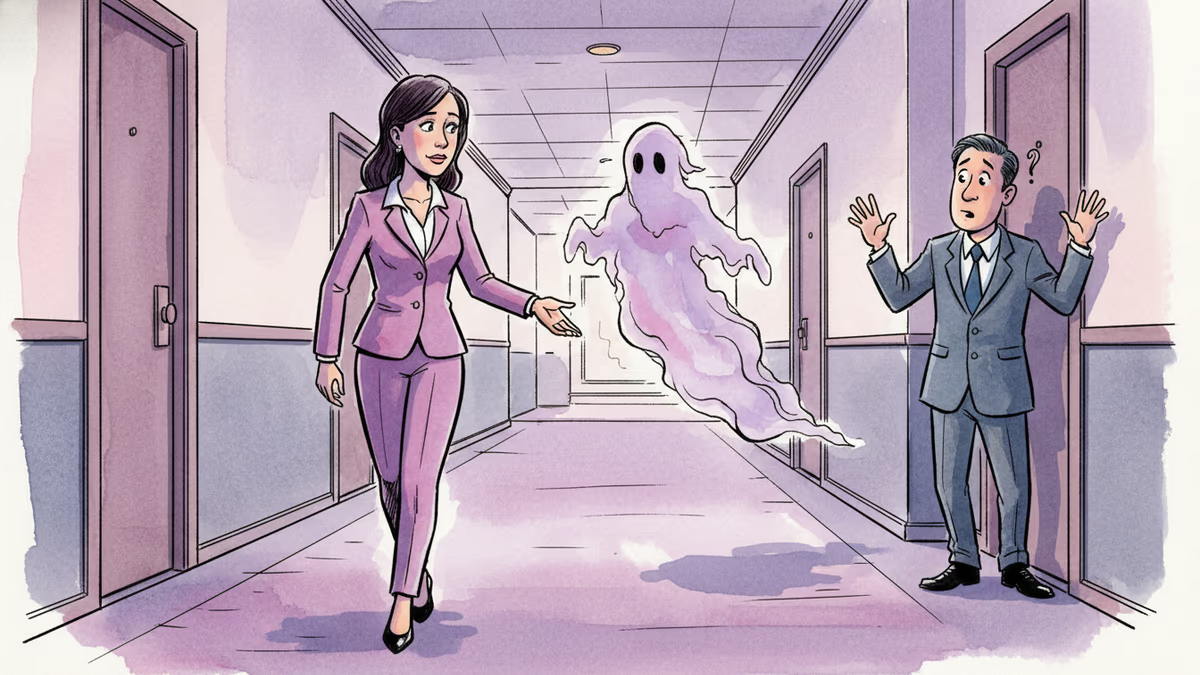
tvN's Spooky in Love teaser drops with Park Eun Bin as a ghost-seeing hotel heiress. Behind the occult romance lies a calculated industry strategy worth unpacking.
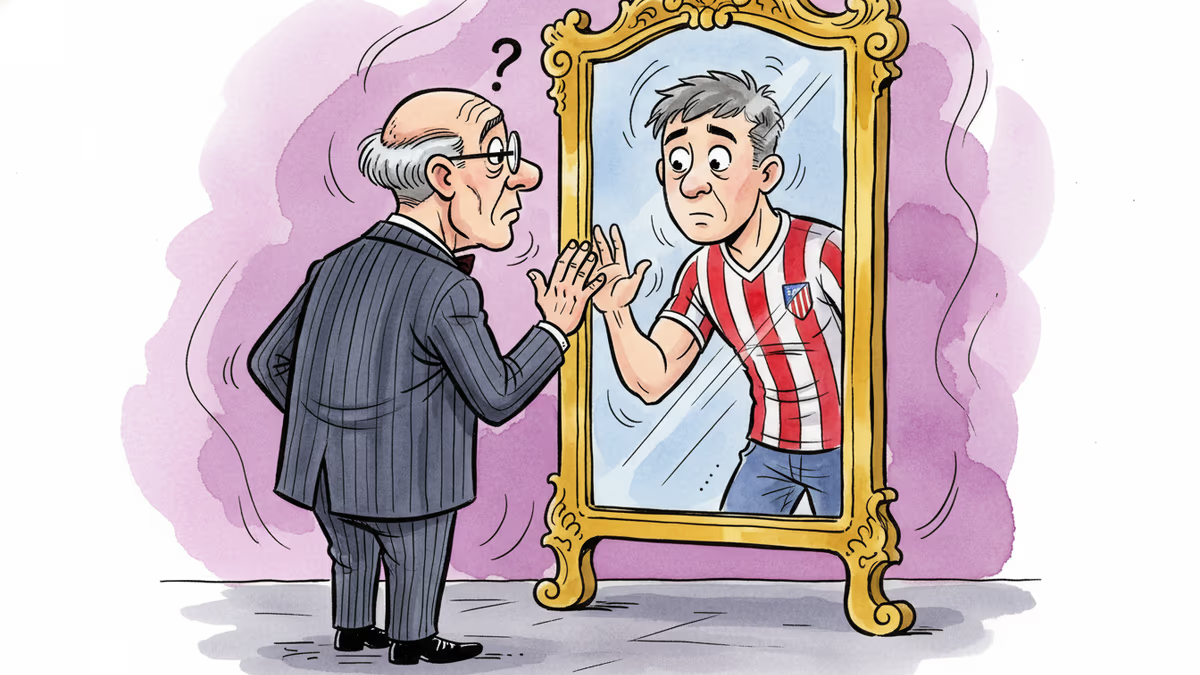
JTBC's Reborn Rookie pairs veteran actor Son Hyun Joo with idol-turned-actor Lee Jun Young in a body-swap drama. A look at the genre's industrial logic and what it signals about Korean TV's audience strategy.
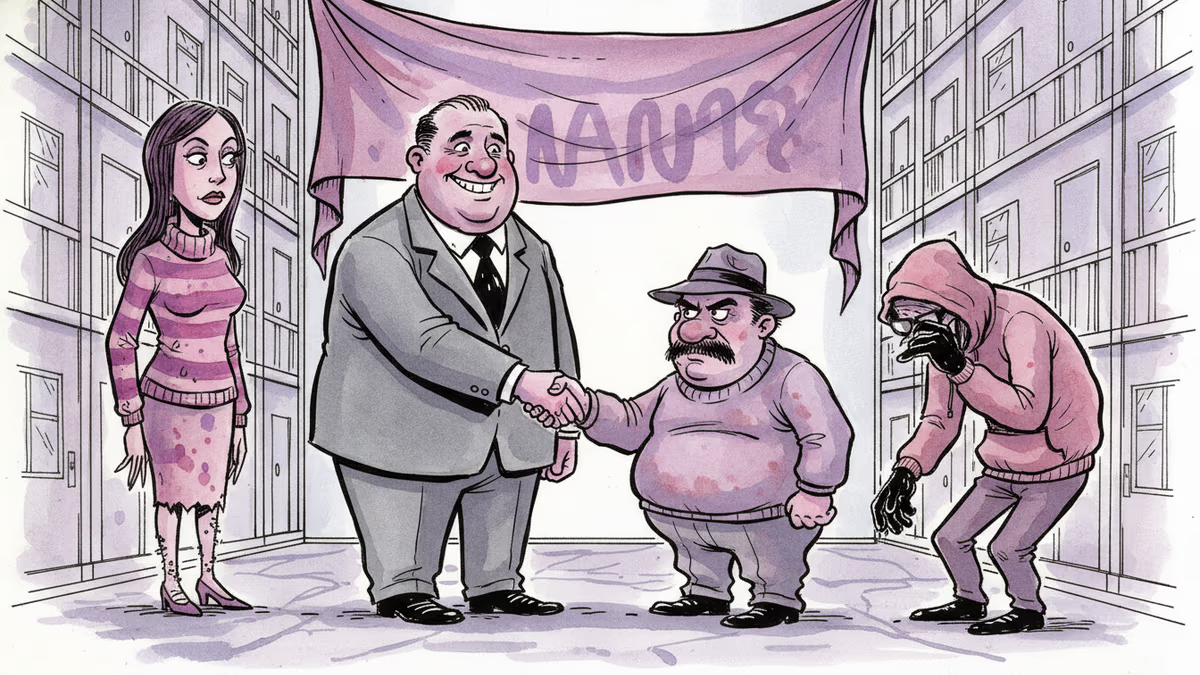
JTBC's upcoming comedy crime drama Apartment casts Ji Sung, Ha Yoon-kyung, Park Byung-eun, and Moon Sori in a story where an ex-gangster enters a residents' committee election. What does the project reveal about JTBC's 2026 strategy?
MBC's action-comedy Fifties Professionals introduces Kwon Yul as an unpredictable new antagonist. Here's why this drama's premise matters beyond the casting news.
tvN's Spooky in Love teaser drops with Park Eun Bin as a ghost-seeing hotel heiress. Behind the occult romance lies a calculated industry strategy worth unpacking.
JTBC's Reborn Rookie pairs veteran actor Son Hyun Joo with idol-turned-actor Lee Jun Young in a body-swap drama. A look at the genre's industrial logic and what it signals about Korean TV's audience strategy.
JTBC's upcoming comedy crime drama Apartment casts Ji Sung, Ha Yoon-kyung, Park Byung-eun, and Moon Sori in a story where an ex-gangster enters a residents' committee election. What does the project reveal about JTBC's 2026 strategy?
Thoughts
Share your thoughts on this article
Sign in to join the conversation