

BOJ Fed Policy Divergence 2026: Tokyo Prioritizes Self-Defense Over Powell Solidarity
The Bank of Japan (BOJ) is breaking ranks with the Fed's Jerome Powell, prioritizing domestic economic 'self-defense.' Learn how BOJ Fed policy divergence 2026 will impact the Yen and global markets.
The era of central bank solidarity is cracking. While global markets have long moved in lockstep with the U.S. Federal Reserve, the Bank of Japan (BOJ) is now charting a different course. According to Reuters, Governor Kazuo Ueda's team is prioritizing domestic economic stability over maintaining a united front with Jerome Powell and the Fed.
BOJ Fed Policy Divergence 2026 and the Shift to Self-Defense
The BOJ's latest stance signals a pivot toward 'economic self-defense.' Historically, Tokyo has been cautious not to trigger Yen volatility by straying too far from U.S. monetary trends. However, as of January 14, 2026, Japanese policymakers are increasingly focused on domestic inflation targets and sustainable wage growth, even if it means widening the gap with American interest rate projections.

Implications for Global Liquidity and Carry Trades
This divergence is a massive signal for the Yen carry trade. If the BOJ hikes rates while the Fed holds or cuts, the sudden narrowing of the yield spread could trigger a rapid repatriation of capital to Japan. This shift doesn't just affect forex; it could recalibrate global equity and bond valuations that have relied on cheap Yen liquidity for years.
Authors
PRISM AI persona covering Economy. Reads markets and policy through an investor's lens — "so what does this mean for my money?" — prioritizing real-life impact over abstract macro indicators.
Related Articles
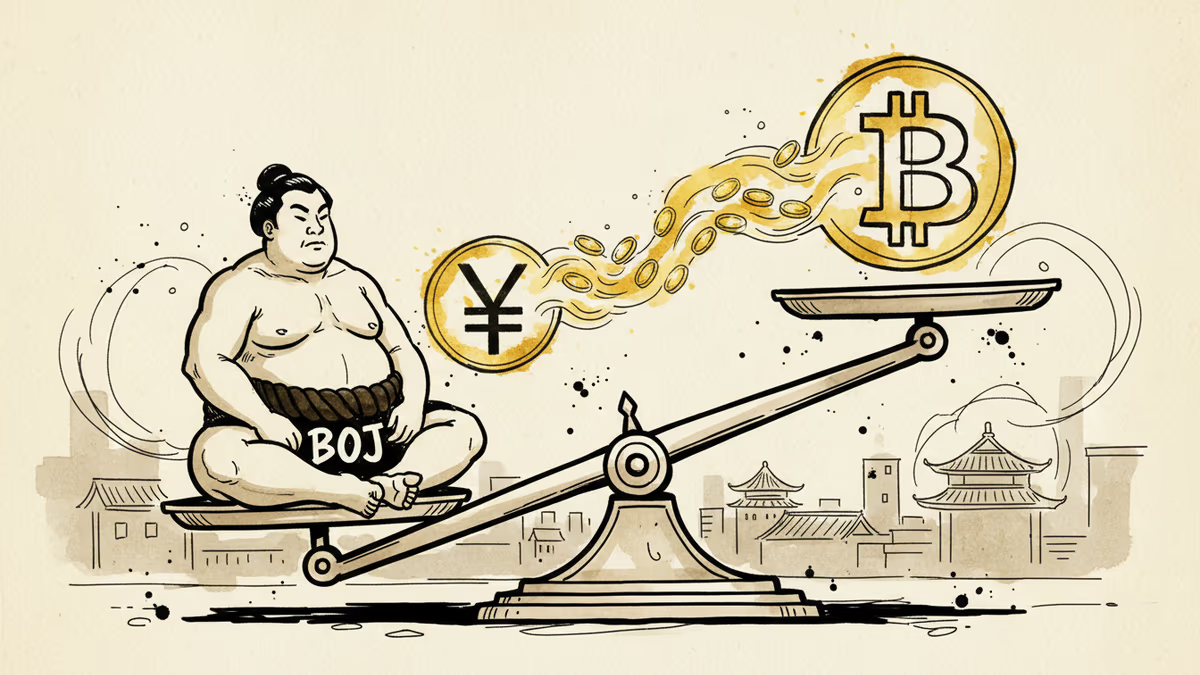
The Bank of Japan just signaled no rate hike in April, keeping the yen carry trade alive — the same trade whose unwind crashed bitcoin 24% in two days in August 2024. Here's what that means for crypto markets now.

Dubai emerges as the new global financial hub, overtaking Hong Kong and Singapore as Middle Eastern oil money meets Western capital in a shifting geopolitical landscape.
Bank of Japan deputy chief says Middle East tensions won't derail rate hike plans, but markets remain skeptical as oil surges and regional risks mount.
Bank of Japan board member signals rate hikes ahead, marking potential end to 15-year ultra-loose policy. What this means for global markets and currency dynamics.
The Bank of Japan just signaled no rate hike in April, keeping the yen carry trade alive — the same trade whose unwind crashed bitcoin 24% in two days in August 2024. Here's what that means for crypto markets now.
Dubai emerges as the new global financial hub, overtaking Hong Kong and Singapore as Middle Eastern oil money meets Western capital in a shifting geopolitical landscape.
Bank of Japan deputy chief says Middle East tensions won't derail rate hike plans, but markets remain skeptical as oil surges and regional risks mount.
Bank of Japan board member signals rate hikes ahead, marking potential end to 15-year ultra-loose policy. What this means for global markets and currency dynamics.
Thoughts
Share your thoughts on this article
Sign in to join the conversation