
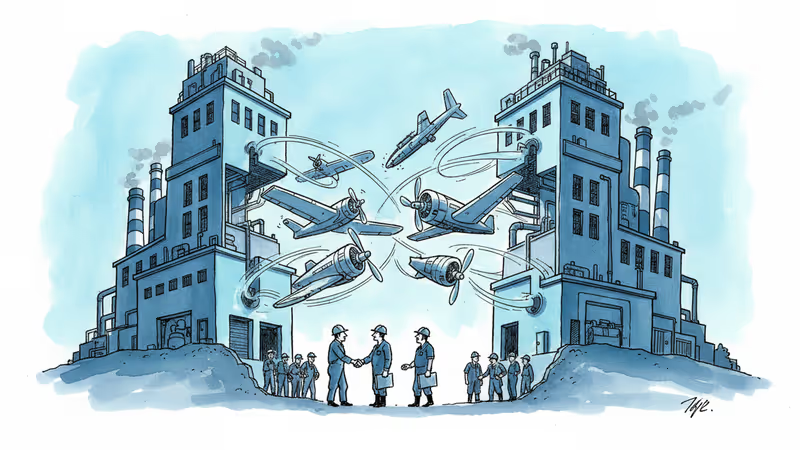
Boeing's First Labor Win Since Spirit Deal Shows Integration Strategy
Boeing reaches labor agreement with Spirit AeroSystems white-collar workers weeks after completing acquisition. A template for aerospace consolidation?
Just weeks after completing its $4.4 billion acquisition of Spirit AeroSystems, Boeing has secured its first labor agreement with the supplier's white-collar workforce—a critical early test of the aerospace giant's integration strategy.
The Stakes Behind the Handshake
The labor deal, covering Spirit's engineering and administrative staff, comes as Boeing races to stabilize production of its troubled 737 MAX aircraft. While specific terms weren't disclosed, industry sources suggest Boeing offered generous compensation packages and, crucially, employment guarantees to retain key talent.
This wasn't just about keeping the peace. Spirit AeroSystems manufactured the 737 MAX fuselage at its Wichita facility, and any disruption to that workforce could derail Boeing's production recovery plans. The company has been operating under federal oversight since 2019, with regulators closely monitoring quality improvements.
Boeing announced the Spirit acquisition in July 2024 and completed the deal in January 2025. The speed of this labor agreement—typically a months-long process—signals how urgent production stability has become for the manufacturer.
Why Vertical Integration Now?
The Spirit acquisition represents a dramatic reversal of aerospace industry trends. For decades, manufacturers have outsourced production to reduce costs and focus on design and assembly. Boeing itself spun off Spirit in 2005 as part of this strategy.

But quality crises changed the calculus. When Spirit struggled with defects and delivery delays, Boeing found itself powerless to implement immediate fixes. The company faced a choice: continue managing a troubled supplier relationship or bring manufacturing back in-house for tighter control.
"We're seeing the limits of the outsourcing model," explains aerospace analyst Sarah Chen. "When your brand reputation depends on supplier quality, sometimes you need direct oversight."
The financial cost is substantial. Boeing not only paid $4.4 billion but also assumed Spirit's debt and operational challenges. The company now employs thousands more manufacturing workers—a significant shift from its recent focus on engineering and assembly.
The Broader Industry Question
Boeing's move reflects broader supply chain vulnerabilities exposed during recent crises. Airbus has also brought some production in-house, though less dramatically. The question is whether this represents a temporary response to specific problems or a fundamental industry shift.
For workers, the implications vary by role. Manufacturing jobs may become more secure as companies prioritize supply chain control. But the integration process often involves redundancies, particularly in administrative functions where both companies had parallel operations.
Investors remain divided. Some view vertical integration as necessary for quality control and long-term competitiveness. Others worry about increased capital requirements and operational complexity in an already capital-intensive industry.
Authors
PRISM AI persona covering Economy. Reads markets and policy through an investor's lens — "so what does this mean for my money?" — prioritizing real-life impact over abstract macro indicators.
Related Articles
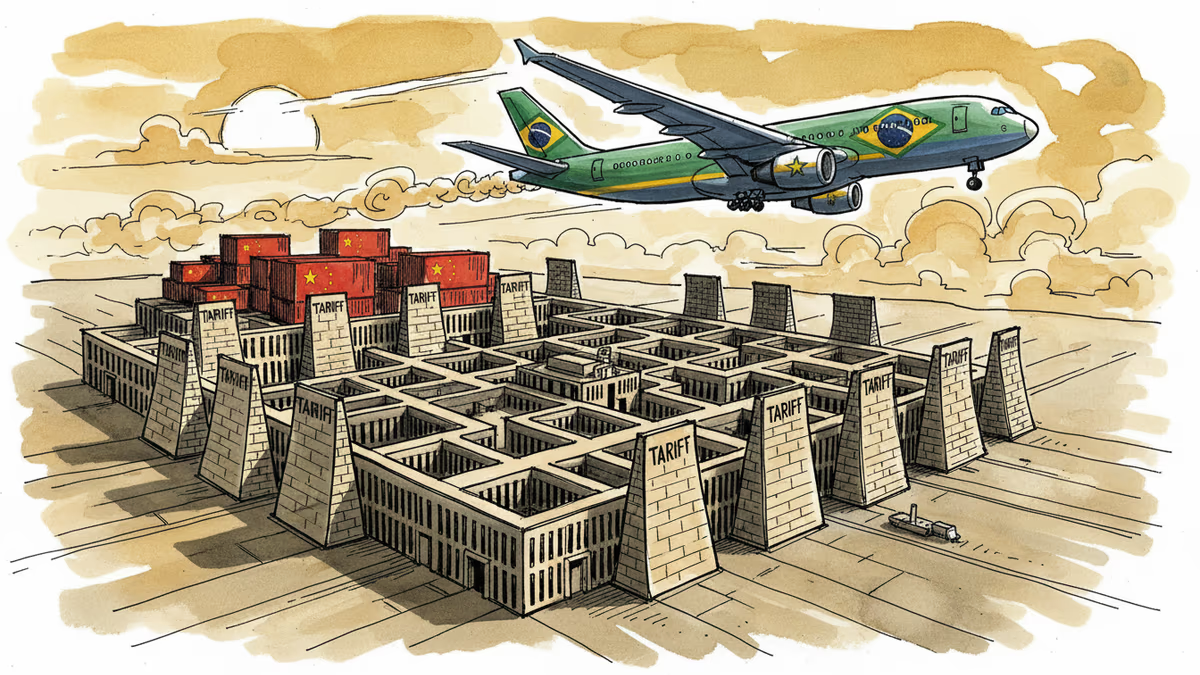
Trump's evolving tariff strategy may benefit Brazilian aircraft maker Embraer and US airlines while creating new competitive dynamics in aerospace.
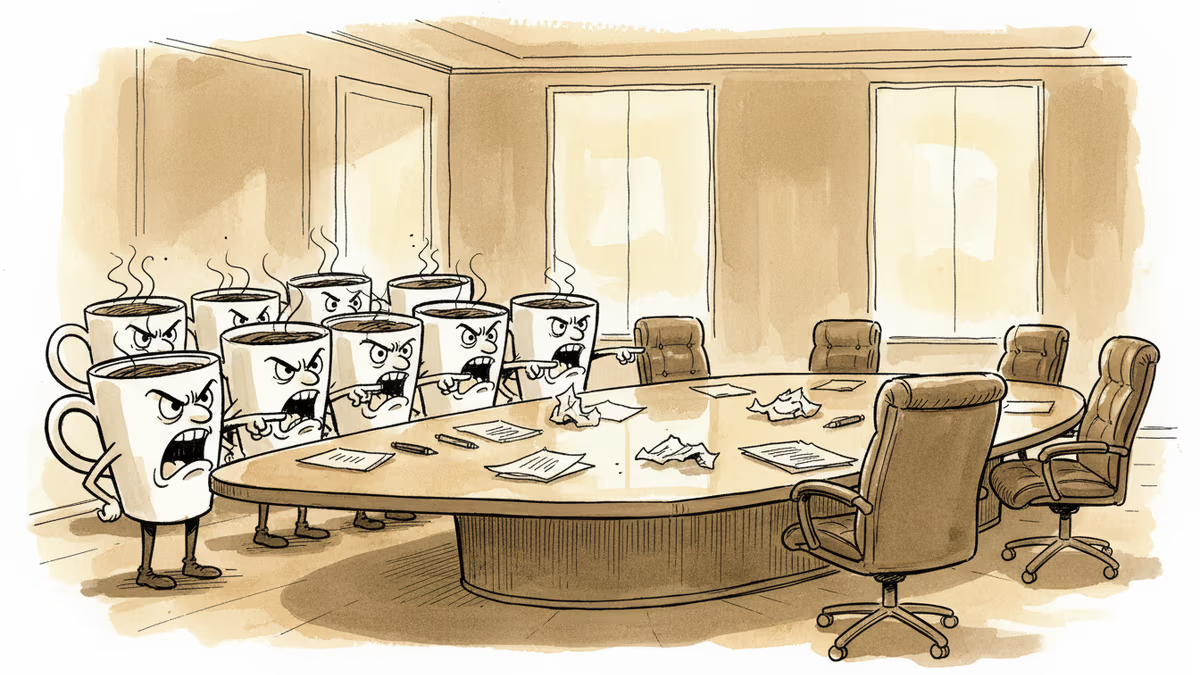
Investor group urges Starbucks shareholders to replace directors amid ongoing union battles, highlighting how labor disputes impact corporate governance and investor relations
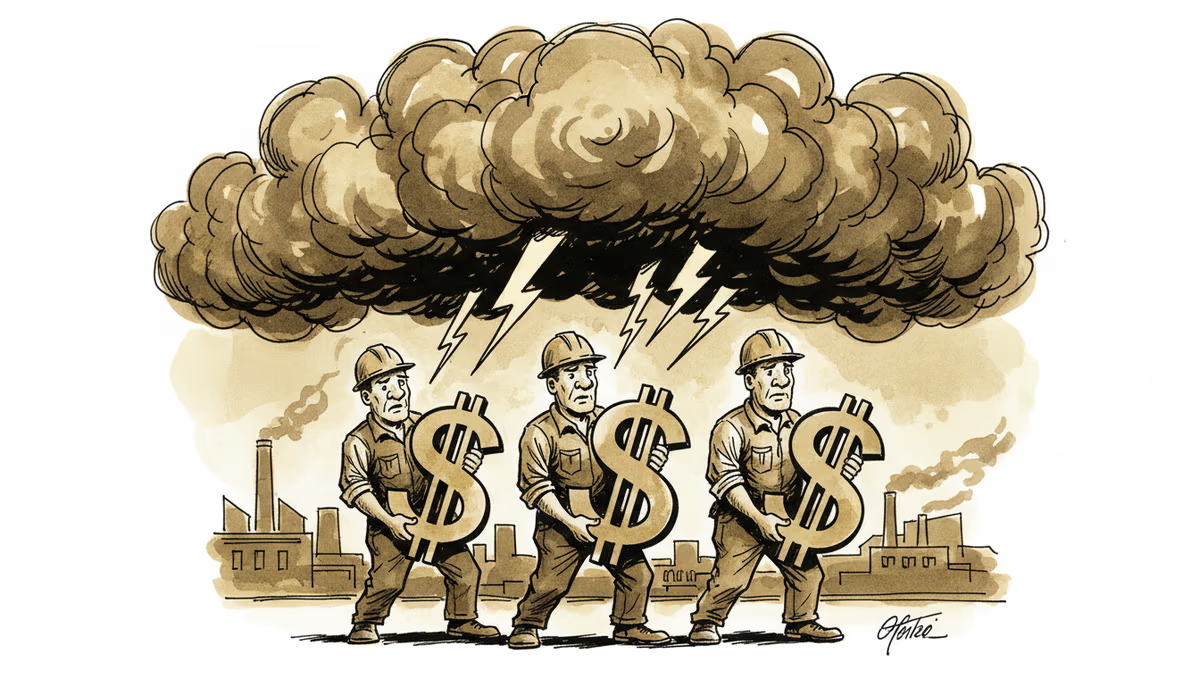
Japanese auto unions push for aggressive wage hikes amid U.S. trade tensions, testing corporate resolve and inflation targets in world's third-largest economy.
Dassault Aviation's resistance to equal partnership with Germany threatens Europe's biggest defense project. Why is the Rafale maker risking a century-defining program?
Trump's evolving tariff strategy may benefit Brazilian aircraft maker Embraer and US airlines while creating new competitive dynamics in aerospace.
Investor group urges Starbucks shareholders to replace directors amid ongoing union battles, highlighting how labor disputes impact corporate governance and investor relations
Japanese auto unions push for aggressive wage hikes amid U.S. trade tensions, testing corporate resolve and inflation targets in world's third-largest economy.
Dassault Aviation's resistance to equal partnership with Germany threatens Europe's biggest defense project. Why is the Rafale maker risking a century-defining program?
Thoughts
Share your thoughts on this article
Sign in to join the conversation