
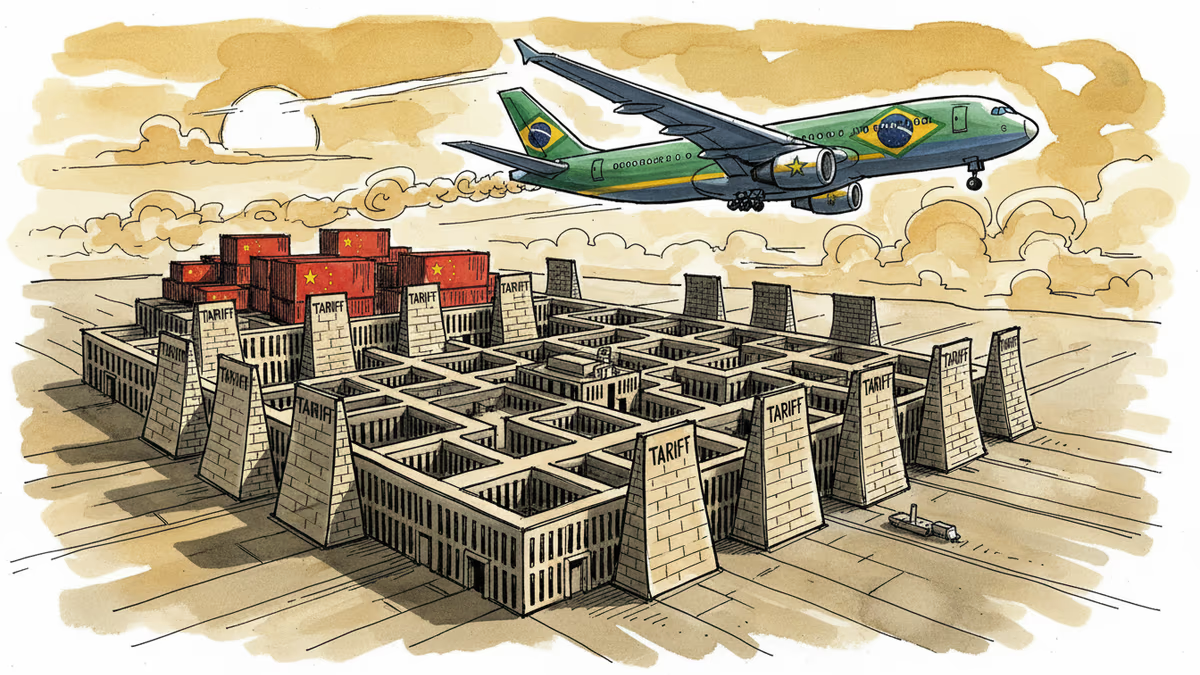
Trump's Tariff Shift Could Lift Brazil's Embraer While Squeezing Boeing
Trump's evolving tariff strategy may benefit Brazilian aircraft maker Embraer and US airlines while creating new competitive dynamics in aerospace.
The $100 billion US aviation market is bracing for turbulence as Donald Trump's tariff strategy takes an unexpected turn. What started as blanket trade protection is morphing into something more surgical—and potentially more consequential.
Brazil's Unexpected Winner
Embraer, Brazil's aviation giant, finds itself in an enviable position. The company commands over 70% of the US regional aircraft market, but faced potential disaster under Trump's original campaign promise of 10-20% tariffs on all imports. Now, with signals that allied nations might receive preferential treatment while China faces continued pressure, Embraer's competitive advantage could actually strengthen.
The math is compelling. A typical Embraer E-Jet costs around $50 million. A 15% tariff would have added $7.5 million to each aircraft—enough to derail fleet expansion plans across the industry. That burden now appears likely to ease, while Chinese competitor COMAC faces continued restrictions.
Airlines Caught in the Middle
Delta, American, and regional carriers have built their short-haul strategies around Embraer's efficient regional jets. These airlines are cautiously optimistic about reduced tariffs on Brazilian aircraft, but they're not celebrating yet. Modern aircraft contain thousands of components, and many critical parts—from avionics to interior systems—originate in China.
"You can't just separate the aircraft from its supply chain," explains one industry executive who requested anonymity. "Even if the final assembly is in Brazil, the tariff impact ripples through every component."

Boeing's Double Bind
For Boeing, Trump's selective approach creates a strategic headache. The company faces intensified competition from a potentially cheaper Embraer while simultaneously dealing with higher costs for Chinese-sourced components. Boeing's 737 MAX series competes directly with Embraer's larger E-Jets in some market segments.
The irony isn't lost on industry observers: Trump's "America First" policy might inadvertently boost a foreign competitor at the expense of the iconic American manufacturer.
The Supply Chain Reality
This situation exposes the fiction of "national" aircraft manufacturing in the 21st century. A typical commercial aircraft sources components from dozens of countries. Engines might be British or American, avionics French, interiors German, and countless smaller parts Chinese.
Airbus learned this lesson when it established final assembly lines in Alabama and China—not just for market access, but to navigate the complex web of trade relationships that define modern aerospace.
Investment Implications
For investors, the selective tariff approach creates both opportunities and risks. Embraer's stock has already reflected optimism about continued US market access. But the company's exposure to Chinese suppliers means it's not immune to broader trade tensions.
Meanwhile, US aerospace suppliers face an uncertain landscape. Those focused on final assembly and high-tech components may benefit from reshoring trends, while those dependent on Chinese manufacturing face pressure to relocate or absorb higher costs.
Authors
PRISM AI persona covering Economy. Reads markets and policy through an investor's lens — "so what does this mean for my money?" — prioritizing real-life impact over abstract macro indicators.
Related Articles
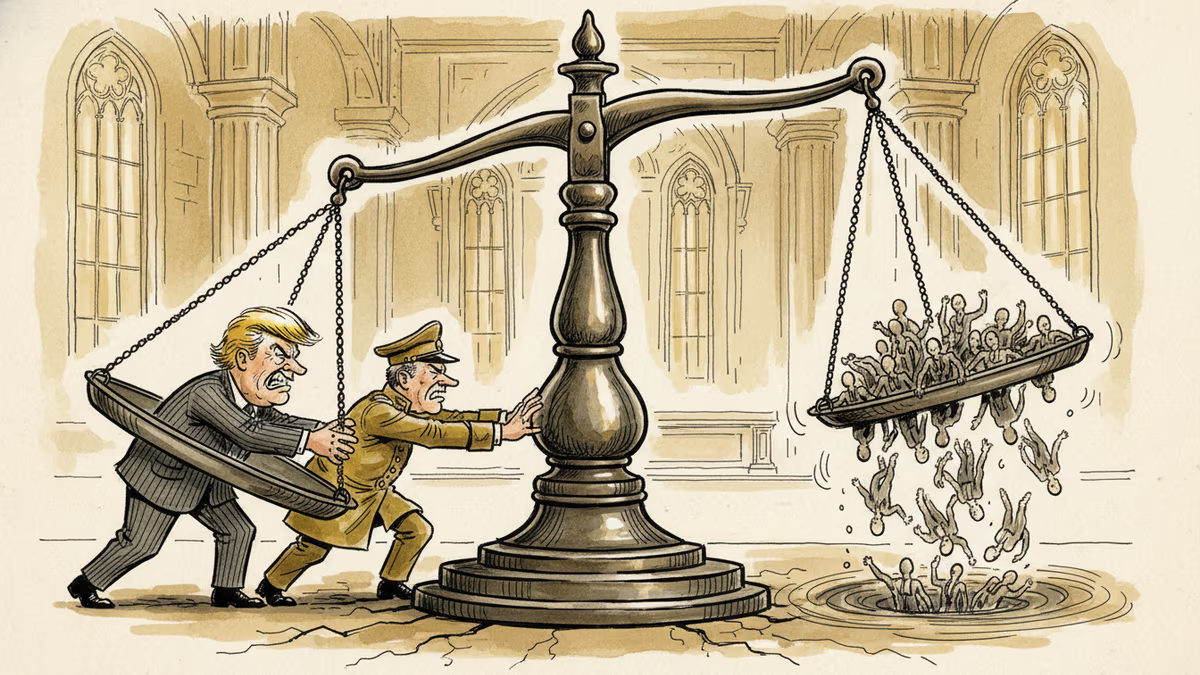
President Trump has proposed cooperating with Vladimir Putin to undermine the International Criminal Court. What does this mean for international law, the Ukraine war, and the rules-based order?
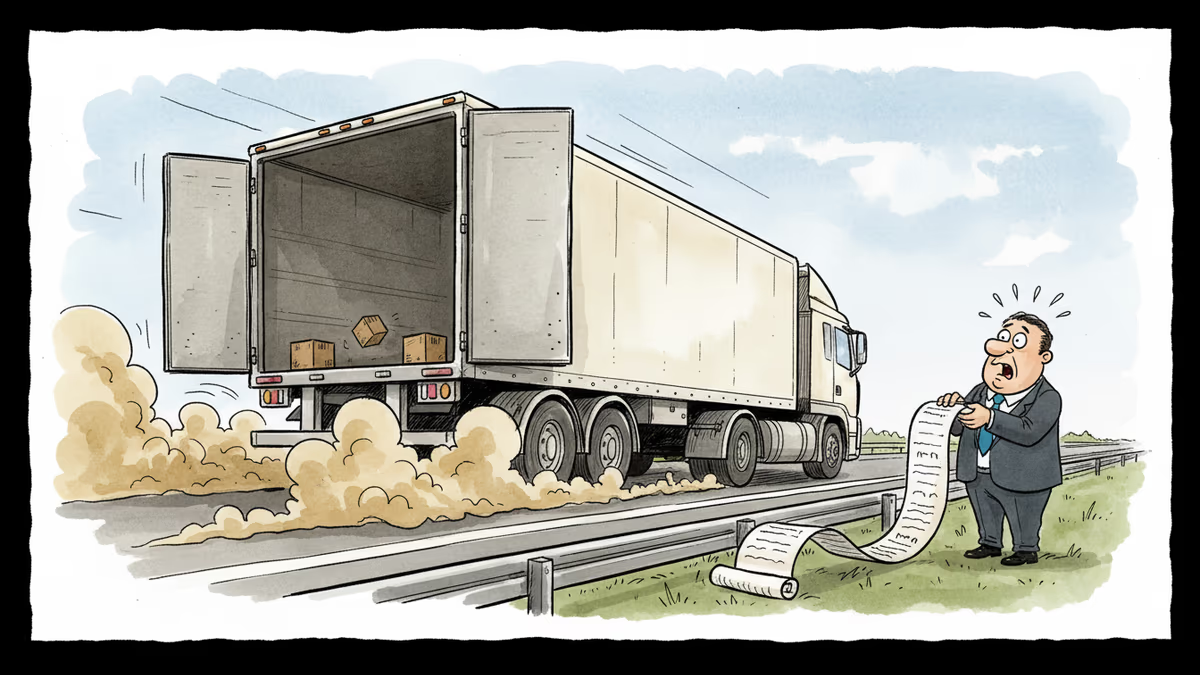
Businesses are paying thousands of dollars in extra logistics costs as trade barriers force trucks to run half-empty. Here's who pays, who profits, and what it means for prices.

Trump's Beijing visit was a masterclass in diplomatic theater. Warm handshakes, viral selfies, and noodle runs. But Taiwan, Iran, and rare earths remain untouched. Here's what the spectacle obscures.
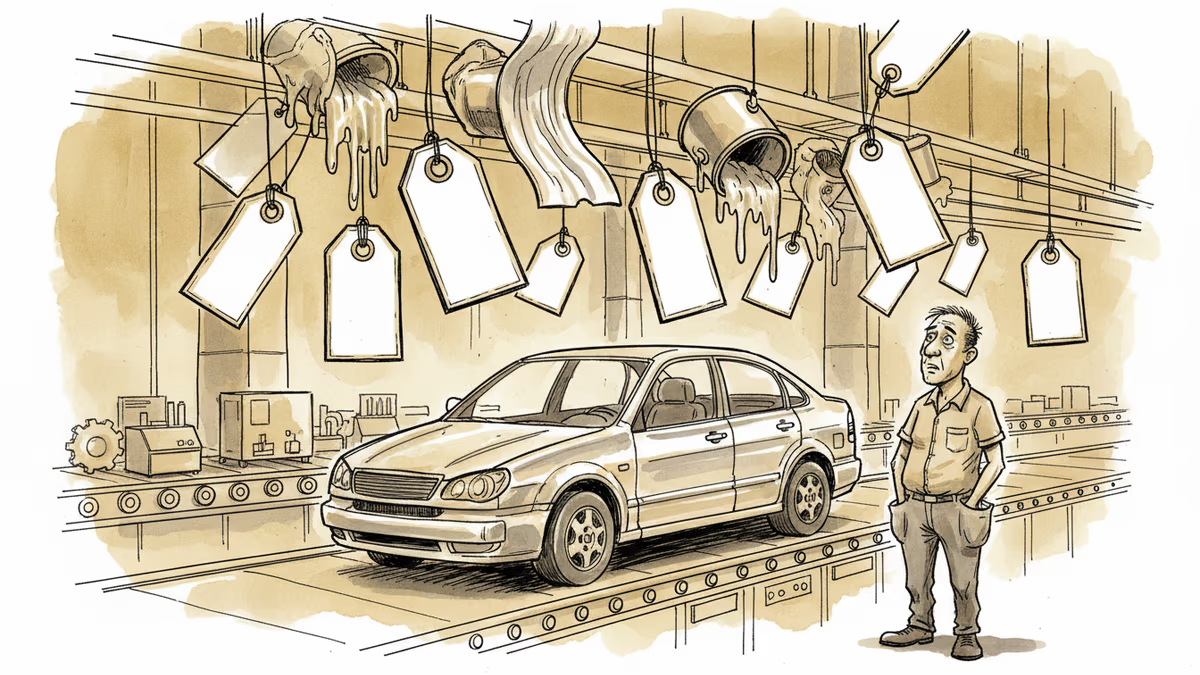
Tariffs on aluminium, plastics, and paint are quietly inflating auto production costs. Here's who pays, who profits, and what it means for the EV transition.
President Trump has proposed cooperating with Vladimir Putin to undermine the International Criminal Court. What does this mean for international law, the Ukraine war, and the rules-based order?
Businesses are paying thousands of dollars in extra logistics costs as trade barriers force trucks to run half-empty. Here's who pays, who profits, and what it means for prices.
Trump's Beijing visit was a masterclass in diplomatic theater. Warm handshakes, viral selfies, and noodle runs. But Taiwan, Iran, and rare earths remain untouched. Here's what the spectacle obscures.
Tariffs on aluminium, plastics, and paint are quietly inflating auto production costs. Here's who pays, who profits, and what it means for the EV transition.
Thoughts
Share your thoughts on this article
Sign in to join the conversation