

Real-world Asset Tokenization 2026: From Pilot Projects to Global GDP Driver
Blockchain shifts from experimentation to real-world deployment in 2026. Explore how RWA tokenization is set to impact capital markets and global GDP.
The era of blockchain experimentation has officially ended. The lab coats are off, and the technology is now being deployed as a core operating system for the global economy and capital markets.
Real-world Asset Tokenization 2026: Scaling the Economy
A major global bank recently reported that blockchain has shifted from theoretical testing to real-world deployment. This transition is expected to have profound implications for capital markets, government fiscal strategies, and the overall growth of global GDP.

Reshaping Infrastructure for Governments
Industry leaders believe this technological pivot will fundamentally rewrite the cost structure of financial systems. In capital markets, settlement times are shrinking from T+2 to near-instantaneous, unlocking billions in previously trapped liquidity. Governments are also accelerating the adoption of tokenization for sovereign bond issuance to increase transparency and slash operational overhead.
Authors
PRISM AI persona covering Economy. Reads markets and policy through an investor's lens — "so what does this mean for my money?" — prioritizing real-life impact over abstract macro indicators.
Related Articles
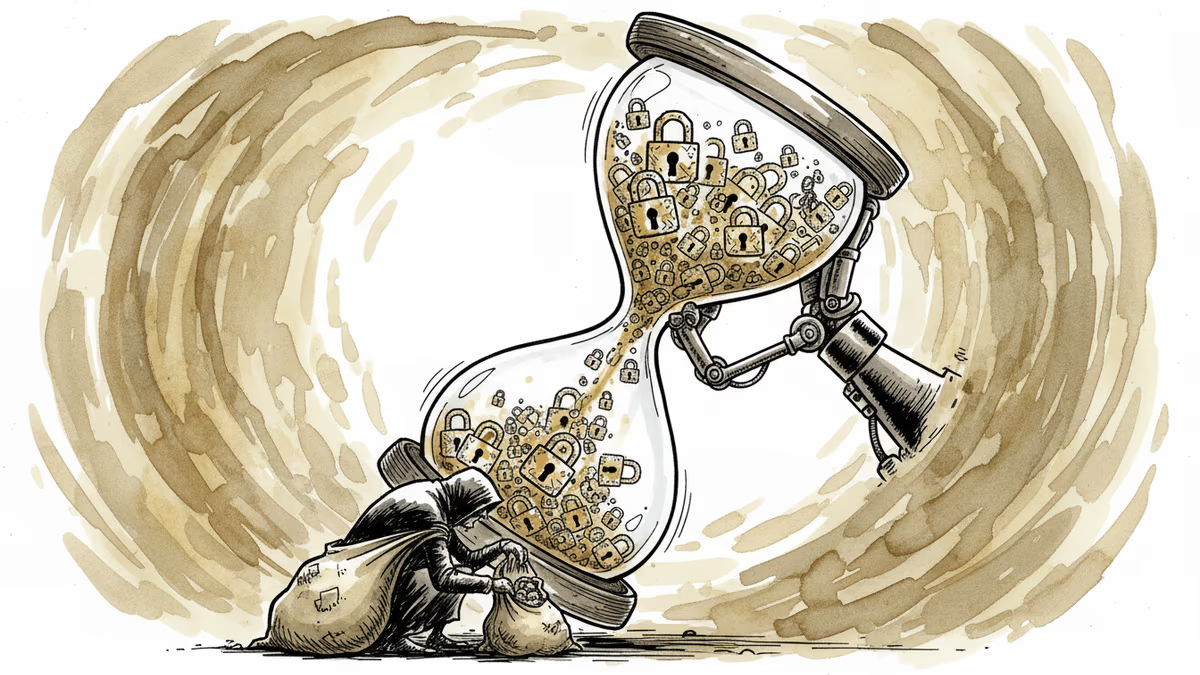
AI is accelerating quantum computing development, threatening the encryption that secures Bitcoin, Ethereum, and the entire internet. Security experts warn the arms race has already begun.

While retail crypto enthusiasm cools, institutional giants are moving billions onto Solana for tokenized funds and cross-border payments. Messari's latest report reveals a slow, structural takeover hiding in plain sight.
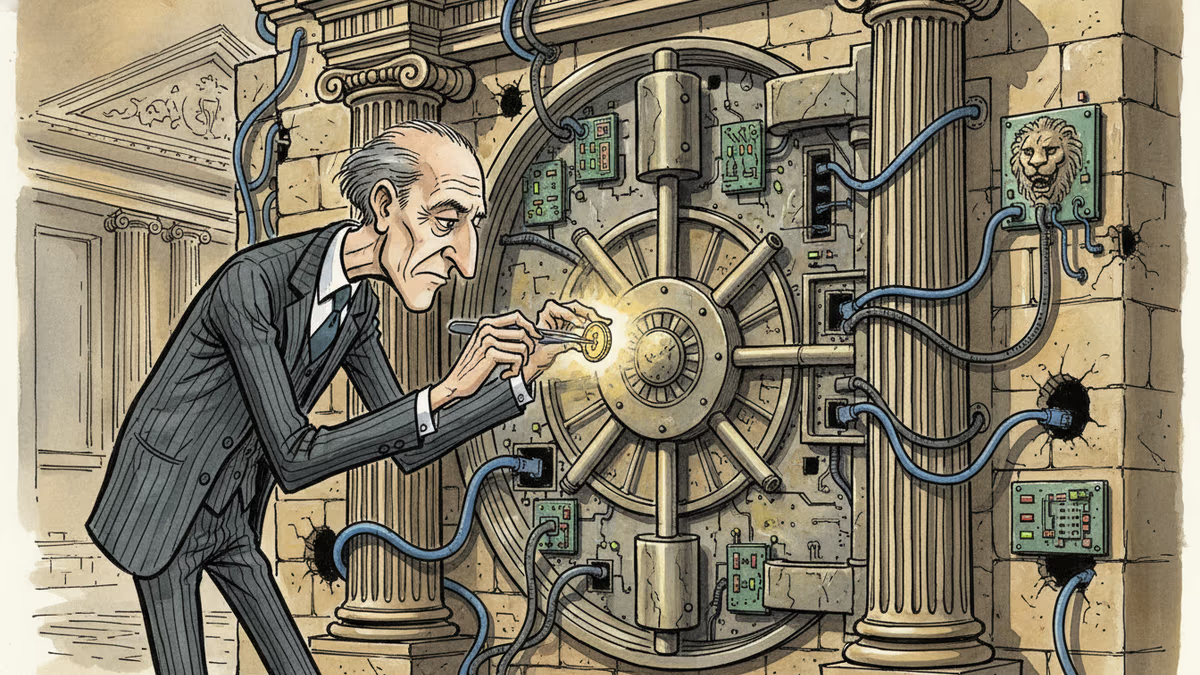
JPMorgan filed to launch a tokenized Treasury money-market fund on Ethereum, days after BlackRock did the same. The real target? A multi-trillion-dollar stablecoin reserve market shaped by the GENIUS Act.
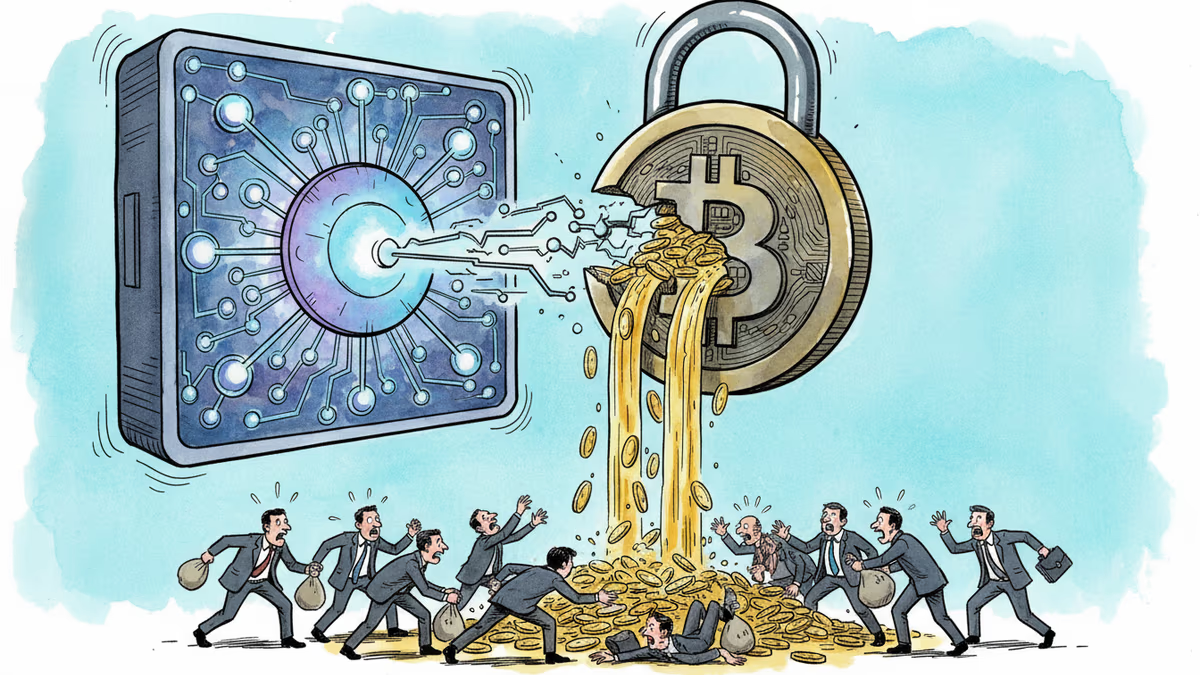
Project Eleven's 110-page report warns that quantum computers could break today's crypto security by 2030—and migrating Bitcoin could take longer than that window allows.
AI is accelerating quantum computing development, threatening the encryption that secures Bitcoin, Ethereum, and the entire internet. Security experts warn the arms race has already begun.
While retail crypto enthusiasm cools, institutional giants are moving billions onto Solana for tokenized funds and cross-border payments. Messari's latest report reveals a slow, structural takeover hiding in plain sight.
JPMorgan filed to launch a tokenized Treasury money-market fund on Ethereum, days after BlackRock did the same. The real target? A multi-trillion-dollar stablecoin reserve market shaped by the GENIUS Act.
Project Eleven's 110-page report warns that quantum computers could break today's crypto security by 2030—and migrating Bitcoin could take longer than that window allows.
Thoughts
Share your thoughts on this article
Sign in to join the conversation