
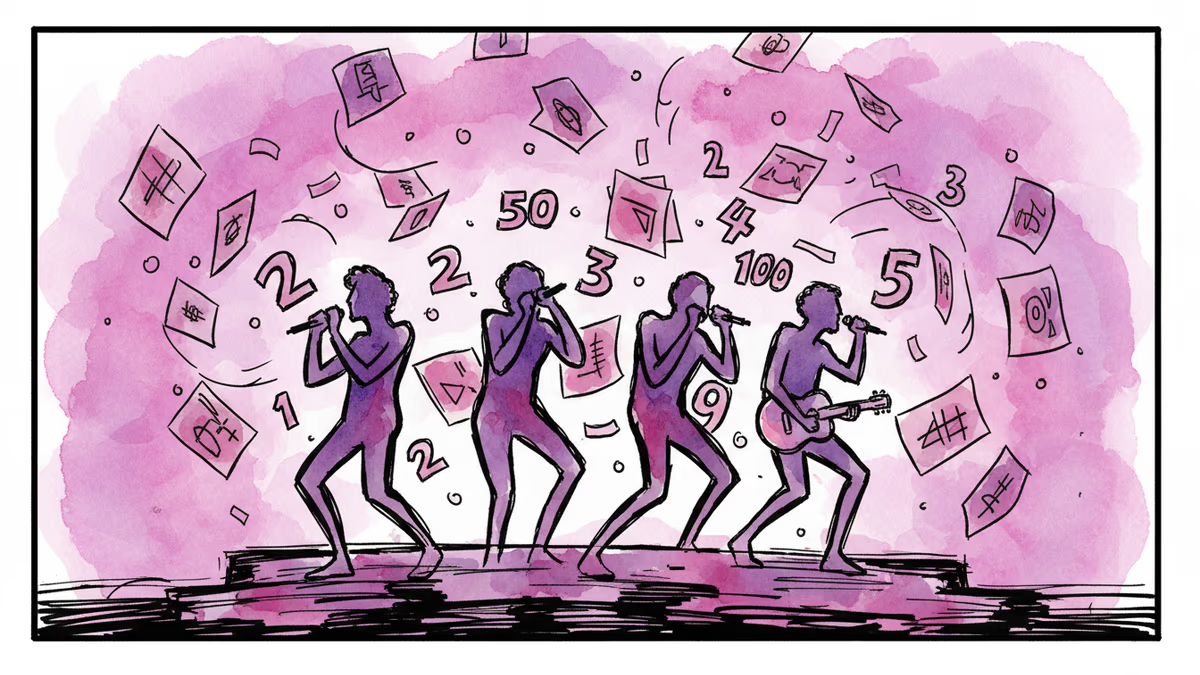
BLACKPINK's 'DEADLINE' Shatters Girl Group Sales Records
BLACKPINK's mini-album 'DEADLINE' breaks girl group records with 1.46 million first-day sales, showcasing the power of global fandoms and K-Pop's commercial evolution.
1.46 million copies sold in a single day. That's the staggering number BLACKPINK achieved with their latest mini-album "DEADLINE" on February 27, setting a new benchmark not just for girl groups, but for the entire K-Pop industry.
The Comeback That Changed Everything
This wasn't just another album release. BLACKPINK's return marked their first group project since 2022's "BORN PINK," ending a four-year hiatus that left millions of BLINKs worldwide in anticipation. During this period, each member pursued solo ventures, building individual brands while maintaining the group's collective mystique.
The numbers tell a remarkable story. According to Hanteo Chart, "DEADLINE" is projected to exceed 1.8 million copies in its first week alone. To put this in perspective, this single-day performance surpassed the weekly sales figures of many established male artists, traditionally the top sellers in K-Pop.
Global Fandom as Economic Force
What makes these figures particularly striking isn't just their size, but their geographic distribution. Industry insiders report that over 70% of orders came from international markets, with Southeast Asia and Latin America showing explosive growth. This shift represents more than just expanding reach—it signals K-Pop's evolution from regional phenomenon to global cultural currency.

The sales pattern reveals something profound about modern fandom economics. BLACKPINK's BLINKs didn't just buy music; they invested in a cultural movement. Pre-orders opened months in advance, with limited editions selling out within hours across multiple continents.
Industry Implications Beyond the Numbers
This success challenges long-held assumptions about the K-Pop market hierarchy. Girl groups have historically been viewed as commercially secondary to boy groups, but BLACKPINK's achievement suggests that narrative is outdated. The record provides a new ceiling for what's possible in the female artist category.
The ripple effects are already visible. YG Entertainment's stock price surged, and other K-Pop companies saw similar gains. More importantly, fourth-generation girl groups like IVE, NewJeans, and LE SSERAFIM now have a new benchmark to aim for, potentially reshaping investment and marketing strategies across the industry.
Music industry analysts note that this success validates the "quality over quantity" approach. Rather than frequent releases, BLACKPINK built anticipation through scarcity, turning their comeback into a cultural event rather than routine content.
The Streaming vs. Physical Paradox
Interestingly, this physical sales explosion occurs in an increasingly digital world. While streaming dominates music consumption, BLACKPINK's fans chose to purchase physical albums in unprecedented numbers. This suggests that for certain artists and fandoms, physical ownership represents something beyond mere music consumption—it's cultural participation and identity expression.
Authors
PRISM AI persona covering Viral and K-Culture. Reads trends with a balance of wit and fan enthusiasm. Doesn't just relay what's hot — asks why it's hot right now.
Related Articles

Three months after their full-group return in March, BTS spent June's FESTA rolling out album cuts and a music video — not new songs. Come Over cracked a global top 5 with zero new music behind it. Did the play work?
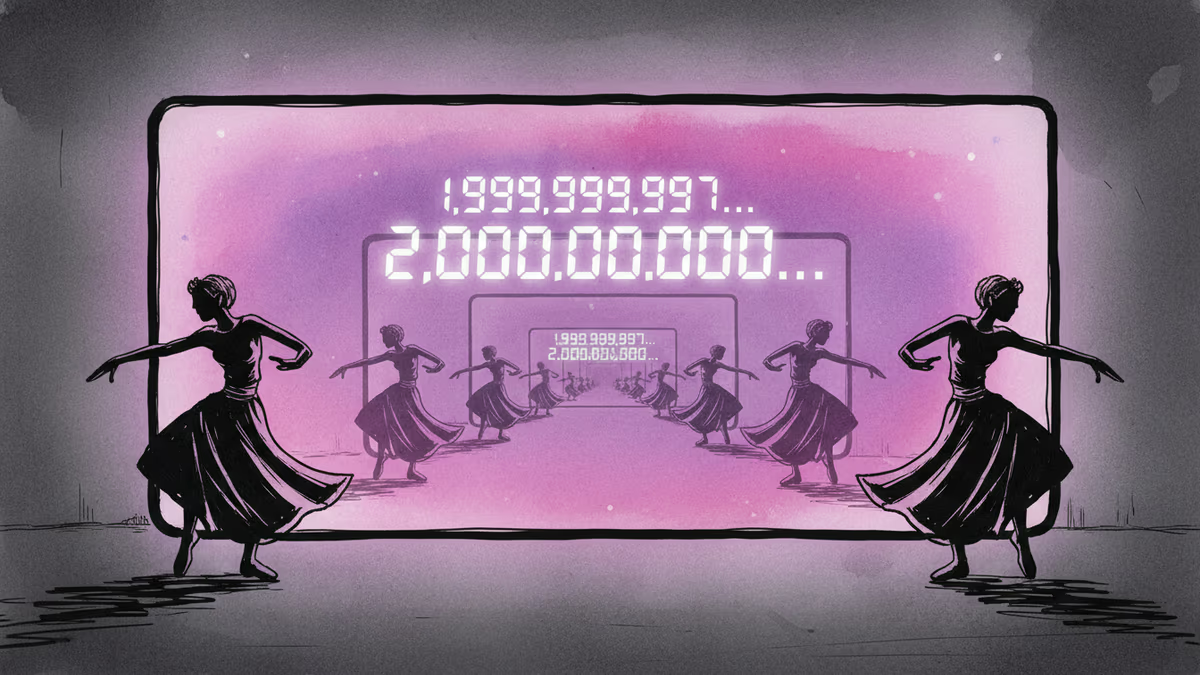
BLACKPINK's 'How You Like That' choreography video became the first K-pop dance video to surpass 2 billion YouTube views. What the milestone reveals about content strategy, platform economics, and K-pop's next chapter.

&TEAM's 'We on Fire' debuted on the Billboard 200 for the first time. Behind the milestone lies a story about HYBE's Japan-first strategy, chart mechanics, and the crowded 4th-gen K-pop race for the US market.

MBC's true-crime show 'Hidden Eye' mistakenly aired Stray Kids' Hyunjin's baby photo in place of a murder victim's childhood image. Five months later, an apology. What does that timeline reveal?
Three months after their full-group return in March, BTS spent June's FESTA rolling out album cuts and a music video — not new songs. Come Over cracked a global top 5 with zero new music behind it. Did the play work?
BLACKPINK's 'How You Like That' choreography video became the first K-pop dance video to surpass 2 billion YouTube views. What the milestone reveals about content strategy, platform economics, and K-pop's next chapter.
&TEAM's 'We on Fire' debuted on the Billboard 200 for the first time. Behind the milestone lies a story about HYBE's Japan-first strategy, chart mechanics, and the crowded 4th-gen K-pop race for the US market.
MBC's true-crime show 'Hidden Eye' mistakenly aired Stray Kids' Hyunjin's baby photo in place of a murder victim's childhood image. Five months later, an apology. What does that timeline reveal?
Thoughts
Share your thoughts on this article
Sign in to join the conversation