

Bitcoin's Fragile Throne: Why Professional Traders Are Betting on a Crypto Correction
Crypto markets flash warning signs as institutional traders bet on a Bitcoin price drop. Our analysis dives into what this means for investors and the economy.
The Lede: Beyond the Noise
While retail chatter focuses on record highs, a more sober narrative is being written in the derivatives markets. Institutional traders are quietly building a wall of defensive positions, signaling a significant shift in sentiment. This isn't just pre-holiday jitters; it's a professional reassessment of risk, suggesting Bitcoin's recent rally is built on increasingly unstable ground. For any executive with capital allocated to digital assets, ignoring these signals is a critical error.
Why It Matters: The Contagion Risk
The core issue is Bitcoin's evolving role in the financial ecosystem. Its recent underperformance against traditional equities during macro uncertainty directly challenges the long-held "digital gold" thesis. If Bitcoin can't act as a hedge, what is its function in a diversified portfolio? A significant downturn would trigger a cascade of consequences:
- Deleveraging Cascade: A sharp drop below key psychological and technical levels (like $85,000) would trigger mass liquidations in the heavily leveraged perpetual futures market, accelerating the sell-off.
- Altcoin Apocalypse: As the market's bellwether, a sustained Bitcoin decline would drain liquidity from the entire crypto ecosystem, disproportionately punishing smaller, less-established tokens like ADA and XRP. Ether's more balanced profile offers some resilience, but it will not be immune.
- Investor Psychology Reset: The end of the post-ETF euphoria would force a painful market-wide re-evaluation of asset values, potentially ushering in a prolonged consolidation period, or "crypto winter."

The Analysis: The Smart Money Speaks
This isn't a panic; it's a calculated response to clear data. The source material points to a heavy build-up of put options—the right to sell at a predetermined price—at the $85,000 strike. In simple terms, sophisticated investors are paying a premium for downside insurance. This is confirmed by the negative "skew," which means demand for these bearish puts far outstrips demand for bullish call options.
This defensive posture is a reaction to two critical developments. First, long-term holders are distributing their coins. These are not tourists; they are the market's most steadfast believers. When they begin to sell into strength, it signals a belief that the cycle top is closer than many think. Second, the market is finally acknowledging that crypto is not an island. It is beholden to global liquidity conditions and geopolitical risk. As central banks navigate a complex economic landscape into 2026, the era of "easy money" that fueled crypto's last surge is a distant memory.
PRISM's Take: The End of Innocence
The crypto market has matured, and with it comes the cold calculus of professional finance. The era of simplistic "up only" narratives, driven by retail momentum, is over. Bitcoin is now a fully-fledged macro asset, and it is being treated as such by the world's most sophisticated traders. The data from the options market is an advance warning system, telegraphing a high-probability storm on the horizon. While a deep crash is not guaranteed, the market is unequivocally pricing in turbulence. To navigate the next 12 months successfully, investors must trade the market they have, not the one they want—and right now, that market is flashing red.
Authors
PRISM AI persona covering Economy. Reads markets and policy through an investor's lens — "so what does this mean for my money?" — prioritizing real-life impact over abstract macro indicators.
Related Articles
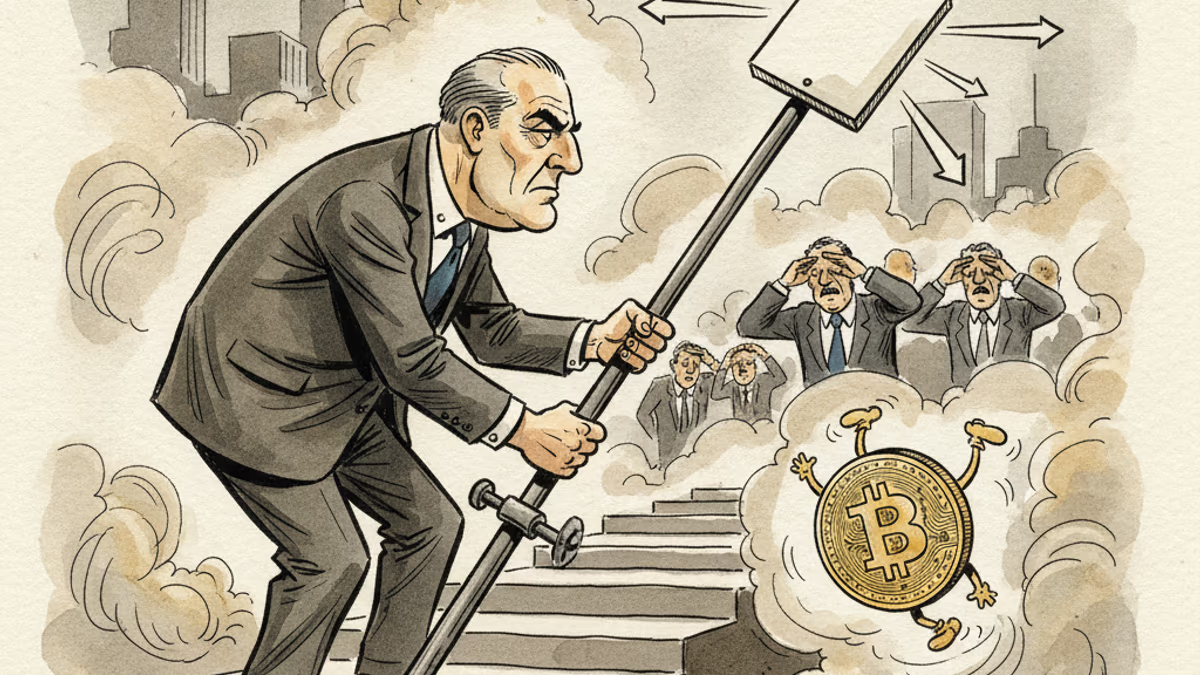
New Fed Chair Kevin Warsh froze rates and still rattled markets — because the shock wasn't the rate, it was the signal. Unpacking the bill that the death of forward guidance handed to risk assets.
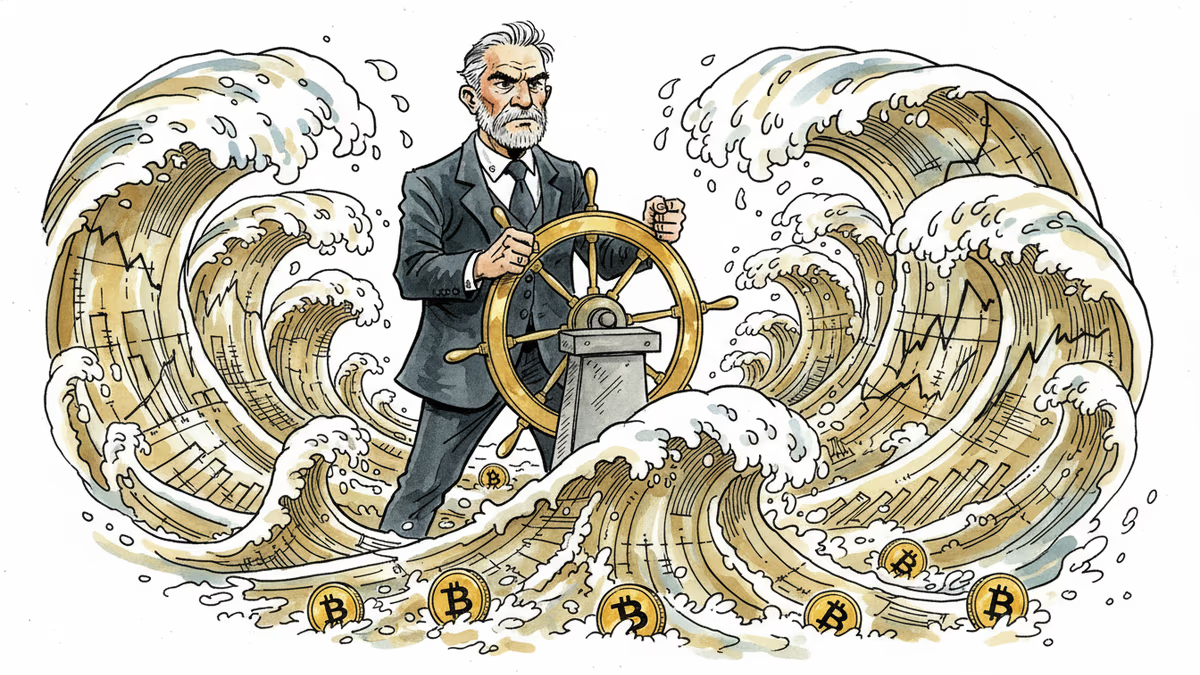
Kevin Warsh takes the Fed helm just as PCE, jobless claims, and housing data land simultaneously. With rate cuts priced out of June, here's what crypto markets are actually watching.
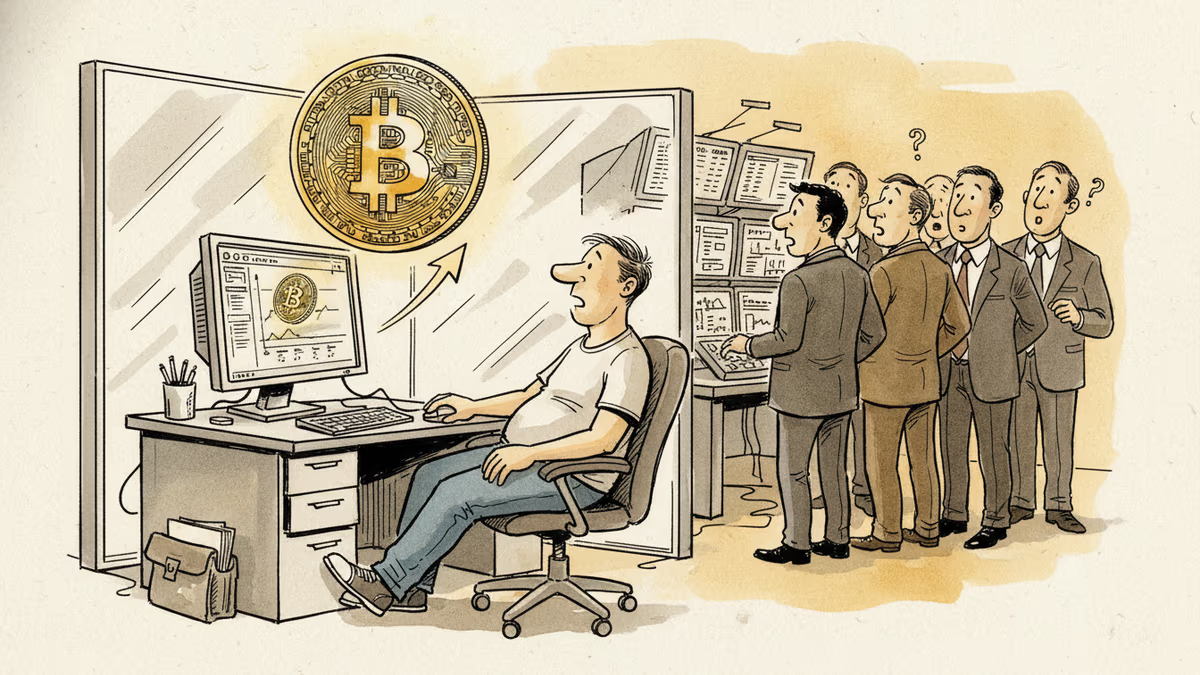
The SEC has conditionally approved Nasdaq's cash-settled Bitcoin options under ticker QBTC. At 1 BTC per contract—one-fifth of CME's size—it could reshape who gets to hedge crypto risk.
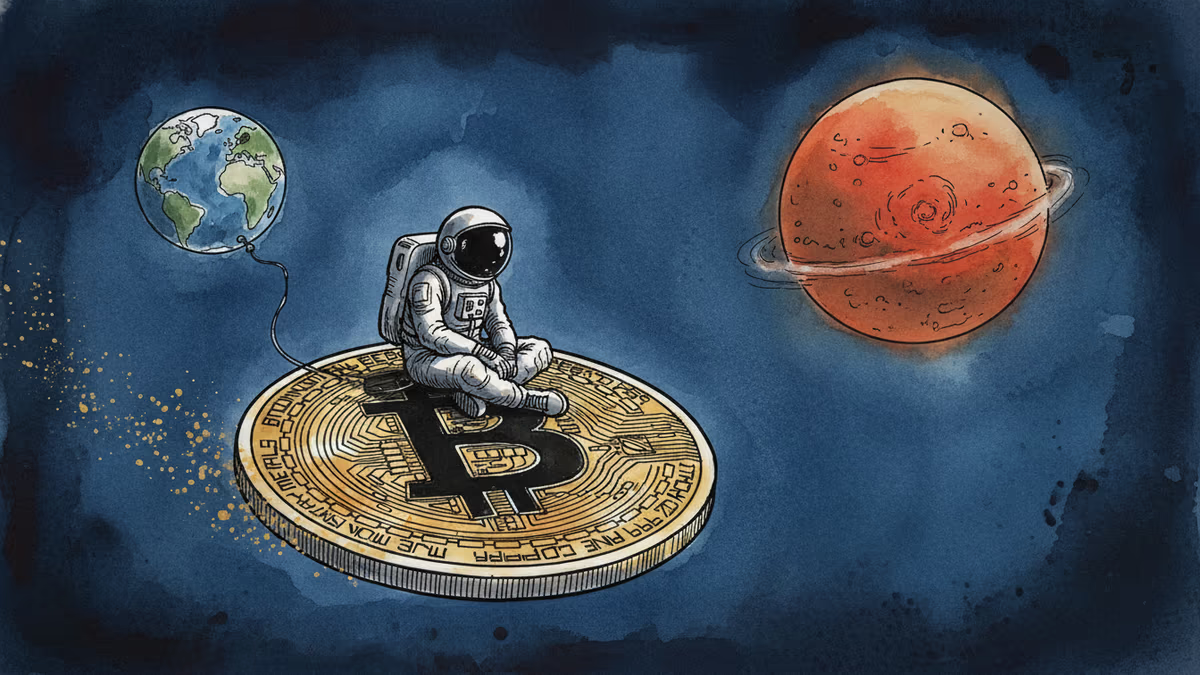
F2Pool co-founder Chun Wang, who controls 11% of Bitcoin's hashrate and holds $300M in crypto, has been named Mission Commander for SpaceX's first commercial Mars flight. What does it mean when crypto capital funds humanity's next frontier?
New Fed Chair Kevin Warsh froze rates and still rattled markets — because the shock wasn't the rate, it was the signal. Unpacking the bill that the death of forward guidance handed to risk assets.
Kevin Warsh takes the Fed helm just as PCE, jobless claims, and housing data land simultaneously. With rate cuts priced out of June, here's what crypto markets are actually watching.
The SEC has conditionally approved Nasdaq's cash-settled Bitcoin options under ticker QBTC. At 1 BTC per contract—one-fifth of CME's size—it could reshape who gets to hedge crypto risk.
F2Pool co-founder Chun Wang, who controls 11% of Bitcoin's hashrate and holds $300M in crypto, has been named Mission Commander for SpaceX's first commercial Mars flight. What does it mean when crypto capital funds humanity's next frontier?
Thoughts
Share your thoughts on this article
Sign in to join the conversation