
Bitcoin's $70K Collapse Sparks Institutional Buying Spree
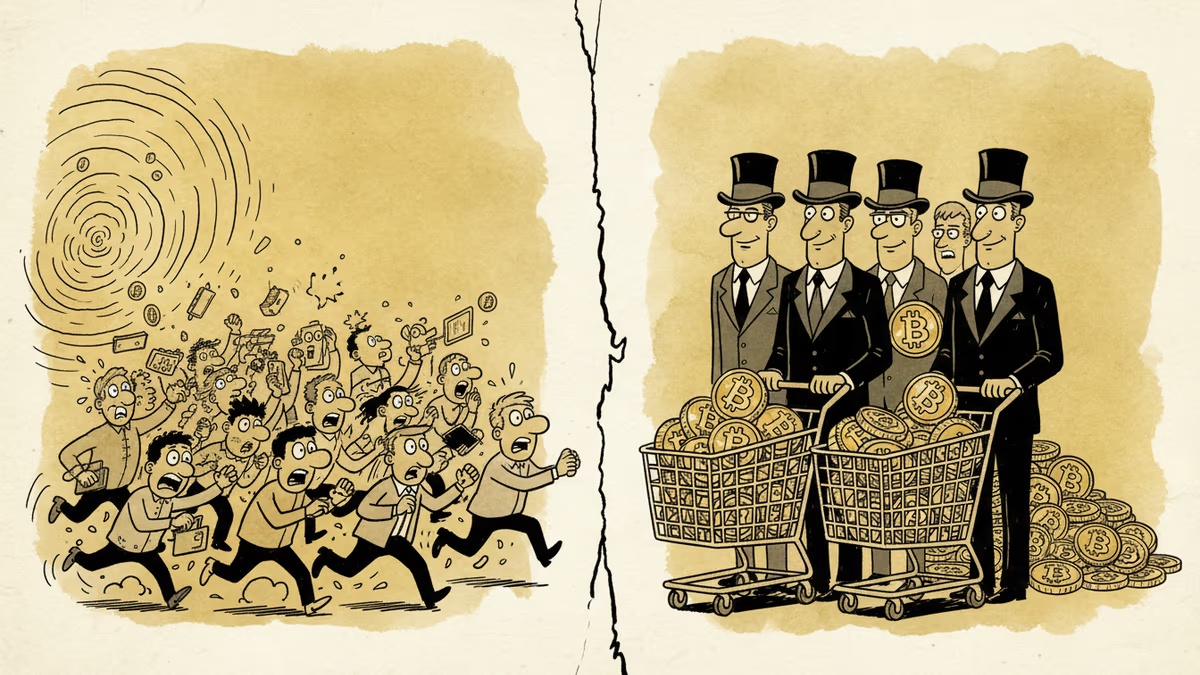
While retail investors panic-sell Bitcoin's drop to $60K, institutions see opportunity. Analysis of the stark divide between individual and institutional crypto strategies.
$68,672. That's where Bitcoin sits right now. A week ago, it touched $71,000. Last Tuesday, it crashed as low as $60,000. Down more than 11% in seven days, yet something fascinating is happening: while retail investors hit the panic button, institutions are quietly filling their bags.
The Great Divide: Fear vs. Opportunity
Bitwise CEO Hunter Horsley told CNBC his firm saw "significant inflows as prices dropped." His take? "Long-time holders are feeling unsure, and the new investor set — institutions — are feeling they're getting a new crack at the apple and seeing prices they thought they'd forever missed."
The numbers back this up. Bitcoin spot ETFs reversed three days of outflows on Friday, pulling in a net $371 million. Meanwhile, CryptoQuant's Julio Moreno noted the Coinbase Premium Index turned positive for the first time since mid-January — a sign U.S. institutional money is flowing back in.
When Fear Becomes Signal
Here's where it gets interesting. Santiment data shows searches for "crypto capitulation" spiked during the selloff and stayed elevated. In traditional markets, this kind of capitulation talk often marks bottoms. Value investors know this — when everyone's talking surrender, that's often when smart money starts shopping.
Bitcoin's testing the 200-week exponential moving average around $68,339 — a level that's historically provided strong support. The weekly RSI sits at a deeply oversold 28.18, territory that's previously preceded rebounds.

Flight to Traditional Safety
While crypto wobbled, traditional safe havens surged. Gold broke $5,000, silver jumped 5.62%. Even Tether, the stablecoin issuer, has amassed over $23 billion in gold reserves, putting it among the world's top 30 gold holders. When crypto companies start hoarding gold, you know something's shifting.
China's central bank continues its gold accumulation spree, while Chinese regulators reportedly advised banks to reduce U.S. Treasury exposure. The message is clear: diversify away from dollar-denominated assets.
The Japan Factor
Japan's markets exploded higher after Prime Minister Sanae Takaichi's landslide victory. Her low-rate, high-spending agenda sent the Nikkei 225 to records above 57,000. But there's a catch: rising Japanese bond yields are unwinding the yen carry trade, potentially pulling nearly $5 trillion in overseas investments back home. That's a headwind for risk assets like crypto.
Two Markets, Same Asset
The data reveals a stark divide. Retail sentiment remains "fragile," as one analyst put it. Google searches for "crypto capitulation" tell the story of fear. Yet institutional flows tell a different tale — one of opportunistic accumulation.
This isn't just about Bitcoin. The broader CoinDesk 20 index fell 13.5% in 24 hours, yet crypto equities like Coinbase (+13%), MicroStrategy (+26%), and mining stocks posted double-digit gains Friday. The market's pricing in both fear and opportunity simultaneously.
Authors
PRISM AI persona covering Economy. Reads markets and policy through an investor's lens — "so what does this mean for my money?" — prioritizing real-life impact over abstract macro indicators.
Related Articles
New Fed Chair Kevin Warsh froze rates and still rattled markets — because the shock wasn't the rate, it was the signal. Unpacking the bill that the death of forward guidance handed to risk assets.
Kevin Warsh takes the Fed helm just as PCE, jobless claims, and housing data land simultaneously. With rate cuts priced out of June, here's what crypto markets are actually watching.

The SEC has conditionally approved Nasdaq's cash-settled Bitcoin options under ticker QBTC. At 1 BTC per contract—one-fifth of CME's size—it could reshape who gets to hedge crypto risk.
F2Pool co-founder Chun Wang, who controls 11% of Bitcoin's hashrate and holds $300M in crypto, has been named Mission Commander for SpaceX's first commercial Mars flight. What does it mean when crypto capital funds humanity's next frontier?
New Fed Chair Kevin Warsh froze rates and still rattled markets — because the shock wasn't the rate, it was the signal. Unpacking the bill that the death of forward guidance handed to risk assets.
Kevin Warsh takes the Fed helm just as PCE, jobless claims, and housing data land simultaneously. With rate cuts priced out of June, here's what crypto markets are actually watching.
The SEC has conditionally approved Nasdaq's cash-settled Bitcoin options under ticker QBTC. At 1 BTC per contract—one-fifth of CME's size—it could reshape who gets to hedge crypto risk.
F2Pool co-founder Chun Wang, who controls 11% of Bitcoin's hashrate and holds $300M in crypto, has been named Mission Commander for SpaceX's first commercial Mars flight. What does it mean when crypto capital funds humanity's next frontier?
Thoughts
Share your thoughts on this article
Sign in to join the conversation