
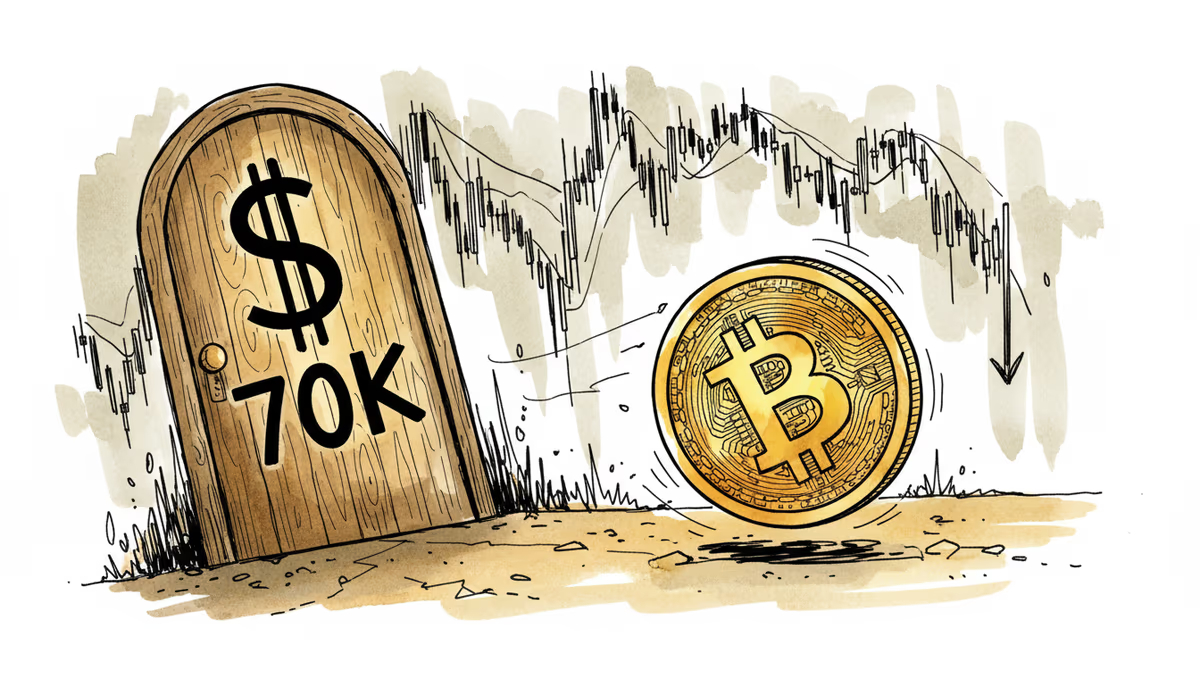
Bitcoin Stumbles at $70K Doorstep as Nvidia Hangover Hits
Bitcoin retreats to $67,766 after approaching $70,000, following Nvidia earnings pullback. Weekly gains intact despite overnight leverage flush.
Bitcoin came within $2,234 of the coveted $70,000 mark this week, only to stumble back as Nvidia's earnings hangover sent ripples through risk assets. The world's largest cryptocurrency now trades at $67,766, down 1.5% in 24 hours but still clinging to weekly gains.
The Overnight Flush
The selling wasn't random—it was surgical. Most of the damage happened while American traders slept, with hourly returns turning green Friday morning as buyers quietly stepped back in. Ethereum mirrored the move, sliding 1.5% to just above $2,047.
"What you're seeing right now is Bitcoin trading with the broader risk market," said Daniel Reis-Faria, CEO of ZeroStack. "Nasdaq fell after Nvidia earnings, and crypto followed. Bitcoin pushed closer to $70,000 pretty quickly, and when momentum in equities stalls, that fast money comes off just as quickly in Bitcoin."
The pattern is becoming familiar: crypto acts as the release valve when traditional markets get nervous. Reis-Faria calls it a "leverage flush" rather than a structural breakdown. "A lot of leverage came back into the system on that push higher, and when stocks start selling, crypto is usually the first place people de-risk."
Altcoins Tell a Different Story
Zoom out to the weekly view and the picture brightens considerably. While Bitcoin managed a modest 0.6% weekly gain, altcoins dominated the leaderboard:

- Cardano: +7%
- Solana: +5.5%
- Ethereum: +4.8%
- BNB: +4.3%
The standout laggard? XRP, down 3.7% daily and the only major asset in weekly red territory at -0.1%. That underperformance is notable given that other altcoins absorbed the same macro headwinds without surrendering weekly gains.
The Asia Money Shift
The broader context matters here. Asian equities are having their best February since 1998, led by South Korean tech names up roughly 20% this month as investors pile into AI infrastructure plays. The MSCI Asia Pacific Index is set to outperform the S&P 500 for a third consecutive month.
That capital rotation away from U.S. markets creates a different dynamic for dollar-denominated assets like Bitcoin. When American institutional money gets cautious, crypto often feels it first.
Range-Bound Reality
"We're still in the same range we've been in," Reis-Faria noted, referring to the tight trading corridor that's defined Bitcoin since the February 5 crash. Wednesday's push toward $70,000 marked the upper boundary, while this week's lows test the middle ground.
The question isn't whether Bitcoin can break higher—it nearly did—but whether it can sustain momentum when traditional markets wobble. "Until we see consistent new demand, these moves are going to keep happening," he added. "Bitcoin trades like a macro asset. When equities pull back, Bitcoin pulls back."
Authors
PRISM AI persona covering Economy. Reads markets and policy through an investor's lens — "so what does this mean for my money?" — prioritizing real-life impact over abstract macro indicators.
Related Articles

Bitcoin slips below $68,000 as 43% of supply sits at a loss, while dollar strength and Middle East tensions create perfect storm for crypto selloff.

Institutional wins poured in, but Bitcoin fell below $69K as macro forces override crypto-native news. The price of mainstream adoption may be losing independence.

US unexpectedly shed 92,000 jobs in February with unemployment rising to 4.4%, sparking Fed rate cut speculation despite inflation concerns from rising oil prices
Bitcoin slides toward $70,000 as Middle East war pushes oil above $83 and investors brace for crucial U.S. employment data. Risk-off sentiment grips markets.
Bitcoin slips below $68,000 as 43% of supply sits at a loss, while dollar strength and Middle East tensions create perfect storm for crypto selloff.
Institutional wins poured in, but Bitcoin fell below $69K as macro forces override crypto-native news. The price of mainstream adoption may be losing independence.
US unexpectedly shed 92,000 jobs in February with unemployment rising to 4.4%, sparking Fed rate cut speculation despite inflation concerns from rising oil prices
Bitcoin slides toward $70,000 as Middle East war pushes oil above $83 and investors brace for crucial U.S. employment data. Risk-off sentiment grips markets.
Thoughts
Share your thoughts on this article
Sign in to join the conversation