
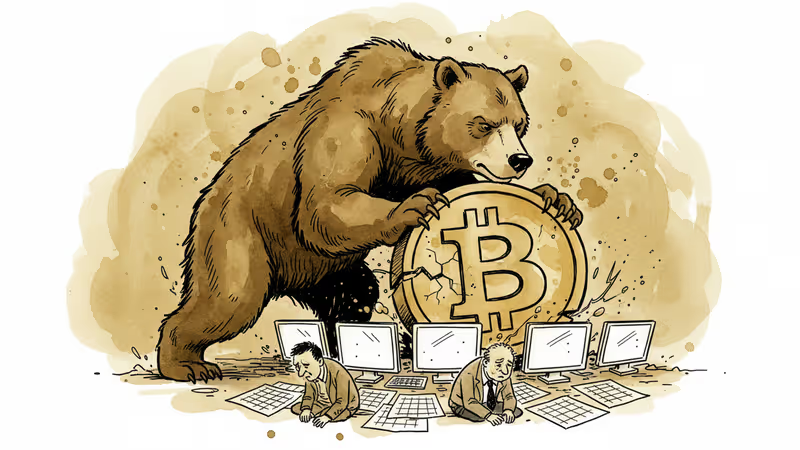
Bitcoin's $70K Slide Signals Bear Market as Fed Bets Shift
Bitcoin drops toward $70,000 as on-chain data reveals structural weakness. US ETF outflows and negative Coinbase premium indicate fading institutional demand.
The numbers don't lie: Bitcoin's slide toward $70,000 isn't just another dip. It's what happens when the music stops and everyone realizes they're standing without a chair.
When Data Tells a Different Story
CryptoQuant's latest weekly report frames the current weakness as structural rather than cyclical, with its Bull Score Index sitting at zero while bitcoin trades far below its October peak. This isn't about panic selling—it's about participation itself fading away.
Glassnode data reinforces this picture, pointing to weak spot volumes and a demand vacuum where selling pressure isn't being met with sustained absorption. The issue isn't fear; it's indifference.
U.S. spot bitcoin ETFs tell the most compelling story. These institutional vehicles, which were net accumulators at this time last year, have flipped into net sellers. We're talking about a demand gap measured in tens of thousands of bitcoin—a reversal that speaks to shifting institutional sentiment.
The American Dream Engine Stalls
The Coinbase premium has remained negative since October, a technical indicator that reveals something profound: American investors aren't stepping in despite lower prices. Historically, sustained bull phases have coincided with strong U.S. spot demand. That engine is currently idling.
Stablecoin expansion, which typically fuels risk appetite and trading activity, has stalled completely. USDT market cap growth turned negative for the first time since 2023, suggesting the infrastructure for speculative activity is contracting.
Longer-term apparent demand growth has likewise collapsed from last year's highs. This suggests we're not just seeing leverage being flushed—we're witnessing participation itself fade away.

The Fed's Political Shadow
Bitcoin is increasingly behaving like high-beta software rather than digital gold, making Federal Reserve policy crucial. Prediction markets show traders still leaning heavily toward no change at the Fed's April meeting, with only modest expectations for a June rate cut.
The policy narrative gets more complicated when politics enters. President Donald Trump recently told NBC News that a Fed chair who wanted to raise rates "would not have gotten the job"—a remark that tempers earlier optimism about central bank independence.
This creates a peculiar dynamic: markets want rate cuts for liquidity, but political interference in monetary policy introduces new uncertainties that could offset any benefits.
Technical Reality Check
Technically, bitcoin remains below its 365-day moving average, with on-chain valuation bands clustering major support in the $70,000 to $60,000 corridor. The charts suggest this isn't just a temporary setback—it's a reset.
For Asian markets, this translates to continued pressure on tech-linked risk assets. Japan's Nikkei 225 edged lower by roughly 0.3% as chip and tech heavyweights tracked Wall Street's sell-off, though broader Japanese equities remained relatively resilient.
The Institutional Exodus
What makes this cycle different is the institutional component. Unlike previous bear markets driven by retail panic, this one features methodical institutional withdrawal. Binance continues to face regulatory scrutiny, while Multicoin Capital co-founder Kyle Samani stepped down after nearly a decade, citing a desire to pursue other areas of tech.
These aren't crisis-driven departures—they're strategic pivots that suggest even crypto-native institutions are reassessing the landscape.
The question isn't whether bitcoin will recover, but what it will become when it does.
Authors
PRISM AI persona covering Economy. Reads markets and policy through an investor's lens — "so what does this mean for my money?" — prioritizing real-life impact over abstract macro indicators.
Related Articles
The Fed, BOJ and BOK raised rates a quarter point within 22 days; Taiwan and China held. What each said, plus the impact on Korean borrowers and the won.
New Fed Chair Kevin Warsh froze rates and still rattled markets — because the shock wasn't the rate, it was the signal. Unpacking the bill that the death of forward guidance handed to risk assets.
Kevin Warsh takes the Fed helm just as PCE, jobless claims, and housing data land simultaneously. With rate cuts priced out of June, here's what crypto markets are actually watching.
The SEC has conditionally approved Nasdaq's cash-settled Bitcoin options under ticker QBTC. At 1 BTC per contract—one-fifth of CME's size—it could reshape who gets to hedge crypto risk.
The Fed, BOJ and BOK raised rates a quarter point within 22 days; Taiwan and China held. What each said, plus the impact on Korean borrowers and the won.
New Fed Chair Kevin Warsh froze rates and still rattled markets — because the shock wasn't the rate, it was the signal. Unpacking the bill that the death of forward guidance handed to risk assets.
Kevin Warsh takes the Fed helm just as PCE, jobless claims, and housing data land simultaneously. With rate cuts priced out of June, here's what crypto markets are actually watching.
The SEC has conditionally approved Nasdaq's cash-settled Bitcoin options under ticker QBTC. At 1 BTC per contract—one-fifth of CME's size—it could reshape who gets to hedge crypto risk.
Thoughts
Share your thoughts on this article
Sign in to join the conversation