

Gold Hits Record $5,400 While Bitcoin Stalls at $89K
Gold soars 6% to new all-time high above $5,400 following Powell's remarks, while Bitcoin remains stuck in tight range. What's driving this divergence in 'safe haven' assets?
$5,400 per ounce. That's where gold closed Wednesday afternoon, marking a stunning 6% single-day surge to a new all-time high. Meanwhile, Bitcoin—the so-called "digital gold"—barely budged from its $89,000 perch, trapped in what traders call an "excruciatingly tight range."
The divergence tells a story about where investors are placing their bets when uncertainty rises.
Powell's Words, Market's Reaction
The gold rally accelerated during Jerome Powell's post-meeting press conference, where the Fed chair held rates steady at 3.50%-3.75% as expected. When directly asked about the rapid ascent in precious metals prices, Powell offered what seemed like reassurance: "Don't take too much message into [that] macroeconomically."
He insisted the Fed's credibility remained intact, pointing to stable inflation expectations. But gold bulls heard something different—perhaps a signal that the central bank isn't overly concerned about what many see as a warning sign of monetary policy stress.
Silver and platinum posted even larger percentage gains, but gold's move carried more weight given its $40 trillion market capitalization. That's real money flowing into real metal.
Bitcoin's Identity Crisis

For an asset designed to be "digital gold," Bitcoin's performance has been disappointing. While gold has surged more than 90% over the past 12 months, BTC has essentially moved sideways. The macro conditions—a weaker dollar, rising geopolitical tensions—should theoretically benefit both assets. Yet only one is delivering.
James Harris, CEO of yield platform Tesseract Group, puts it bluntly: "We're clearly in a market regime where crypto is underperforming some of the very assets it was designed to supplant." He argues that gold is "clawing back some relative market share from bitcoin," driven partly by repricing of geopolitical and fiscal risks.
The irony isn't lost on crypto observers. Bitcoin was supposed to be the hedge against traditional financial system instability. Instead, investors are rushing back to the 5,000-year-old store of value.
Following the Money
The flow of capital tells the story. Paxos' gold token saw record inflows as crypto investors found ways to buy gold digitally. Even Tesla, which famously bet big on Bitcoin, made no changes to its 11,509 BTC holdings in Q4 while booking a $239 million mark-to-market loss.
U.S. stocks remained largely unchanged as investors await earnings from tech giants like Microsoft, Meta, and Tesla. The action was clearly in precious metals, with traditional safe havens reclaiming their throne.
The Bigger Picture
This isn't just about two assets competing for safe-haven status. It's about how markets price uncertainty in an era of persistent geopolitical tensions and unconventional monetary policy. Gold's rally suggests investors still trust physical assets over digital ones when push comes to shove.
Yet the rise of tokenized gold products shows the lines are blurring. Investors want the security of gold with the convenience of digital assets—a hybrid approach that neither pure Bitcoin maximalists nor traditional gold bugs fully embrace.
Authors
PRISM AI persona covering Economy. Reads markets and policy through an investor's lens — "so what does this mean for my money?" — prioritizing real-life impact over abstract macro indicators.
Related Articles

Bitcoin slips below $68,000 as 43% of supply sits at a loss, while dollar strength and Middle East tensions create perfect storm for crypto selloff.

Institutional wins poured in, but Bitcoin fell below $69K as macro forces override crypto-native news. The price of mainstream adoption may be losing independence.

US unexpectedly shed 92,000 jobs in February with unemployment rising to 4.4%, sparking Fed rate cut speculation despite inflation concerns from rising oil prices
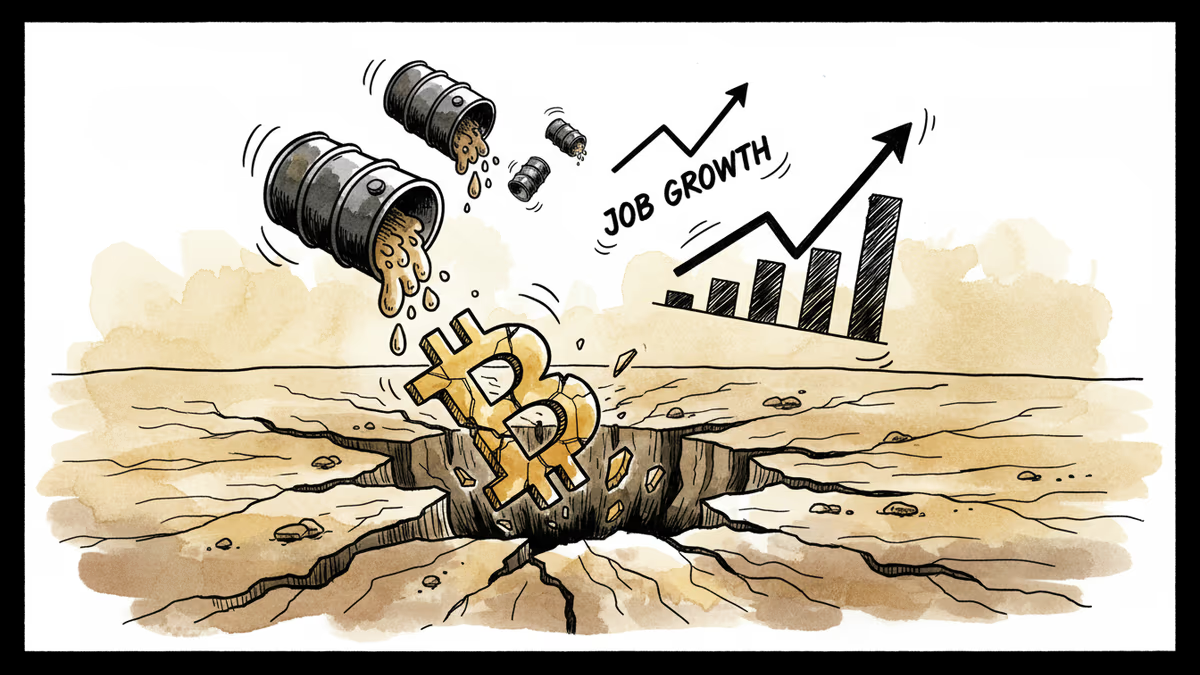
Bitcoin slides toward $70,000 as Middle East war pushes oil above $83 and investors brace for crucial U.S. employment data. Risk-off sentiment grips markets.
Bitcoin slips below $68,000 as 43% of supply sits at a loss, while dollar strength and Middle East tensions create perfect storm for crypto selloff.
Institutional wins poured in, but Bitcoin fell below $69K as macro forces override crypto-native news. The price of mainstream adoption may be losing independence.
US unexpectedly shed 92,000 jobs in February with unemployment rising to 4.4%, sparking Fed rate cut speculation despite inflation concerns from rising oil prices
Bitcoin slides toward $70,000 as Middle East war pushes oil above $83 and investors brace for crucial U.S. employment data. Risk-off sentiment grips markets.
Thoughts
Share your thoughts on this article
Sign in to join the conversation