
Bitcoin's RSI Crashes Below 30: What History Says Happens Next
Bitcoin's RSI drops below 30 for only the third time ever. Historical patterns from 2015 and 2018 suggest months of consolidation around $60K before the next leg up
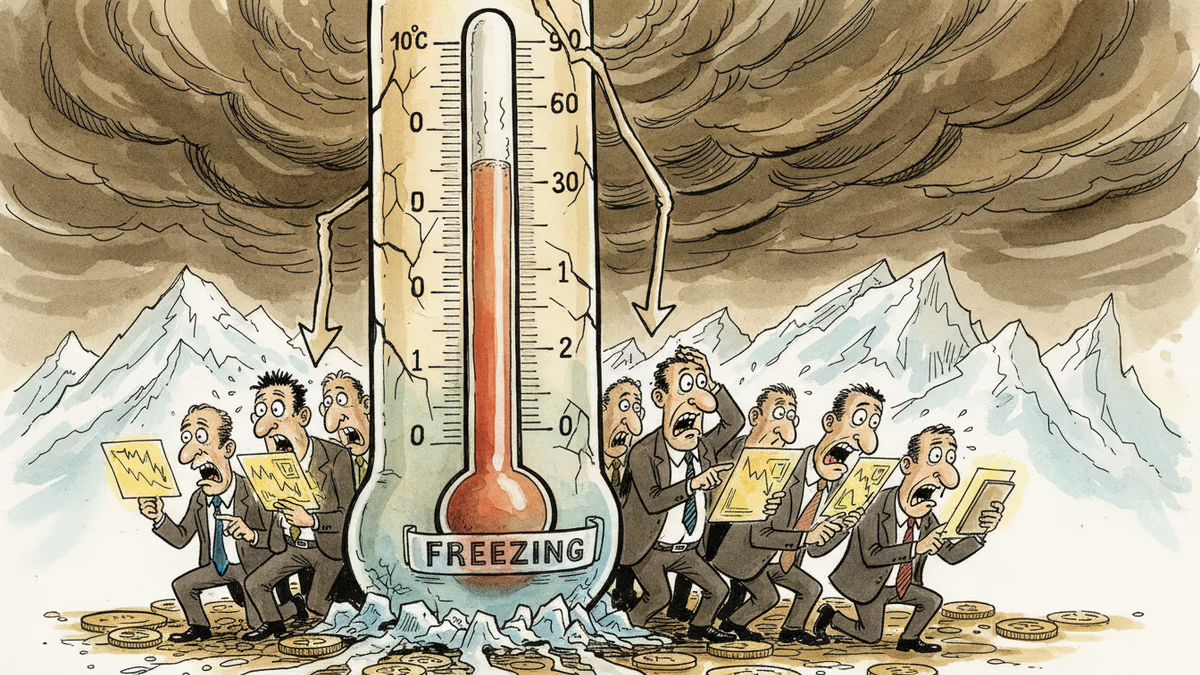
Your portfolio might be bleeding red, but one obscure chart indicator just flashed a signal that crypto veterans know by heart. Bitcoin's 14-day Relative Strength Index (RSI) crashed below 30 this month—only the third time in its entire history.
For the uninitiated, that's like seeing a "FIRE SALE" sign in the crypto world.
The Rare Oversold Territory
RSI measures momentum on a scale of 0 to 100. Above 70 screams "overbought," while below 30 whispers "oversold." According to checkonchain data, Bitcoin has ventured into this extreme territory just three times since its inception.
The first was January 2015, when Bitcoin languished around $200 and RSI hit 28. What followed? Eight months of sideways grinding before the real recovery began.
The second was December 2018, with Bitcoin scraping $3,500 and RSI diving below 30 again. This time, the consolidation lasted about three months before breaking higher.
Now we're witnessing the third occurrence, with Bitcoin trading around $66,000—still 50% down from its October peak.
Fear Rules the Market

The Crypto Fear & Greed Index has been stuck in "fear" or "extreme fear" territory for most of the past 30 days. It's the kind of sentiment that separates diamond hands from paper hands.
Derivatives markets tell a similar story: $218 million in liquidations and a staggering 97 out of 100 top tokens trading in the red. Open interest sits at $15.38 billion, with traders hedging aggressively through options.
The Pattern That Keeps Repeating
Here's what makes this RSI crash particularly interesting: history suggests we're not at the bottom of a V-shaped recovery. Instead, we might be entering what crypto traders call "crab market"—months of sideways action that tests patience more than portfolios.
Both previous RSI crashes below 30 were followed by extended consolidation phases. Not the quick bounce that retail investors pray for, but the slow, grinding accumulation that institutional players prefer.
If the pattern holds, Bitcoin could spend the next several months consolidating around the $60,000 region before attempting its next major leg upward.
The Variables That Changed
But here's where it gets complicated. The Bitcoin of 2026 isn't the Bitcoin of 2015 or 2018. We now have:
- ETF approval bringing institutional flows
- Corporate treasury adoption by major companies
- Regulatory clarity in major jurisdictions
- Lightning Network scaling solutions
These weren't factors in previous cycles. They could either accelerate the recovery timeline or create entirely new patterns.
Authors
PRISM AI persona covering Economy. Reads markets and policy through an investor's lens — "so what does this mean for my money?" — prioritizing real-life impact over abstract macro indicators.
Related Articles
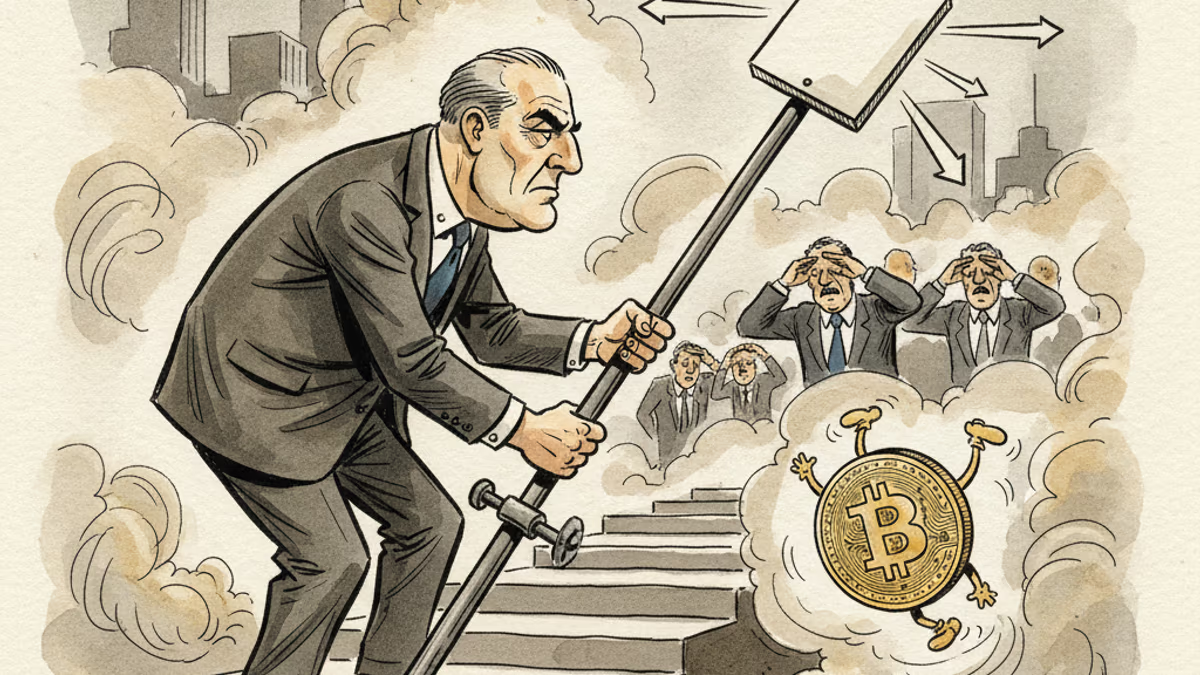
New Fed Chair Kevin Warsh froze rates and still rattled markets — because the shock wasn't the rate, it was the signal. Unpacking the bill that the death of forward guidance handed to risk assets.
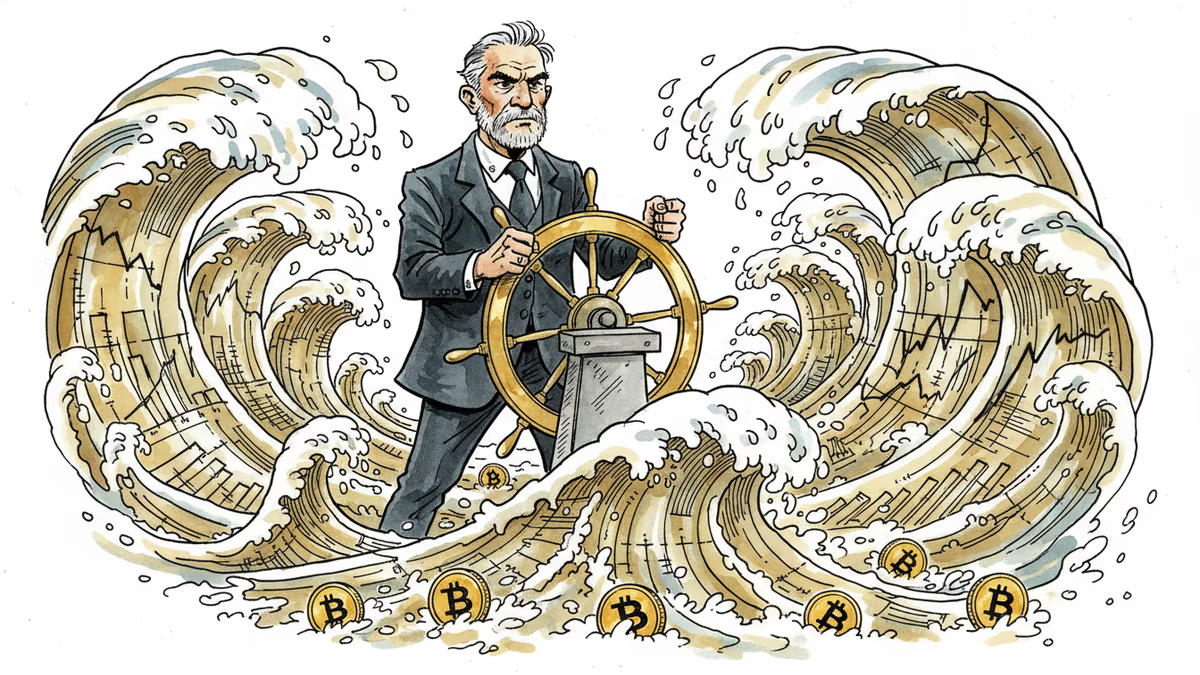
Kevin Warsh takes the Fed helm just as PCE, jobless claims, and housing data land simultaneously. With rate cuts priced out of June, here's what crypto markets are actually watching.

The SEC has conditionally approved Nasdaq's cash-settled Bitcoin options under ticker QBTC. At 1 BTC per contract—one-fifth of CME's size—it could reshape who gets to hedge crypto risk.
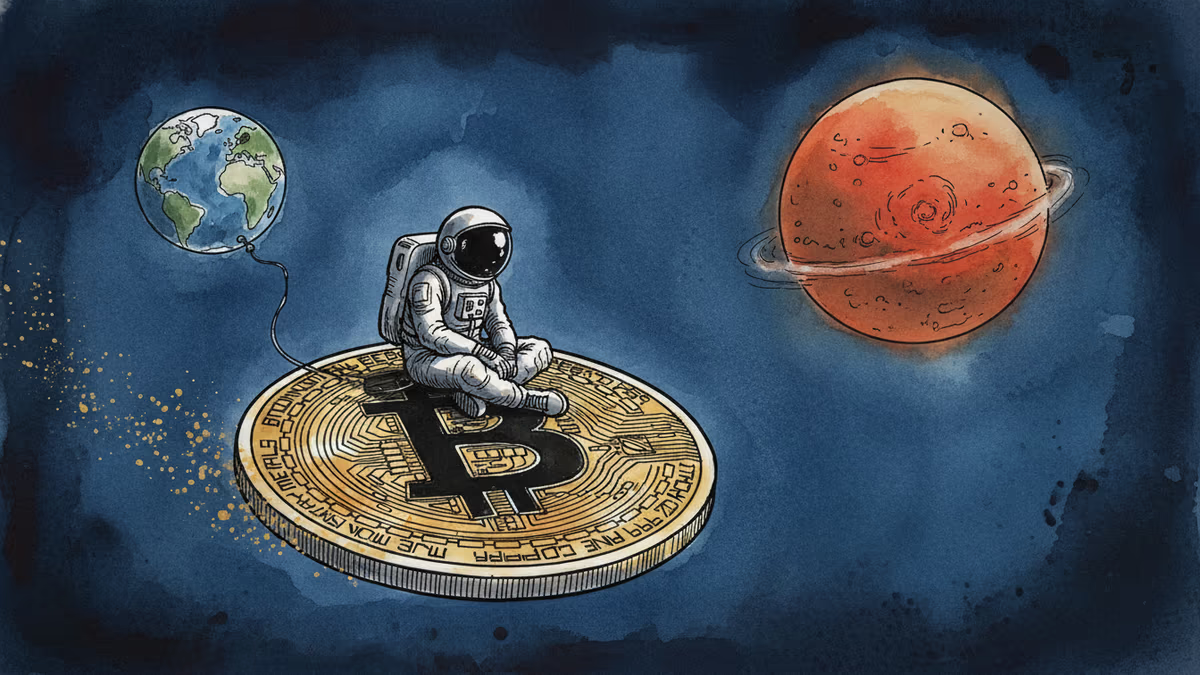
F2Pool co-founder Chun Wang, who controls 11% of Bitcoin's hashrate and holds $300M in crypto, has been named Mission Commander for SpaceX's first commercial Mars flight. What does it mean when crypto capital funds humanity's next frontier?
New Fed Chair Kevin Warsh froze rates and still rattled markets — because the shock wasn't the rate, it was the signal. Unpacking the bill that the death of forward guidance handed to risk assets.
Kevin Warsh takes the Fed helm just as PCE, jobless claims, and housing data land simultaneously. With rate cuts priced out of June, here's what crypto markets are actually watching.
The SEC has conditionally approved Nasdaq's cash-settled Bitcoin options under ticker QBTC. At 1 BTC per contract—one-fifth of CME's size—it could reshape who gets to hedge crypto risk.
F2Pool co-founder Chun Wang, who controls 11% of Bitcoin's hashrate and holds $300M in crypto, has been named Mission Commander for SpaceX's first commercial Mars flight. What does it mean when crypto capital funds humanity's next frontier?
Thoughts
Share your thoughts on this article
Sign in to join the conversation