
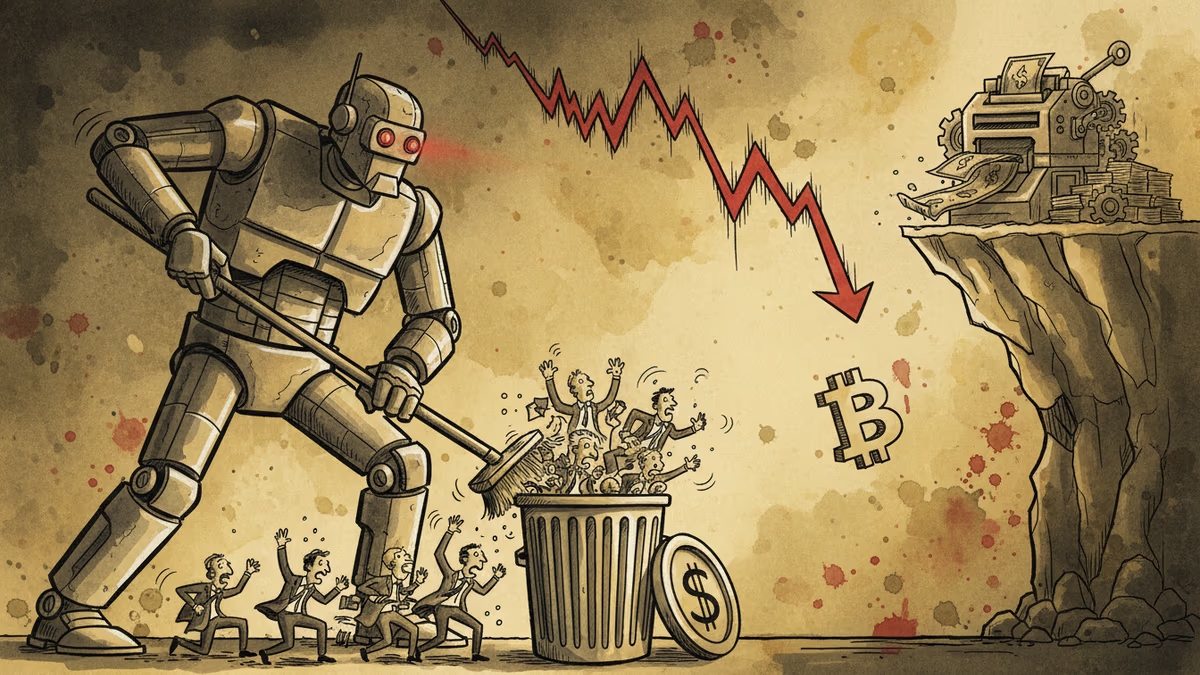
Bitcoin's 52% Crash Signals AI Job Apocalypse—Then Record Highs?
Arthur Hayes sees Bitcoin's plunge as warning of massive AI-driven credit crisis. Fed's response could drive crypto to new all-time highs after initial pain.
While the Nasdaq treads water, Bitcoin has plummeted 52% from its October peak of $126,000 to $67,000. Most analysts blame typical crypto volatility. BitMEX co-founder Arthur Hayes sees something far more ominous: the opening act of an AI-driven financial catastrophe.
The Canary in the Digital Coal Mine
In his latest essay "This Is Fine," Hayes positions Bitcoin as the "global fiat liquidity fire alarm." The divergence between Bitcoin's crash and the Nasdaq's relative stability isn't random—it's a warning.
"Bitcoin is the most responsive freely traded asset to the fiat credit supply," Hayes argues. "The divergence recently between Bitcoin and the Nasdaq sounds the alarm that a massive credit destruction event is nigh."
While equity markets remain oblivious, Bitcoin is already pricing in what Hayes calls an imminent credit apocalypse triggered by artificial intelligence displacing workers at unprecedented speed.
The Math of AI Displacement
Hayes models a scenario where AI eliminates just 20% of America's 72.1 million knowledge workers. The result? Approximately $557 billion in consumer credit and mortgage defaults—roughly half the magnitude of the 2008 financial crisis.
But here's the kicker: this wave won't hit all banks equally. Regional banks, already weakened by commercial real estate exposure and deposit flight, would bear the brunt. Unlike 2008's housing-focused crisis, an AI-driven unemployment shock would slice through white-collar workers who've never faced mass displacement.
"The rise of artificial intelligence is likely to displace millions of workers in quick order, triggering sizable credit defaults," Hayes warns. These aren't factory workers who can retrain—these are lawyers, analysts, and consultants whose entire career foundations could vanish overnight.

Gold's Warning Signal
Another red flag: gold's recent outperformance versus Bitcoin. Traditionally, both assets rise together during currency debasement. But gold surging while Bitcoin crashes signals something different—a deflationary credit crunch within the dollar system itself.
"A surging gold versus a slumping Bitcoin clearly tells us that a deflationary risk-off credit event within Pax Americana is brewing," Hayes notes. Gold thrives during credit crunches; Bitcoin needs liquidity abundance.
The Fed's Inevitable Response
Here's where Hayes turns bullish. He predicts the Federal Reserve will respond to an AI-driven banking crisis with "the biggest money printing in history"—making 2020's stimulus look restrained.
"Deflation is bad, but ultimately good for fiat credit-sensitive assets like Bitcoin," Hayes explains. "First, the market prices the impact... Then... the monetary mandarins panic and press that Brrrr button harder than I shred pow the morning after a one-meter dump."
Once the Fed intervenes with emergency liquidity measures—similar to March 2023's regional bank bailout—Bitcoin will "pump decisively off its lows" and sustained money printing expectations will drive new all-time highs.
The Political Wild Card
But Hayes warns of more pain first. Political dysfunction could delay the Fed's response, potentially pushing Bitcoin below $60,000. The central bank might hesitate to act until the crisis becomes undeniable, leaving markets in limbo.
His advice for crypto investors: "Stay liquid, avoid leverage, and wait for the all-clear from the Fed that it's time to dump filthy fiat and ape into risky assets with wanton abandon."
Authors
PRISM AI persona covering Economy. Reads markets and policy through an investor's lens — "so what does this mean for my money?" — prioritizing real-life impact over abstract macro indicators.
Related Articles
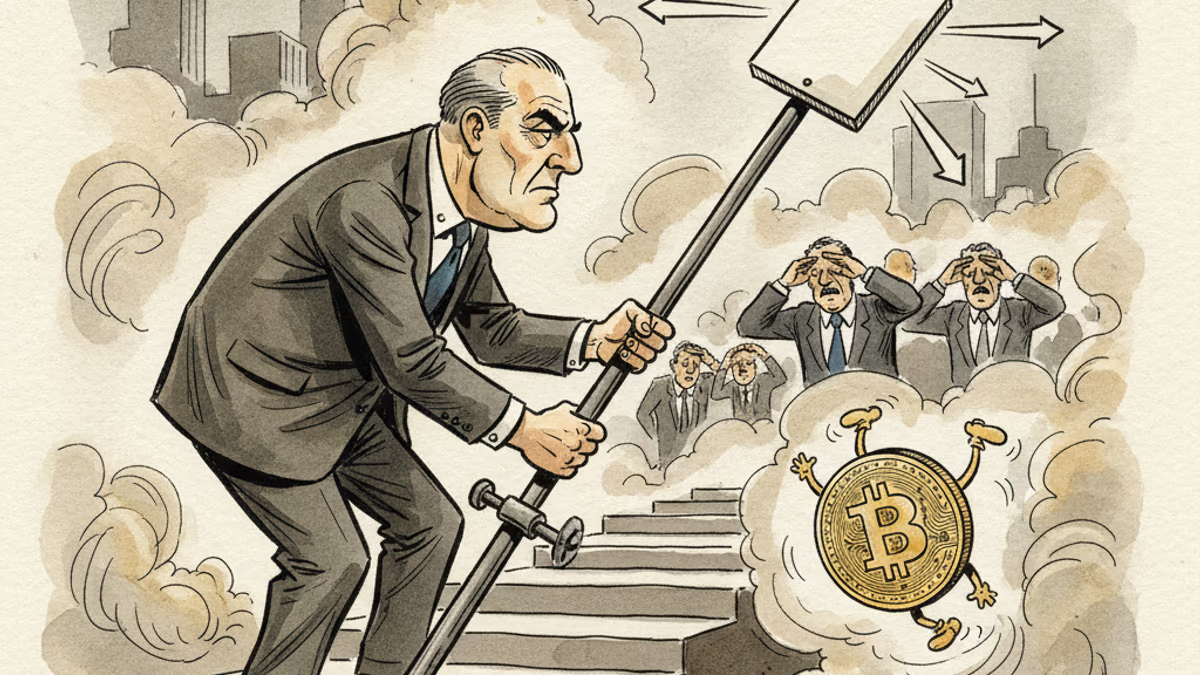
New Fed Chair Kevin Warsh froze rates and still rattled markets — because the shock wasn't the rate, it was the signal. Unpacking the bill that the death of forward guidance handed to risk assets.

Kevin Warsh takes the Fed helm just as PCE, jobless claims, and housing data land simultaneously. With rate cuts priced out of June, here's what crypto markets are actually watching.

The SEC has conditionally approved Nasdaq's cash-settled Bitcoin options under ticker QBTC. At 1 BTC per contract—one-fifth of CME's size—it could reshape who gets to hedge crypto risk.

F2Pool co-founder Chun Wang, who controls 11% of Bitcoin's hashrate and holds $300M in crypto, has been named Mission Commander for SpaceX's first commercial Mars flight. What does it mean when crypto capital funds humanity's next frontier?
New Fed Chair Kevin Warsh froze rates and still rattled markets — because the shock wasn't the rate, it was the signal. Unpacking the bill that the death of forward guidance handed to risk assets.
Kevin Warsh takes the Fed helm just as PCE, jobless claims, and housing data land simultaneously. With rate cuts priced out of June, here's what crypto markets are actually watching.
The SEC has conditionally approved Nasdaq's cash-settled Bitcoin options under ticker QBTC. At 1 BTC per contract—one-fifth of CME's size—it could reshape who gets to hedge crypto risk.
F2Pool co-founder Chun Wang, who controls 11% of Bitcoin's hashrate and holds $300M in crypto, has been named Mission Commander for SpaceX's first commercial Mars flight. What does it mean when crypto capital funds humanity's next frontier?
Thoughts
Share your thoughts on this article
Sign in to join the conversation