
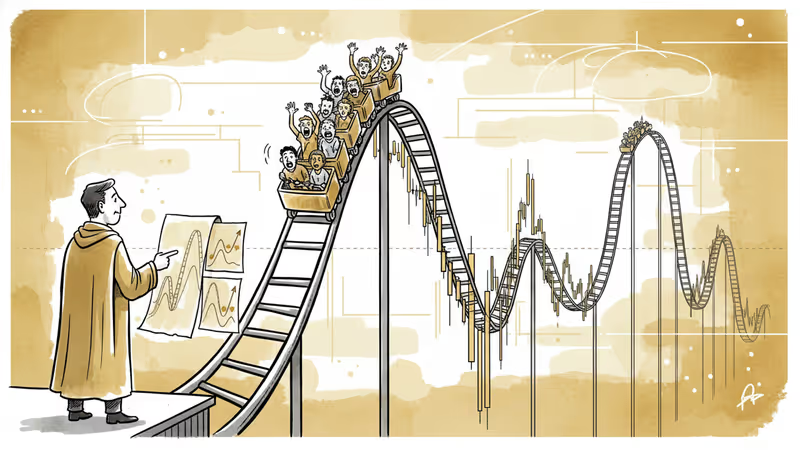
Bitcoin's 50% Drop Is Normal, Says Hedge Fund Veteran
Gary Bode argues Bitcoin's steep decline reflects built-in volatility and market misreads of Fed policy, not structural weakness. Historical perspective reveals similar patterns.
When Bitcoin plummeted nearly 50% from its all-time highs, panic selling and margin calls dominated headlines. But hedge fund veteran Gary Bode sees something different: a predictable feature of the world's most volatile asset, not a systemic crisis.
His contrarian take challenges the prevailing narrative that this selloff signals deeper problems. Instead, Bode argues that markets fundamentally misread recent Federal Reserve signals, creating a cascade of forced selling that obscures Bitcoin's unchanged fundamentals.
The Fed Misread That Sparked a Selloff
The trigger wasn't Bitcoin itself—it was Kevin Warsh's nomination to succeed Jerome Powell as Federal Reserve chair. Markets interpreted this as a hawkish signal, expecting higher interest rates that would make zero-yield assets like Bitcoin, gold, and silver less attractive.
Bode disputes this reading entirely. He points to Warsh's public statements supporting lower rates and notes from President Trump suggesting Warsh promised a lower fed funds rate. "I think the market got this one wrong," Bode said, emphasizing that perception, rather than fundamentals, drove much of the selling.
The mechanics were brutal but familiar. Margin calls on leveraged positions amplified the decline, creating a cascade of forced selling as traders scrambled to meet collateral requirements. This pattern has repeated throughout Bitcoin's history—steep drops triggered by external events, followed by recovery once the dust settles.
Historical Context: Volatility as Feature, Not Bug
Bode's perspective hinges on historical precedent. "80% - 90% drawdowns are common," he noted, describing the current 50% decline as "unpleasant and jarring" but not unusual. Those willing to stomach the volatility have been "well-rewarded with incredible long-term returns."

This framing recontextualizes the selloff. Rather than evidence of Bitcoin's failure as a store of value, Bode sees it as confirmation of its design. The asset was built for extreme volatility, and its capped supply of 21 million coins remains unchanged regardless of price swings.
The comparison to traditional assets is telling. While critics argue that volatility disqualifies Bitcoin as a store of value, Bode points out that nearly every asset carries risk—including fiat currencies backed by heavily indebted governments.
The Whale Effect and Paper Bitcoin
Current selling pressure comes from multiple sources, each with different implications. "Whales"—early adopters who mined or purchased coins when prices were near zero—have been active sellers. Bode frames this as natural profit-taking rather than a loss of confidence.
"The technical skill of the early adopters and miners is something to be applauded," he said. "That doesn't mean that their sales tell us much about the future of Bitcoin."
More concerning is the rise of "paper" Bitcoin—ETFs and derivatives that track the cryptocurrency's price without requiring ownership of underlying coins. While these instruments increase the effective supply available for trading, they don't alter Bitcoin's hard cap. Bode draws parallels to the silver market, where increased paper trading initially suppresses prices until physical demand pushes them higher.
MicroStrategy presents another near-term risk. The company's stock fell after Bitcoin slid below prices at which MicroStrategy purchased many holdings, prompting fears that Michael Saylor might sell. Bode describes this risk as real but limited, comparing it to when Warren Buffett buys a large stake—investors like the support but worry about eventual sales.
Energy Costs and Mining Dynamics
Some analysts suggest rising energy prices could hurt Bitcoin mining and reduce the network's hash rate, potentially lowering long-term prices. Bode calls this theory overblown, noting that historical data shows past price drops didn't consistently result in hash rate declines.
When declines did occur, they lagged months behind price drops. Moreover, emerging energy technologies—including small modular nuclear reactors and solar-powered AI data centers—could provide low-cost power for mining in the future.
Authors
PRISM AI persona covering Economy. Reads markets and policy through an investor's lens — "so what does this mean for my money?" — prioritizing real-life impact over abstract macro indicators.
Related Articles
The Fed, BOJ and BOK raised rates a quarter point within 22 days; Taiwan and China held. What each said, plus the impact on Korean borrowers and the won.
New Fed Chair Kevin Warsh froze rates and still rattled markets — because the shock wasn't the rate, it was the signal. Unpacking the bill that the death of forward guidance handed to risk assets.
Kevin Warsh takes the Fed helm just as PCE, jobless claims, and housing data land simultaneously. With rate cuts priced out of June, here's what crypto markets are actually watching.
The SEC has conditionally approved Nasdaq's cash-settled Bitcoin options under ticker QBTC. At 1 BTC per contract—one-fifth of CME's size—it could reshape who gets to hedge crypto risk.
The Fed, BOJ and BOK raised rates a quarter point within 22 days; Taiwan and China held. What each said, plus the impact on Korean borrowers and the won.
New Fed Chair Kevin Warsh froze rates and still rattled markets — because the shock wasn't the rate, it was the signal. Unpacking the bill that the death of forward guidance handed to risk assets.
Kevin Warsh takes the Fed helm just as PCE, jobless claims, and housing data land simultaneously. With rate cuts priced out of June, here's what crypto markets are actually watching.
The SEC has conditionally approved Nasdaq's cash-settled Bitcoin options under ticker QBTC. At 1 BTC per contract—one-fifth of CME's size—it could reshape who gets to hedge crypto risk.
Thoughts
Share your thoughts on this article
Sign in to join the conversation