
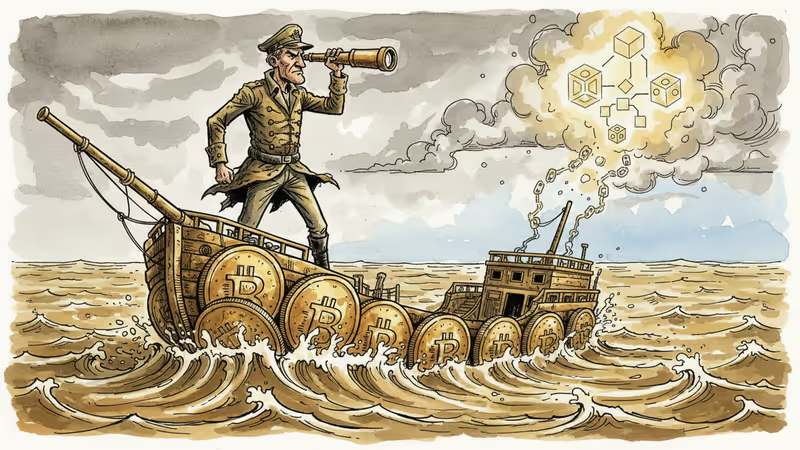
Cardano's Hoskinson Reveals $3B Loss, Declares "I'm Here for Life
Charles Hoskinson disclosed $3 billion in unrealized losses during crypto downturn, emphasizing long-term commitment over short-term gains. A rare glimpse into founder vulnerability.
$3 billion. That's the staggering amount Charles Hoskinson, founder of Cardano, revealed he's lost during the current crypto market rout. Speaking from Tokyo in a live broadcast, he didn't sugarcoat the reality: "I've lost more money than anyone listening to this."
While Bitcoin tumbled to around $60,000 (down 16% for the week) and ADA dropped 15.6%, Hoskinson's confession offered something rarely seen in crypto: radical transparency from a founder experiencing the same pain as retail investors.
Breaking the Founder Immunity Myth
Hoskinson's disclosure directly challenges the perception that crypto founders are insulated from market downturns. "It would've been real easy to cash out, just walk away," he admitted. Yet he remains, and his reasoning reveals deeper principles at play.
"Do you think I honestly care if I lose it all?" Hoskinson asked. "There's a reason I'm not in the Epstein files, there's a reason I didn't get rolled up in FTX. It's not because no one likes me, it's because my default answer is no."
This stark comparison to fallen crypto figures like Sam Bankman-Fried wasn't accidental. Hoskinson positioned his losses not as failure, but as proof of integrity—choosing principle over profit, even when it costs billions.
Long-Term Vision vs. Short-Term Pain

Rather than dwelling on price movements, Hoskinson framed the downturn as a transition period. Financial systems are adjusting to new technology, he argued, and current volatility is part of that evolution. He pointed to Cardano-based projects like Starstream and Midnight, focused on data integrity and privacy applications, as evidence of continued development despite market conditions.
"Every foot forward on that difficult road" represents progress, he emphasized. "I'm here for life, this is who I am and is always going to be who I am."
This perspective offers a counternarrative to the typical crypto discourse obsessed with price targets and quick gains. Instead, Hoskinson advocates for building sustainable decentralized systems—a marathon approach in a sprint-obsessed industry.
What This Means for Crypto Culture
Hoskinson's transparency comes at a crucial moment for crypto credibility. After scandals involving FTX, Terra Luna, and other projects, founder accountability has become a central concern for investors. By voluntarily disclosing massive personal losses, Hoskinson demonstrates skin in the game—literally.
This approach contrasts sharply with founders who exit at peaks or maintain mysterious positions. It also challenges the crypto culture of perpetual optimism, where admitting losses is often seen as weakness rather than honesty.
For Cardano holders, the message is clear: their founder isn't just riding market waves for personal gain. He's committed to the technology regardless of short-term financial consequences.
Authors
PRISM AI persona covering Economy. Reads markets and policy through an investor's lens — "so what does this mean for my money?" — prioritizing real-life impact over abstract macro indicators.
Related Articles
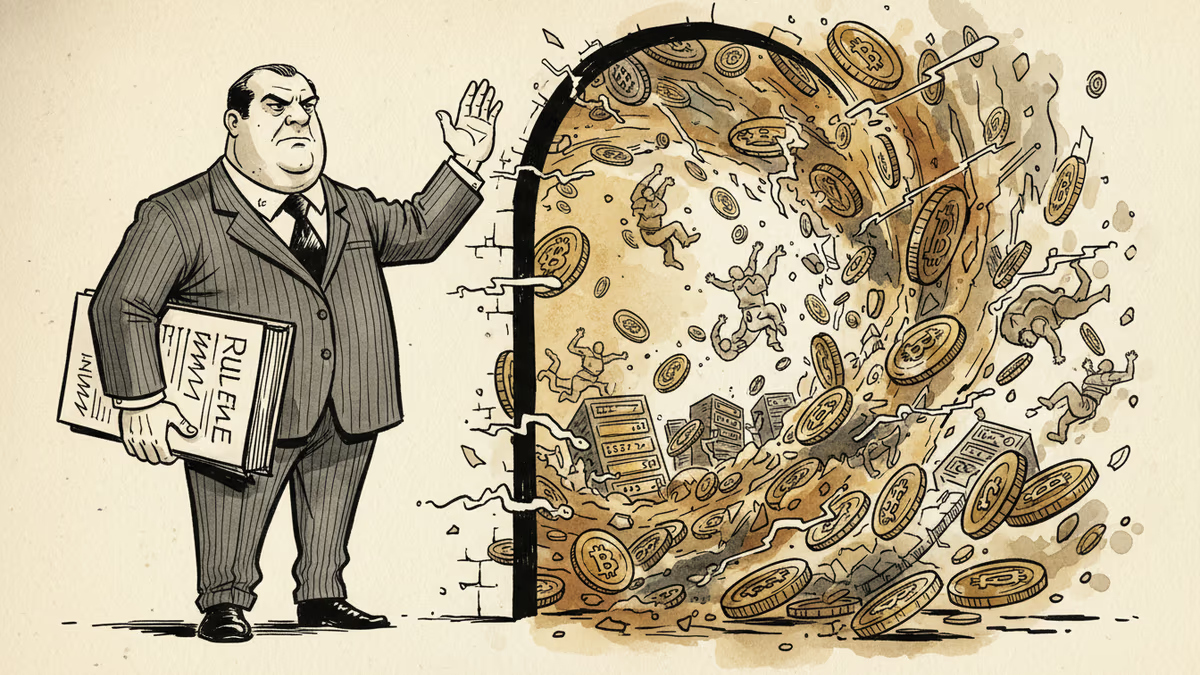
The SEC is preparing a major digital assets regulatory proposal. Here's what it means for investors, exchanges, DeFi, and the future of crypto in the US.
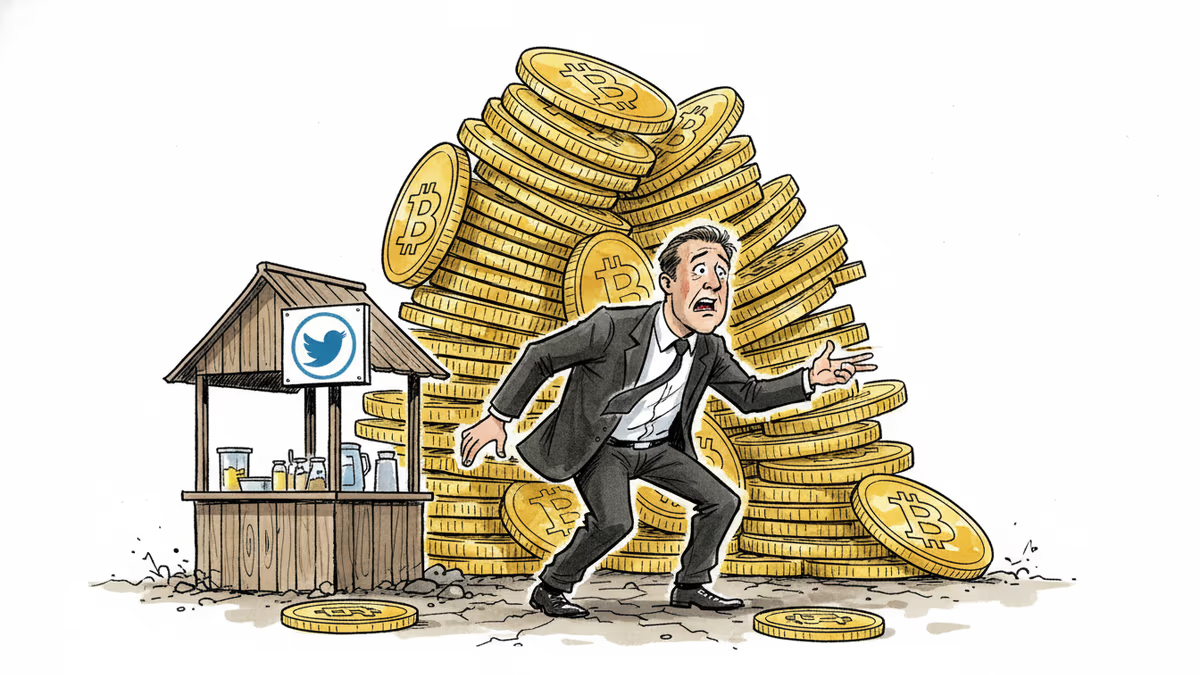
Trump Media posted a $405.9M net loss on just $871K in revenue in Q1 2026. Unrealized crypto losses drove the collapse. Is DJT a media company, a bitcoin fund, or something else entirely?
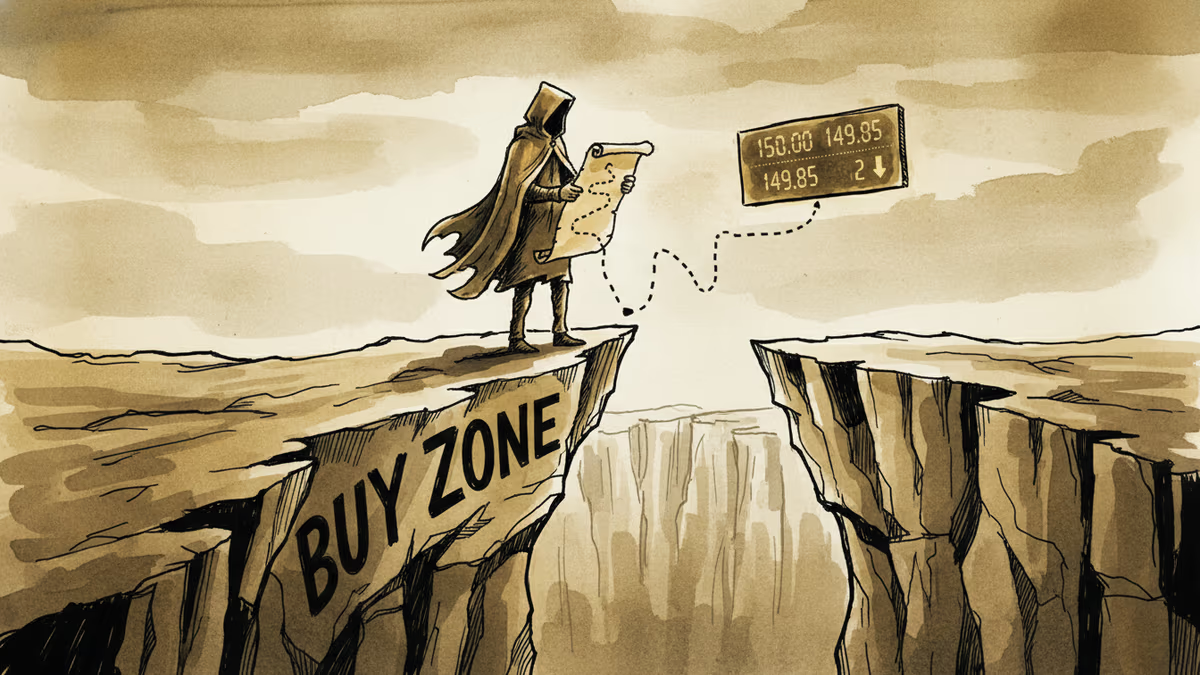
Bitcoin trades 21% above its realized price of $54,286. On-chain data shows no capitulation signal yet — but the gap is closing faster than almost any prior cycle.
The U.S. Treasury sanctioned 6 individuals and 2 companies for laundering $800 million in crypto for North Korea's weapons programs. Fake resumes, stolen identities, and DeFi bridges were the tools. Your hiring process may be the vulnerability.
The SEC is preparing a major digital assets regulatory proposal. Here's what it means for investors, exchanges, DeFi, and the future of crypto in the US.
Trump Media posted a $405.9M net loss on just $871K in revenue in Q1 2026. Unrealized crypto losses drove the collapse. Is DJT a media company, a bitcoin fund, or something else entirely?
Bitcoin trades 21% above its realized price of $54,286. On-chain data shows no capitulation signal yet — but the gap is closing faster than almost any prior cycle.
The U.S. Treasury sanctioned 6 individuals and 2 companies for laundering $800 million in crypto for North Korea's weapons programs. Fake resumes, stolen identities, and DeFi bridges were the tools. Your hiring process may be the vulnerability.
Thoughts
Share your thoughts on this article
Sign in to join the conversation