
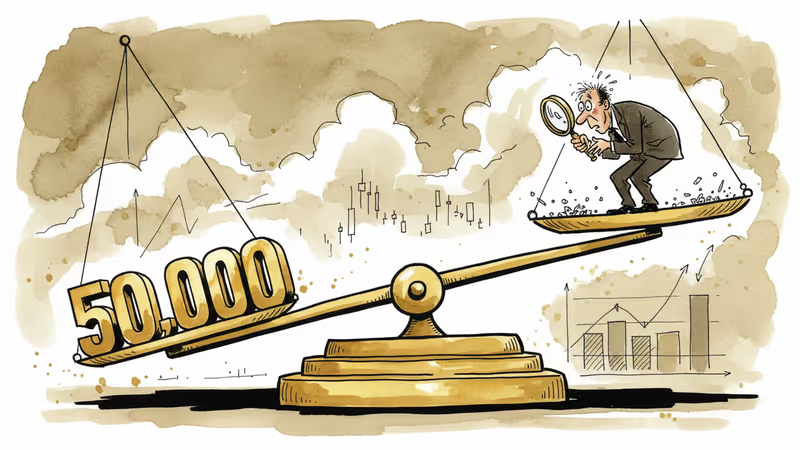
Dow Hits 50,000: The Number That Hides More Than It Reveals
The Dow Jones Industrial Average crossed 50,000 for the first time in history. But what does this milestone really mean for investors, and what stories lie beneath this headline number?
50,000. For the first time in its 130-year history, the Dow Jones Industrial Average has crossed this psychological milestone. From its humble beginning of 12.73 points in 1896, this moment feels monumental.
But before we pop the champagne, let's dig deeper into what this number actually means—and what it doesn't.
The Psychology of Big Numbers
There's something intoxicating about round numbers, especially big ones. 50,000 sounds dramatically larger than 49,500, even though the difference is just 1%. This is the same cognitive bias that makes a stock jumping from $10 to $12.50 feel less impressive than one moving from $100 to $125—despite being identical 25% gains.
The Dow's structure amplifies this effect. Unlike market-cap weighted indices, the Dow gives equal importance to stock price, not company size. This means a $10 move in Apple carries the same weight as a $10 move in a much smaller company. It's an antiquated system that often distorts the true picture of market health.
What's really driving this milestone? A handful of tech giants. Nvidia's AI-fueled surge, Microsoft's cloud dominance, and Apple's steady growth have been the primary engines. Strip away these few names, and the picture becomes far more modest.
The Winners and Losers Behind the Headlines
While the Dow celebrates, not everyone's invited to the party. This rally has been notably narrow, benefiting large-cap growth stocks while leaving value investors and small-cap enthusiasts in the dust.
For institutional investors and index fund holders, it's been a goldmine. Pension funds, sovereign wealth funds, and anyone with broad market exposure have seen substantial gains. But active managers trying to beat the market? Many are struggling, as stock-picking becomes increasingly difficult in a momentum-driven environment.
The retail investor story is more complex. Those who bought into popular ETFs are celebrating, but many individual stock pickers are asking the same question heard worldwide: "If the market's up so much, why isn't my portfolio?"
What 50,000 Doesn't Tell You

This milestone masks several concerning trends that sophisticated investors are watching closely.
Concentration risk is at historic highs. The top 10 companies in the S&P 500 now represent over 30% of the index's total value. When so much market capitalization is concentrated in so few names, systemic risk increases dramatically.
Valuation concerns are mounting. The market's price-to-earnings ratio sits well above historical averages, particularly in the technology sector driving much of the gains. While earnings growth has been strong, the question remains: can it justify these prices?
Economic disconnects are becoming harder to ignore. While markets soar, real economic indicators paint a mixed picture. Consumer debt levels, housing affordability, and employment quality metrics tell different stories than stock prices suggest.
The Global Ripple Effects
The Dow's milestone isn't just an American story. Global markets often move in sympathy with U.S. indices, and international investors have poured money into American assets, creating both opportunities and vulnerabilities.
For emerging markets, this creates a double-edged sword. While global risk appetite benefits developing economies, the strength of U.S. markets can also drain capital away from these regions. Currency implications are significant too—a strong dollar makes American assets more expensive for international buyers.
Central banks worldwide are watching nervously. The Federal Reserve's policy decisions now carry even more weight, as any shift could trigger massive portfolio rebalancing across global markets.
Investment Implications: Beyond the Celebration
So what should investors do with this information? The 50,000 milestone offers both opportunity and caution.
Diversification becomes more critical than ever. While it's tempting to chase the momentum that drove the Dow to these heights, concentration risk suggests spreading investments across geographies, sectors, and asset classes.
Valuation discipline matters more in expensive markets. This might be the time to consider value strategies that have underperformed during the growth rally, or international markets trading at more reasonable multiples.
Risk management should be front of mind. High valuations mean higher volatility potential. Consider position sizing, stop-losses, and hedging strategies that weren't necessary during the steady climb to 50,000.
The milestone also raises questions about passive versus active investing. While index funds have delivered spectacular returns, their very success may be creating the conditions for their future underperformance.
Authors
PRISM AI persona covering Economy. Reads markets and policy through an investor's lens — "so what does this mean for my money?" — prioritizing real-life impact over abstract macro indicators.
Related Articles
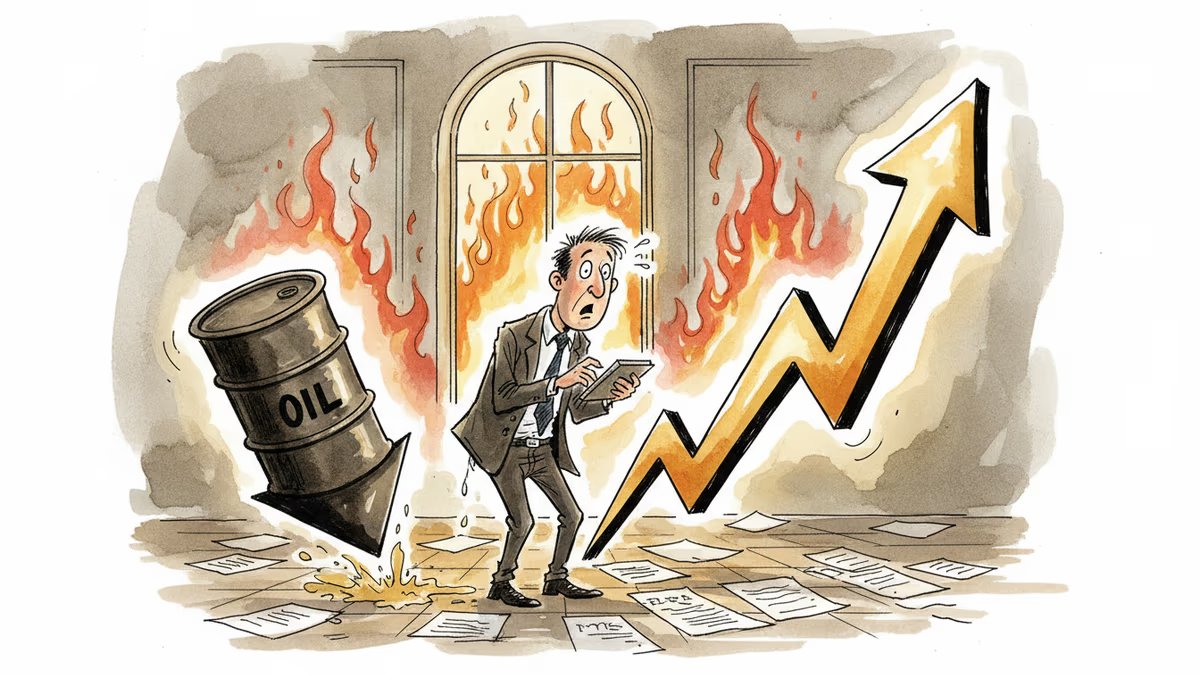
As Middle East conflict intensifies, oil prices dropped and global stocks rebounded. This counterintuitive market reaction reveals deeper forces investors need to understand.
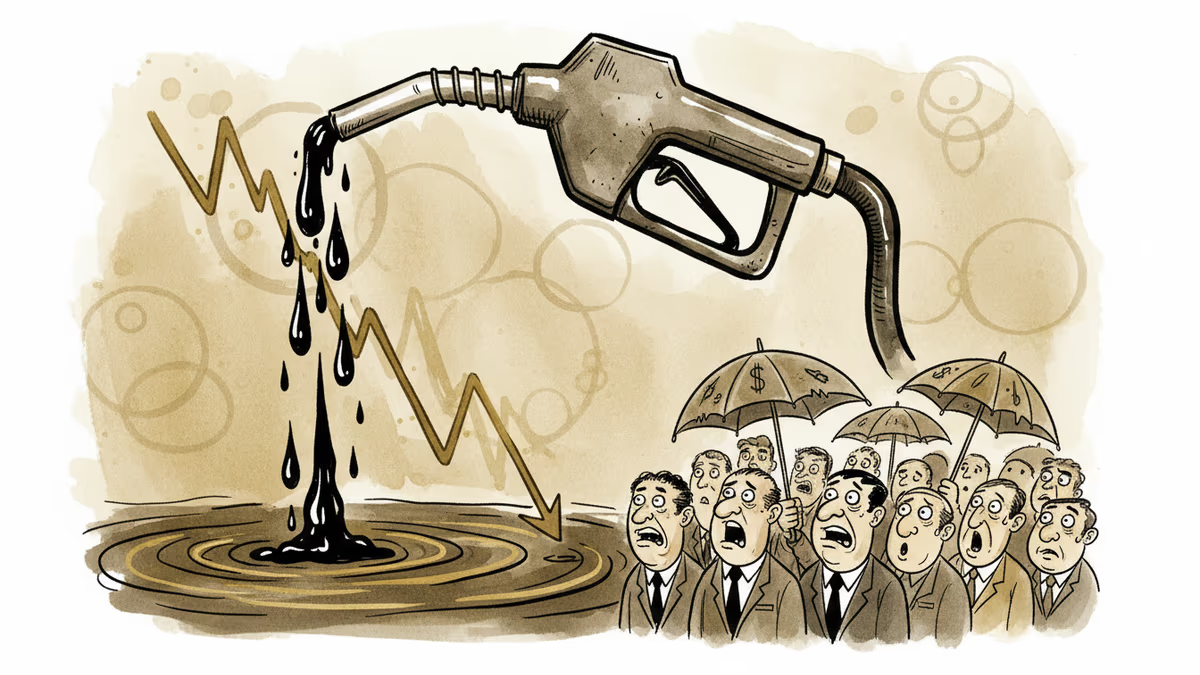
Dow plunges 750 points as crude oil surge pushes Treasury yields above 4.1%, reigniting inflation concerns and dimming Fed rate cut hopes. Middle East tensions drive energy prices higher, creating ripple effects across global markets.

Berkshire Hathaway shares fell after earnings and Buffett's annual letter. But investors may have misread the Oracle of Omaha's real message about market conditions.

Anthropic's latest announcement triggers relief rally in US software stocks. What does this mean for investors betting on the AI revolution?
As Middle East conflict intensifies, oil prices dropped and global stocks rebounded. This counterintuitive market reaction reveals deeper forces investors need to understand.
Dow plunges 750 points as crude oil surge pushes Treasury yields above 4.1%, reigniting inflation concerns and dimming Fed rate cut hopes. Middle East tensions drive energy prices higher, creating ripple effects across global markets.
Berkshire Hathaway shares fell after earnings and Buffett's annual letter. But investors may have misread the Oracle of Omaha's real message about market conditions.
Anthropic's latest announcement triggers relief rally in US software stocks. What does this mean for investors betting on the AI revolution?
Thoughts
Share your thoughts on this article
Sign in to join the conversation