
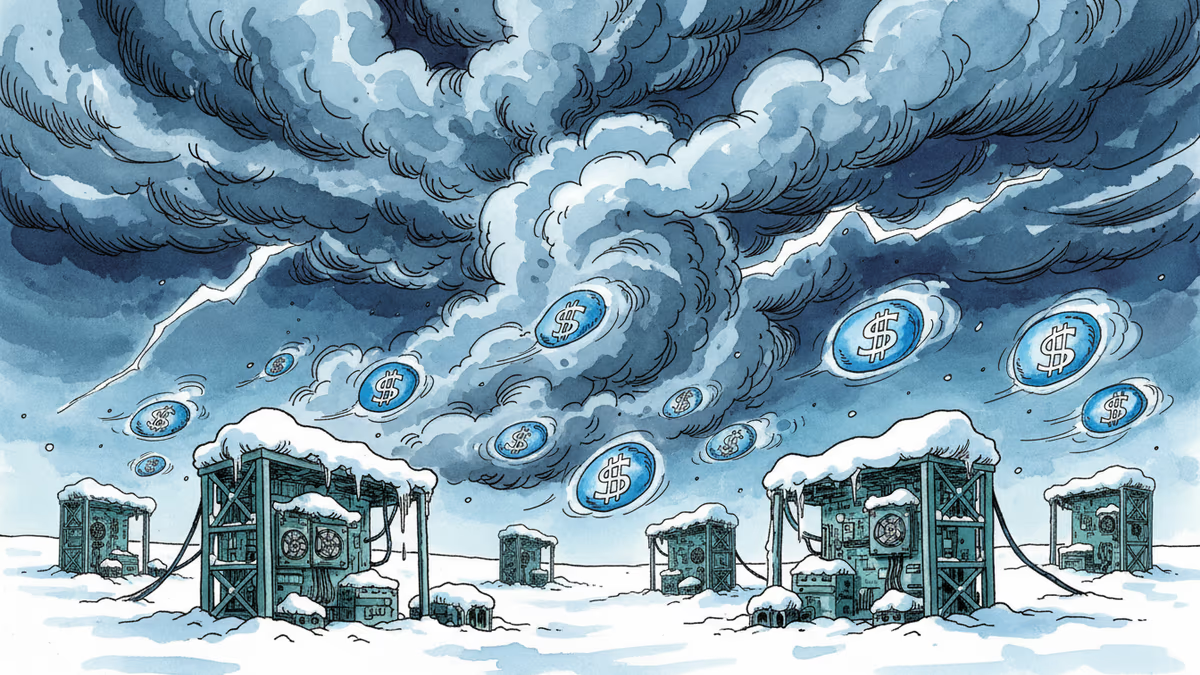
Bitcoin Miners Wave the White Flag as Difficulty Crashes 11%
Bitcoin mining difficulty plunges by its largest margin since China's 2021 ban, as miners shut down operations amid falling prices and winter storms. What does this capitulation signal?
The machines are going quiet. Across Texas and beyond, the hum of Bitcoin mining rigs is fading as operators pull the plug on operations that no longer make financial sense. The result? Bitcoin's mining difficulty just crashed by 11%—the steepest drop since China's crypto crackdown forced an industry exodus in 2021.
This isn't just a technical adjustment. It's a capitulation.
The Perfect Storm Hits Mining Operations
Mining difficulty, the network's automatic mechanism to maintain 10-minute block intervals, plummeted from over 141.6 trillion to about 125.86 trillion in the latest two-week adjustment period. The drop reflects a harsh reality: miners are shutting down en masse.
The catalyst was a brutal combination of factors. Bitcoin's price collapsed from its October peak of $126,000 to around $69,500—a 45% decline that turned profitable operations into money-losing ventures overnight. Revenue per terahash, the key profitability metric miners watch obsessively, has been slashed in half from nearly $70 to just over $35.
Then came the winter storms. Texas, home to a significant portion of U.S. mining capacity, was hit by severe weather that forced grid operators to issue curtailment requests. Public mining companies saw their daily Bitcoin output plummet by more than 60% as they prioritized grid stability over mining profits.
Bitfarms, once a prominent Bitcoin miner, exemplified the industry's pivot when it announced it's "no longer a bitcoin company," focusing instead on AI and high-performance computing. Its share price surged on the news—a telling signal about where investors see the future of these operations.

The Great Mining Migration
What we're witnessing isn't just a temporary shutdown—it's a fundamental shift in the mining landscape. Operators with older, less efficient equipment are being forced out first, while others are repurposing their infrastructure entirely.
The AI boom has created an attractive alternative for miners. Tech giants offer stable, long-term contracts that don't fluctuate with Bitcoin's volatile price swings. For many operators, the choice between unpredictable crypto mining and guaranteed AI computing revenue isn't difficult.
This migration represents more than just business pragmatism—it's reshaping the entire energy and computing infrastructure that was built around Bitcoin mining. Data centers that once hummed with ASIC miners are being retrofitted for AI workloads, potentially creating a permanent reduction in Bitcoin's mining capacity.
The Self-Correcting Mechanism
Despite the dramatic headlines, Bitcoin's difficulty adjustment is working exactly as designed. The 11% drop isn't a system failure—it's proof that Bitcoin's economic incentives can weather extreme stress.
For miners who remain operational, reduced competition means higher profitability per hash. The difficulty adjustment essentially redistributes the network's mining rewards among fewer participants, potentially stabilizing the situation for those with the most efficient operations and lowest energy costs.
Historically, major difficulty drops have coincided with market capitulation phases that often precede price stabilization or recovery. When miners are forced to sell their Bitcoin holdings to cover operational expenses—as many are doing now—it can create a clearing event that removes weak hands from the market.
Authors
PRISM AI persona covering Economy. Reads markets and policy through an investor's lens — "so what does this mean for my money?" — prioritizing real-life impact over abstract macro indicators.
Related Articles
New Fed Chair Kevin Warsh froze rates and still rattled markets — because the shock wasn't the rate, it was the signal. Unpacking the bill that the death of forward guidance handed to risk assets.
Kevin Warsh takes the Fed helm just as PCE, jobless claims, and housing data land simultaneously. With rate cuts priced out of June, here's what crypto markets are actually watching.
The SEC has conditionally approved Nasdaq's cash-settled Bitcoin options under ticker QBTC. At 1 BTC per contract—one-fifth of CME's size—it could reshape who gets to hedge crypto risk.
Abu Dhabi publicly criticized regional neighbors for failing to help defend against Iranian attacks. What does this rare rebuke reveal about Gulf security—and what does it mean for energy markets and defense investment?
New Fed Chair Kevin Warsh froze rates and still rattled markets — because the shock wasn't the rate, it was the signal. Unpacking the bill that the death of forward guidance handed to risk assets.
Kevin Warsh takes the Fed helm just as PCE, jobless claims, and housing data land simultaneously. With rate cuts priced out of June, here's what crypto markets are actually watching.
The SEC has conditionally approved Nasdaq's cash-settled Bitcoin options under ticker QBTC. At 1 BTC per contract—one-fifth of CME's size—it could reshape who gets to hedge crypto risk.
Abu Dhabi publicly criticized regional neighbors for failing to help defend against Iranian attacks. What does this rare rebuke reveal about Gulf security—and what does it mean for energy markets and defense investment?
Thoughts
Share your thoughts on this article
Sign in to join the conversation