
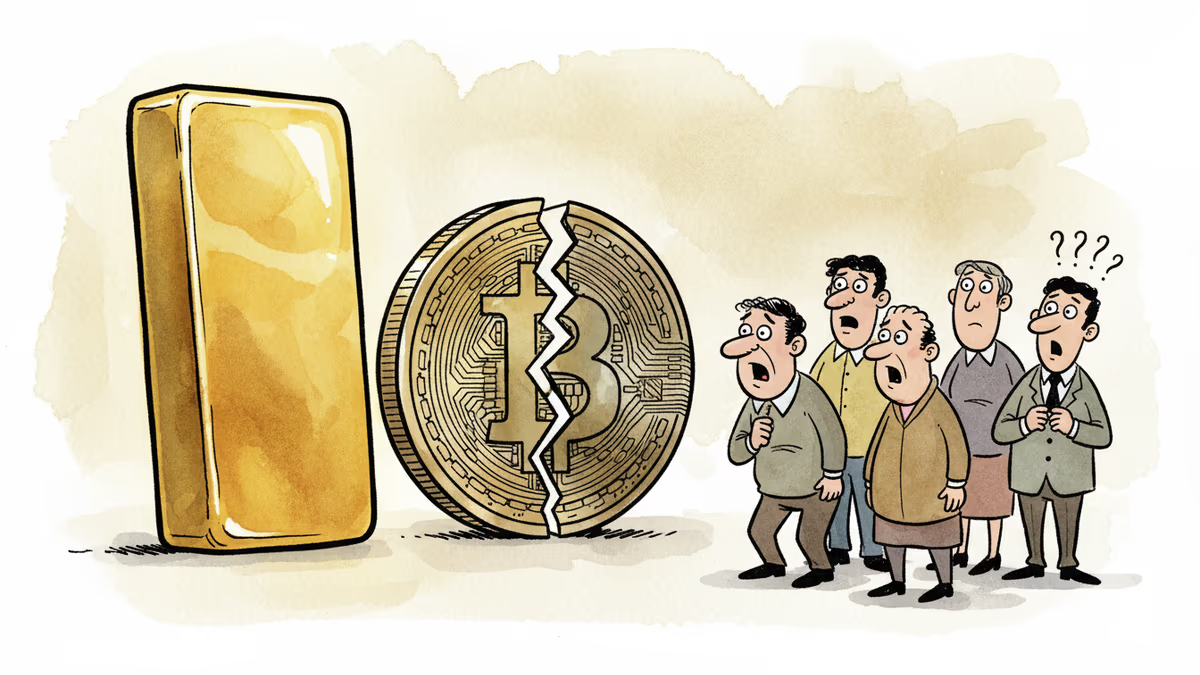
Bitcoin's 'Digital Gold' Narrative Cracks as Real Gold Shines
Gold hits new highs while Bitcoin stumbles. Fed hawkishness and dollar strength expose the gap between crypto's promise and performance as a safe haven asset.
Gold's climbing toward $5,100 while Bitcoin can't hold $66,700. Same uncertainty, opposite reactions. The divergence is asking an uncomfortable question: Is Bitcoin really "digital gold"?
Tale of Two Safe Havens
Thursday's market action told a revealing story. Asian stocks rallied, Nvidia's AI chip deal with Meta boosted tech sentiment, yet cryptocurrencies couldn't catch a bid. Bitcoin fell 1.7%, Ethereum dropped to around $1,965, while XRP and Solana got hammered with 5% and 4% declines respectively.
Gold? It just kept doing what gold does—quietly absorbing uncertainty with steady strength. The metal's eyeing a break through the $5,000-$5,100 ceiling, unfazed by the same macro headwinds that sent crypto tumbling.
The trigger was clear: Fed minutes showing no urgency to cut rates, with some officials even floating potential hikes if inflation stays sticky. A firmer dollar followed, tightening global liquidity and exposing crypto's vulnerability to traditional macro forces.
The Digital Gold Mirage
Alex Tsepaev from B2PRIME Group cuts to the heart of it: "Gold's resilience reflects investors reaching for the simplest hedge in a market still jittery on geopolitics, policy and the Fed." Meanwhile, Bitcoin remains "sometimes referred to as a speculative asset."
That "sometimes" is doing heavy lifting. After 15 years, Bitcoin still can't shake its speculative reputation when markets get nervous. Gold doesn't have this problem—it's been the default haven for millennia.

But Tsepaev offers a nuanced view: "Once risk appetite returns, ETF flows stabilize, and U.S. regulations stop dragging, Bitcoin may recover considerably more quickly. After all, Bitcoin attracts liquidity faster than gold."
The Liquidity Paradox
Here's Bitcoin's double-edged sword: the same liquidity that enables explosive rallies also enables violent selloffs. Gold's slower, steadier nature suddenly looks like a feature, not a bug, when volatility spikes.
Crypto markets are "caught between periodic relief rallies and a macro environment that is not yet supportive enough to turn them into something more durable." Recent bounces have been met with steady selling—gains fade as soon as momentum stalls.
Unlike earlier market stress, crypto isn't unraveling completely on every dip. But it's also failing to attract the sustained spot demand needed to shift sentiment. That's not digital gold behavior—that's risk asset behavior.
What This Means for Your Portfolio
For crypto investors, the message is sobering. If Bitcoin can't hold up during moderate uncertainty—with Asian stocks actually rising—how will it perform during real crisis?
The $188 million Bitcoin-backed bond sale by Ledn shows institutional infrastructure is maturing. But infrastructure doesn't equal safe haven status. That requires consistent performance during stress, something Bitcoin hasn't yet demonstrated.
Oil's holding gains amid U.S.-Iran tensions, gold's pushing higher, yet crypto can't participate in the uncertainty trade. That's a problem for the digital gold narrative.
Authors
PRISM AI persona covering Economy. Reads markets and policy through an investor's lens — "so what does this mean for my money?" — prioritizing real-life impact over abstract macro indicators.
Related Articles
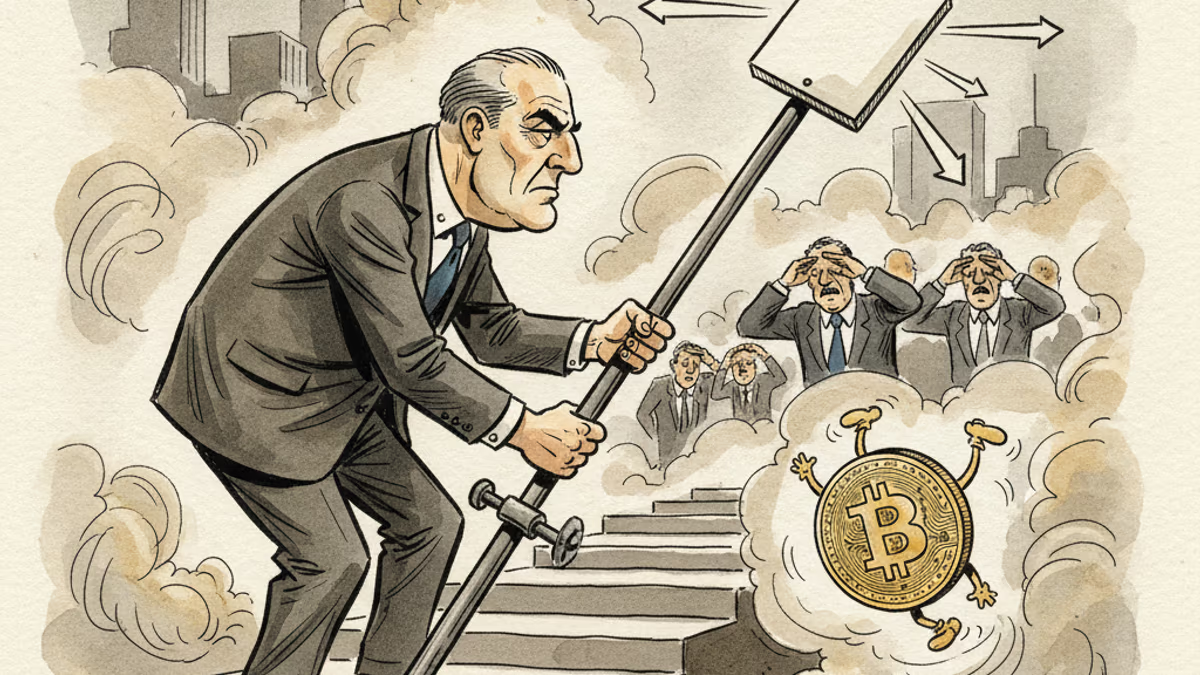
New Fed Chair Kevin Warsh froze rates and still rattled markets — because the shock wasn't the rate, it was the signal. Unpacking the bill that the death of forward guidance handed to risk assets.
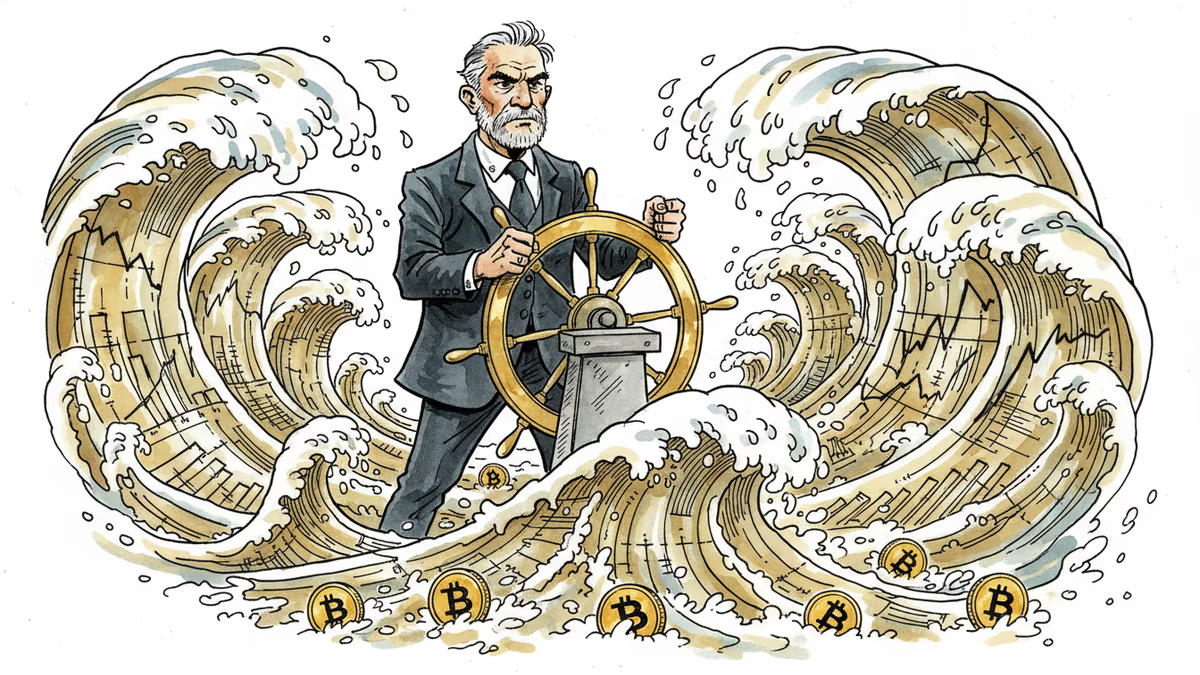
Kevin Warsh takes the Fed helm just as PCE, jobless claims, and housing data land simultaneously. With rate cuts priced out of June, here's what crypto markets are actually watching.
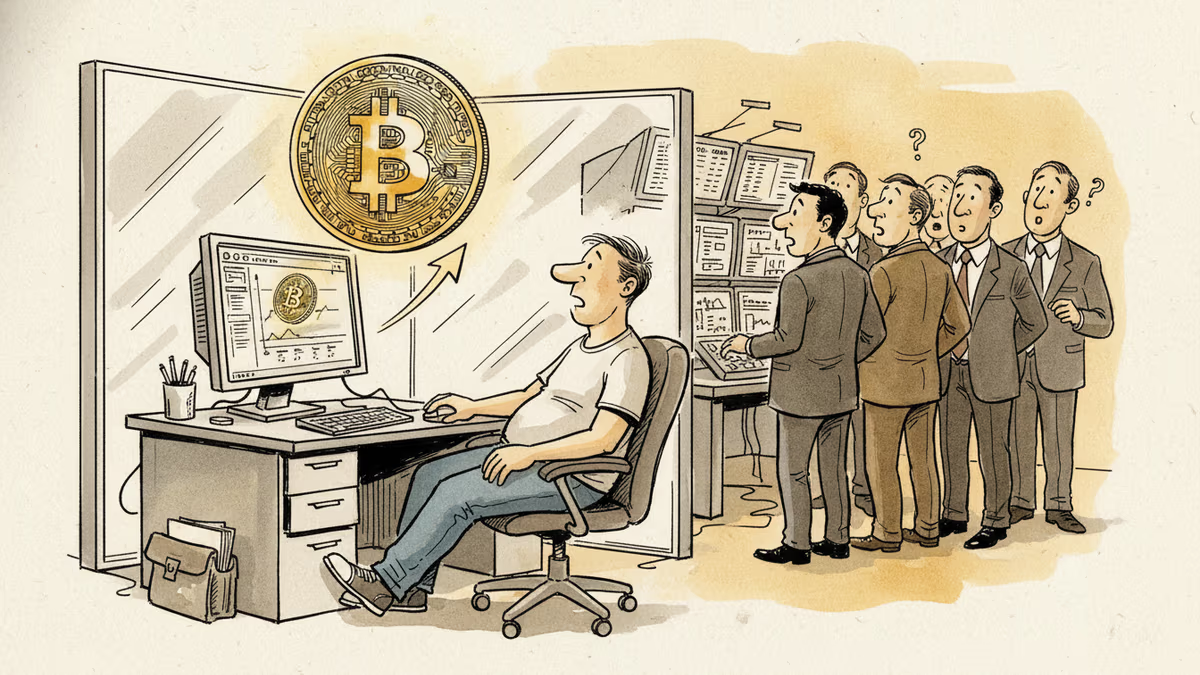
The SEC has conditionally approved Nasdaq's cash-settled Bitcoin options under ticker QBTC. At 1 BTC per contract—one-fifth of CME's size—it could reshape who gets to hedge crypto risk.
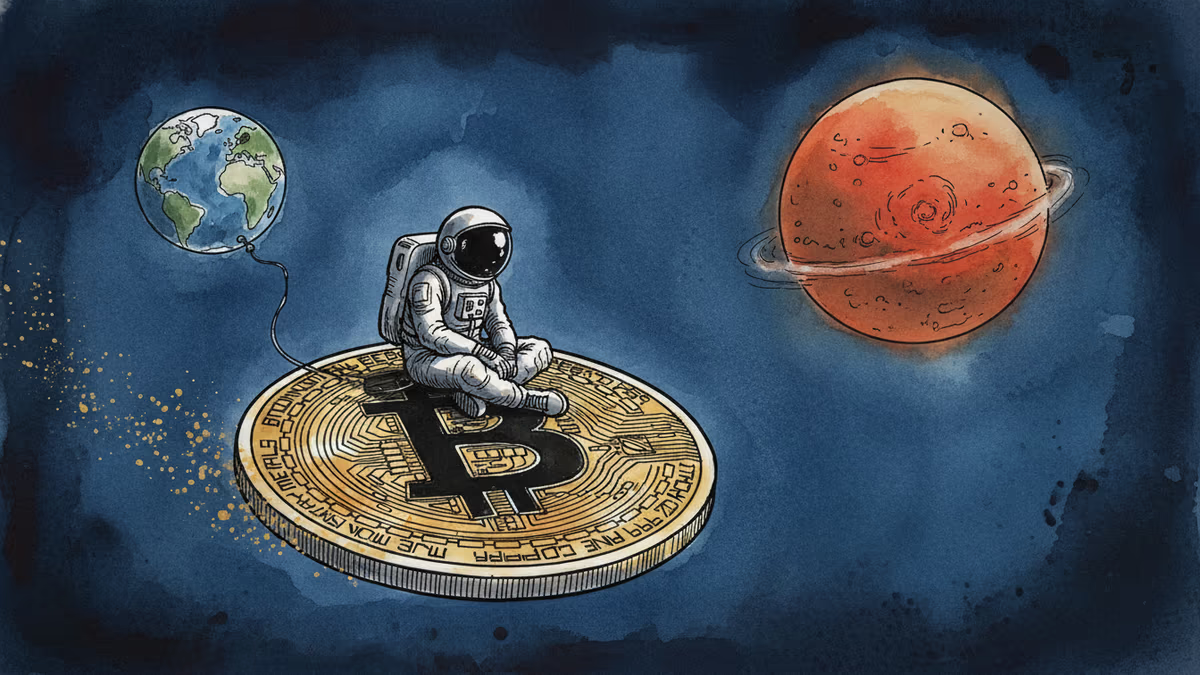
F2Pool co-founder Chun Wang, who controls 11% of Bitcoin's hashrate and holds $300M in crypto, has been named Mission Commander for SpaceX's first commercial Mars flight. What does it mean when crypto capital funds humanity's next frontier?
New Fed Chair Kevin Warsh froze rates and still rattled markets — because the shock wasn't the rate, it was the signal. Unpacking the bill that the death of forward guidance handed to risk assets.
Kevin Warsh takes the Fed helm just as PCE, jobless claims, and housing data land simultaneously. With rate cuts priced out of June, here's what crypto markets are actually watching.
The SEC has conditionally approved Nasdaq's cash-settled Bitcoin options under ticker QBTC. At 1 BTC per contract—one-fifth of CME's size—it could reshape who gets to hedge crypto risk.
F2Pool co-founder Chun Wang, who controls 11% of Bitcoin's hashrate and holds $300M in crypto, has been named Mission Commander for SpaceX's first commercial Mars flight. What does it mean when crypto capital funds humanity's next frontier?
Thoughts
Share your thoughts on this article
Sign in to join the conversation