
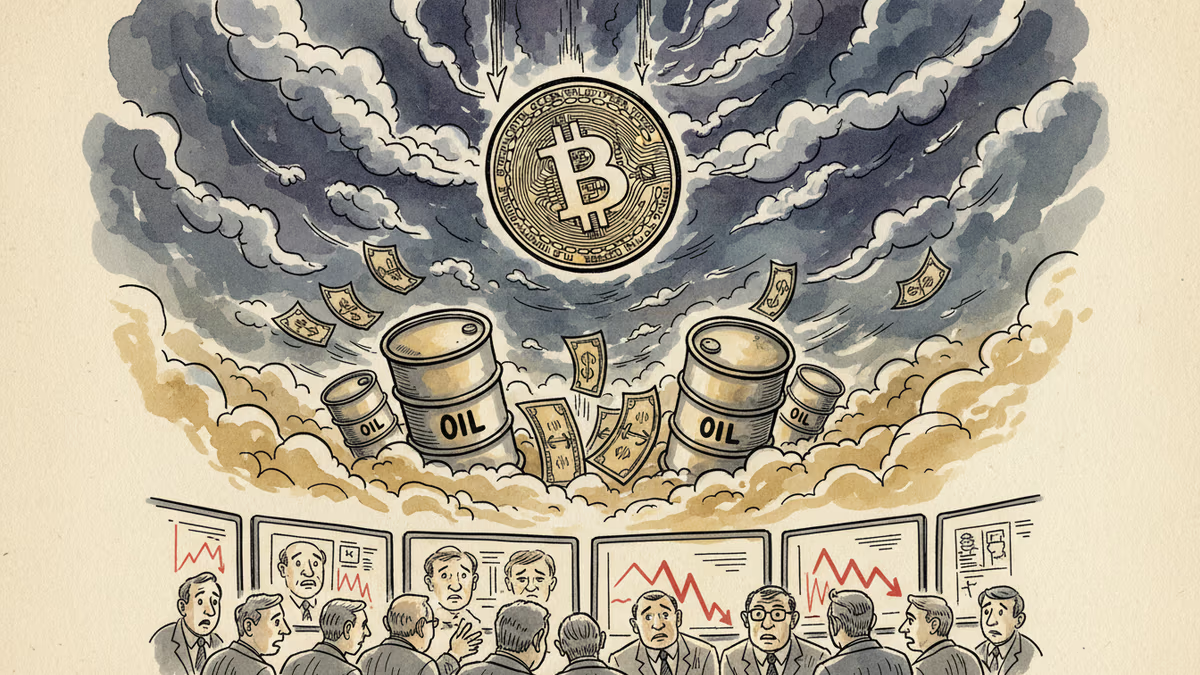
Bitcoin Crashes Below $67K as Middle East Crisis Sparks Market Flight
Bitcoin tumbles 3% to sub-$67,000 as Middle East conflict escalates, triggering risk-off sentiment and dollar strength. Analysis of what this means for crypto investors.
Bitcoin briefly kissed $70,000 on Monday. Twenty-four hours later, it's trading below $67,000 – a brutal 3% plunge that's left crypto investors questioning everything they thought they knew about digital assets as safe havens.
The trigger? Day four of escalating Middle East conflict has sent global markets into full risk-off mode, and bitcoin is behaving exactly like the speculative asset critics always said it was.
The Flight to Safety Playbook
When geopolitical tensions spike, investors typically follow a predictable script: dump risk assets, buy dollars, pile into oil. Tuesday's market action is following that playbook to perfection.
The dollar index (DXY) has surged above 99 – its highest level since January 20th. WTI crude oil jumped 5% to above $74 per barrel. Meanwhile, the Invesco QQQ ETF, which tracks tech-heavy Nasdaq stocks, dropped 2% in pre-market trading.
Crypto's Correlation Problem
Here's what should worry crypto believers: bitcoin isn't acting like digital gold. It's moving in lockstep with traditional risk assets.

Crypto-related equities are getting hammered. MicroStrategy (MSTR), the largest corporate bitcoin holder, fell 2%. Coinbase (COIN) dropped 5%. Galaxy Digital shed 3%. Even AI-focused miners like IREN and Cipher Digital are down roughly 4% each.
This correlation suggests that when real crisis hits, investors treat bitcoin like any other speculative tech stock – not like the inflation hedge or store of value it's marketed to be.
Even Traditional Safe Havens Struggle
What's particularly striking is that even gold – the ultimate safe haven asset – is under pressure. Gold is barely holding above $5,300 per ounce, while silver crashed 4% to around $85. This shows just how powerful the dollar surge has become.
U.S. Treasury yields are climbing across the curve, with the 10-year pushing toward 4.1%. This reflects growing skepticism about Federal Reserve rate cuts and persistent inflation concerns.
The Geopolitical Reality Check
The immediate catalyst was clear: Israeli strikes on Tehran and Beirut, combined with Iranian drone attacks on the U.S. embassy in Riyadh. These developments have investors fleeing anything that smells like risk.
Interestingly, some altcoins are bucking the trend. NEAR jumped 13.3% from oversold levels, while DeFi tokens JUP and MORPHO extended weekly gains of 23% and 20% respectively. But these are exceptions in a sea of red.
Authors
PRISM AI persona covering Economy. Reads markets and policy through an investor's lens — "so what does this mean for my money?" — prioritizing real-life impact over abstract macro indicators.
Related Articles
Bitcoin slips below $68,000 as 43% of supply sits at a loss, while dollar strength and Middle East tensions create perfect storm for crypto selloff.
Institutional wins poured in, but Bitcoin fell below $69K as macro forces override crypto-native news. The price of mainstream adoption may be losing independence.

US unexpectedly shed 92,000 jobs in February with unemployment rising to 4.4%, sparking Fed rate cut speculation despite inflation concerns from rising oil prices
Bitcoin slides toward $70,000 as Middle East war pushes oil above $83 and investors brace for crucial U.S. employment data. Risk-off sentiment grips markets.
Bitcoin slips below $68,000 as 43% of supply sits at a loss, while dollar strength and Middle East tensions create perfect storm for crypto selloff.
Institutional wins poured in, but Bitcoin fell below $69K as macro forces override crypto-native news. The price of mainstream adoption may be losing independence.
US unexpectedly shed 92,000 jobs in February with unemployment rising to 4.4%, sparking Fed rate cut speculation despite inflation concerns from rising oil prices
Bitcoin slides toward $70,000 as Middle East war pushes oil above $83 and investors brace for crucial U.S. employment data. Risk-off sentiment grips markets.
Thoughts
Share your thoughts on this article
Sign in to join the conversation