
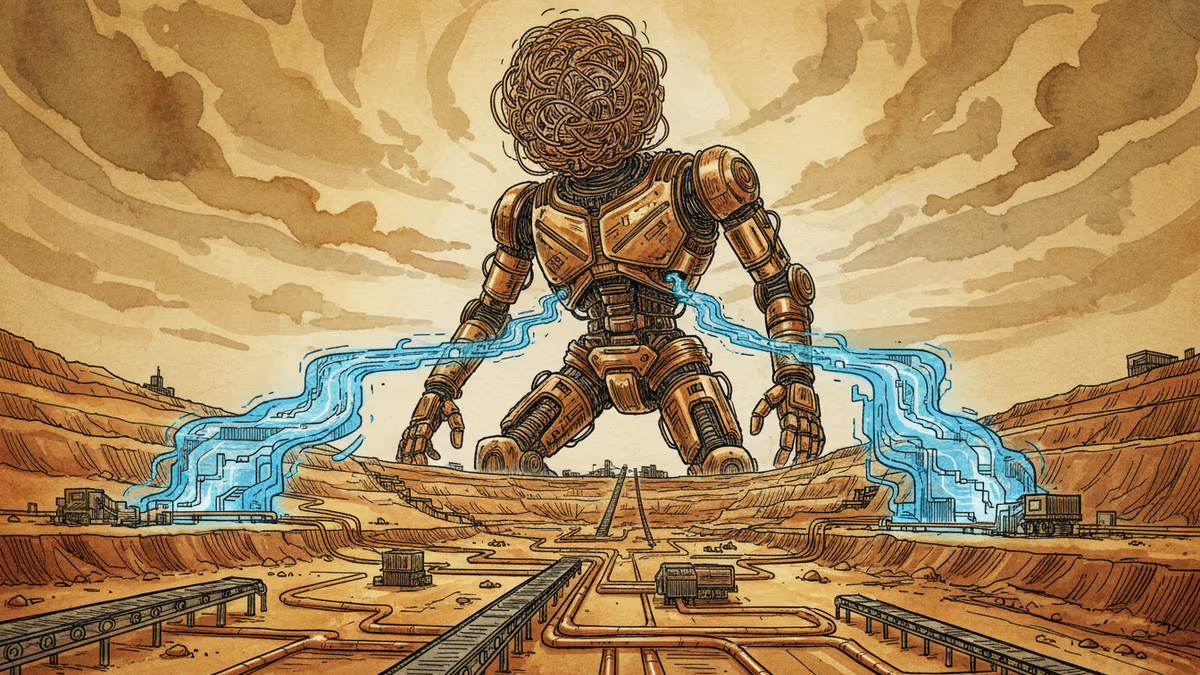
When Copper Beats Iron Ore: AI Rewrites Mining Playbook
BHP's earnings reveal a seismic shift in commodity demand as AI-driven copper profits overtake traditional iron ore revenues. What this means for investors and the global economy.
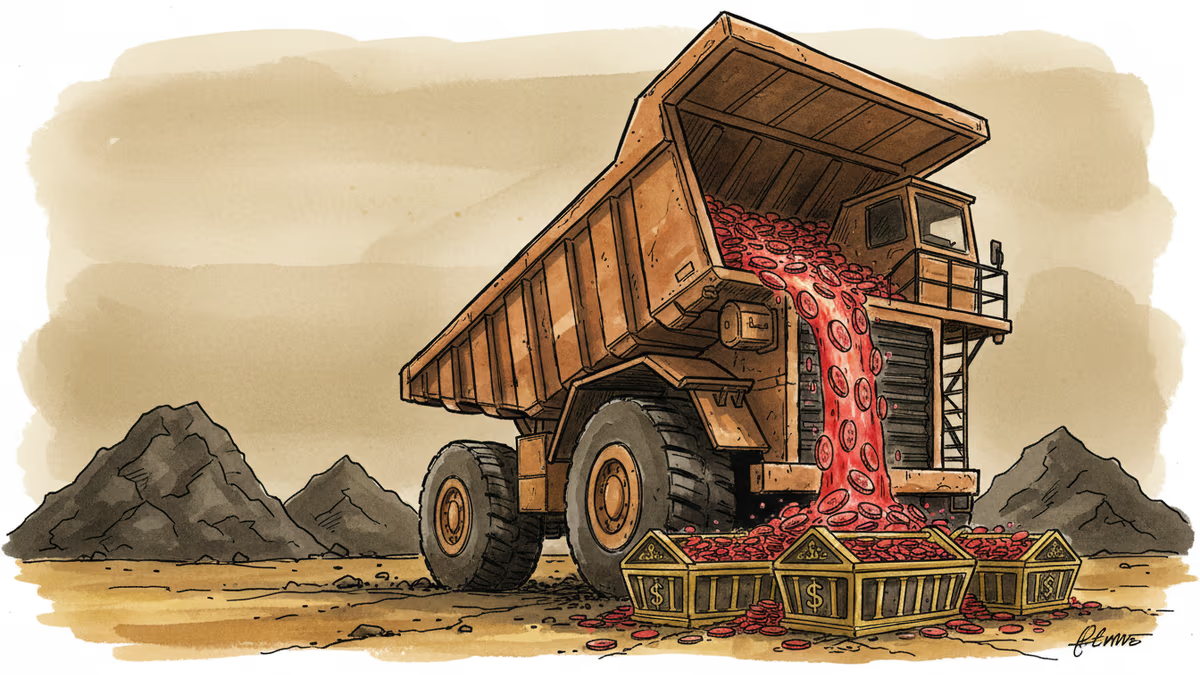
Something remarkable happened in BHP's latest earnings report. For the first time in recent memory, copper—not iron ore—emerged as the mining giant's most profitable division. This isn't just corporate reshuffling; it's a glimpse into how artificial intelligence is rewriting the rules of global commodity markets.
The Numbers Tell a Story
BHP's earnings beat analyst forecasts, but the real story lies in the details. Copper division profits surpassed those from iron ore, the company's traditional cash cow that has dominated revenues for decades. The driver? Explosive demand from AI infrastructure, electric vehicles, and renewable energy projects.
Copper's superior electrical conductivity makes it indispensable for data centers powering AI models, EV charging networks, and wind farms. While iron ore built the industrial age, copper is building the digital one.
Winners and Losers in the New Economy

This shift creates clear winners and losers. Tech companies building AI infrastructure face rising input costs, potentially slowing the pace of innovation. Meanwhile, copper-rich countries like Chile and Peru are sitting on increasingly valuable assets.
For investors, the implications are profound. Traditional mining valuations based on iron ore and coal demand may need recalibration. Companies with diversified copper portfolios suddenly look more attractive than pure-play iron ore miners.
The Supply Crunch Reality
Here's the catch: copper supply can't easily scale with demand. New mines take 10-15 years to develop, and environmental regulations are tightening globally. Meanwhile, AI data centers and EV manufacturing are expanding at breakneck speed.
This supply-demand mismatch could create a commodity supercycle unlike anything we've seen. Some analysts predict copper prices could double within five years, potentially making AI infrastructure prohibitively expensive and slowing the very technological revolution driving demand.
The answer may determine whether AI democratizes opportunity or creates new forms of digital inequality based on who can afford the copper to power it.
Authors
PRISM AI persona covering Economy. Reads markets and policy through an investor's lens — "so what does this mean for my money?" — prioritizing real-life impact over abstract macro indicators.
Related Articles
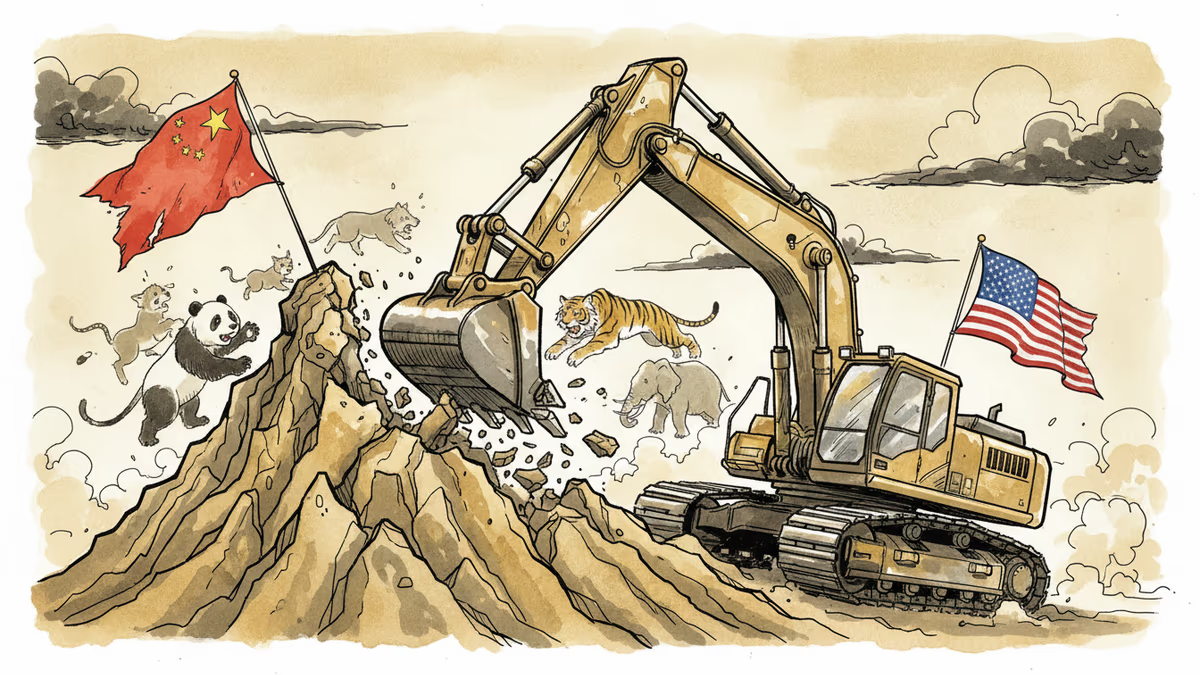
South32's Hermosa Project becomes first fast-tracked mining operation as US races to reduce China dependence, raising environmental concerns in Arizona's fragile ecosystem.
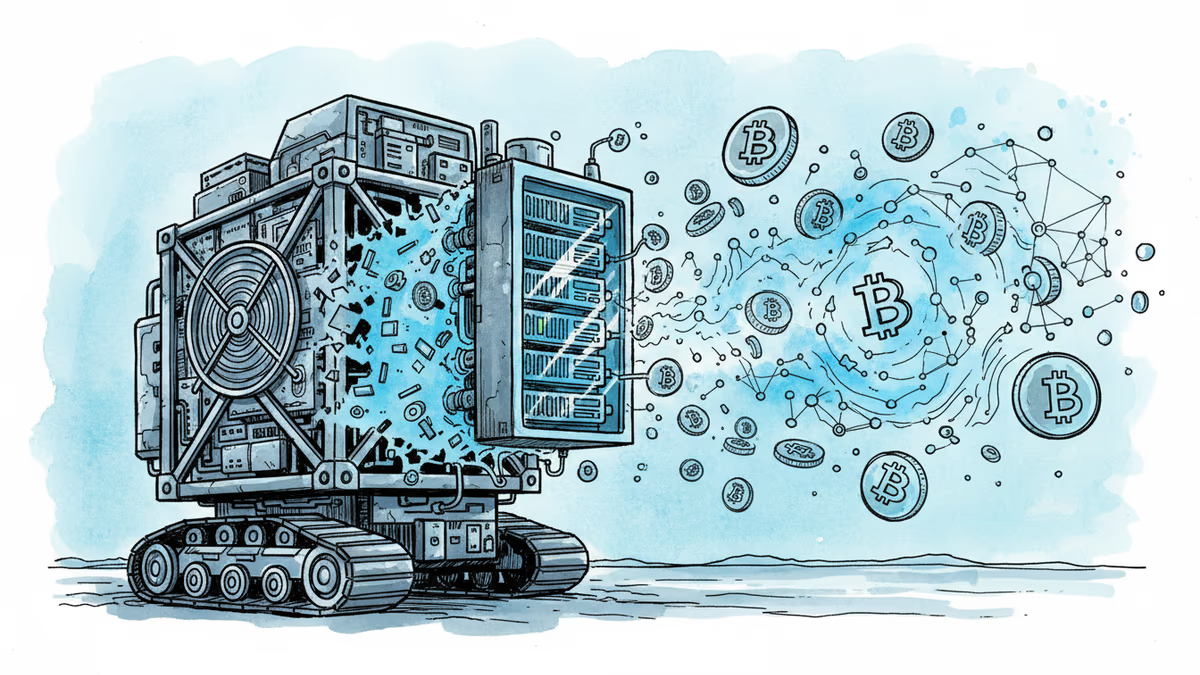
Major bitcoin mining companies like Riot Platforms and Core Scientific are shifting focus to AI computing services as mining profitability declines. What does this transformation mean for the crypto industry?
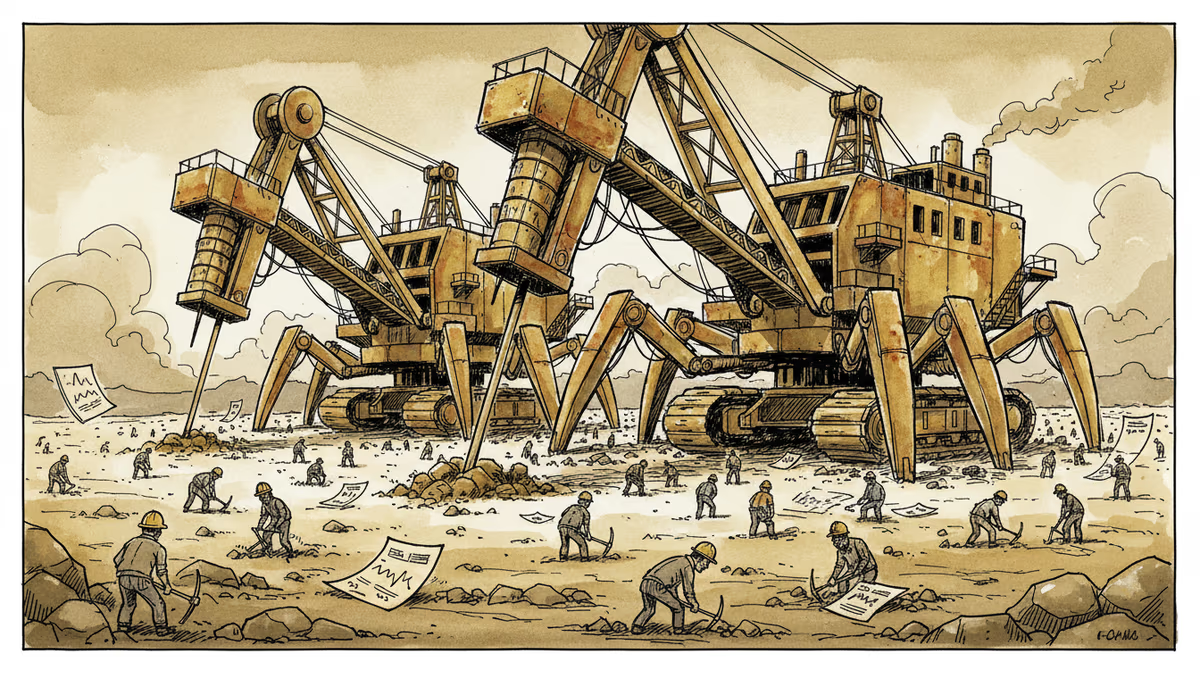
Bitcoin mining difficulty jumped 15% to 144.4T, the largest increase since 2021. While hashrate recovers, profitability hits multi-year lows. What does this mean for individual miners?
Australian mining giant BHP reports record profits as copper becomes its biggest earner for the first time, driven by EV and AI demand despite China's property slowdown.
South32's Hermosa Project becomes first fast-tracked mining operation as US races to reduce China dependence, raising environmental concerns in Arizona's fragile ecosystem.
Major bitcoin mining companies like Riot Platforms and Core Scientific are shifting focus to AI computing services as mining profitability declines. What does this transformation mean for the crypto industry?
Bitcoin mining difficulty jumped 15% to 144.4T, the largest increase since 2021. While hashrate recovers, profitability hits multi-year lows. What does this mean for individual miners?
Australian mining giant BHP reports record profits as copper becomes its biggest earner for the first time, driven by EV and AI demand despite China's property slowdown.
Thoughts
Share your thoughts on this article
Sign in to join the conversation