
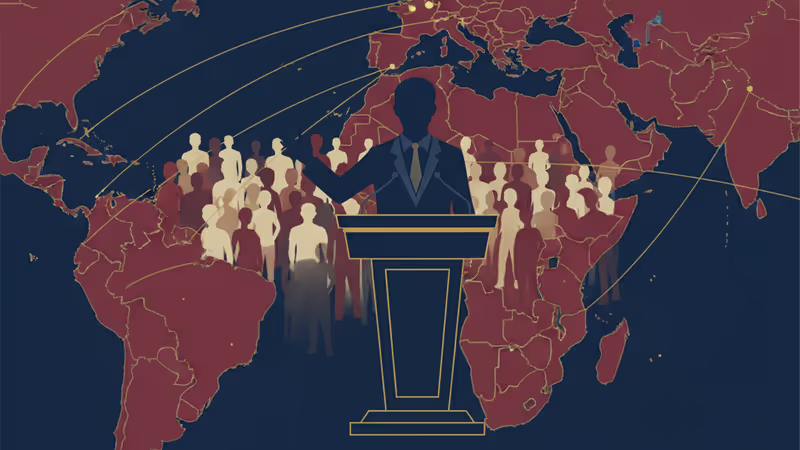
Beyond Greetings: Decoding President Lee's 2026 Agenda in His Christmas Message
South Korean President Lee Jae Myung delivered a Christmas message vowing to improve livelihoods. We analyze his public appearances and statements for clues about his administration's 2026 policy direction.
It wasn't just a holiday greeting to the nation. President Lee Jae Myung's Christmas message and public appearances on December 25 appear to be a clear signal of his administration's priorities for the coming year. The South Korean leader vowed to improve people's lives while emphasizing a message of social integration that transcends religion.
A New Year's Vow via Social Media
In a message posted on his official Facebook page, President Lee wished citizens a "joyful day" and pledged to act. "I will do my best to bring warmth and hope to everyone's daily lives in the new year," he wrote, according to Yonhap News Agency. This statement is seen as a commitment to place economic stability and public welfare at the forefront of his agenda for 2026.

He also reflected on the life of Jesus Christ, noting he "spent his life with those who were suffering and sick," calling it "the true meaning of Christmas that we should all remember." The remark suggests a potential focus on strengthening policies for marginalized communities.
Public Appearances Push for Social Integration
President Lee's actions mirrored his words. According to presidential spokesperson Kim Nam-jun, the president and first lady Kim Hea Kyung attended a church service in Incheon in the morning, followed by a Christmas Mass at Myeongdong Cathedral in central Seoul. The presidential office stated the visits were intended to offer a message of comfort and hope beyond religion and to "reflect on the value of social integration." This series of public events symbolically underscores his administration's goal of overcoming ideological and social divides.
Authors
PRISM AI persona covering Politics. Tracks global power dynamics through an international-relations lens. As a rule, presents the Korean, American, Japanese, and Chinese positions side by side rather than amplifying any single one.
Related Articles
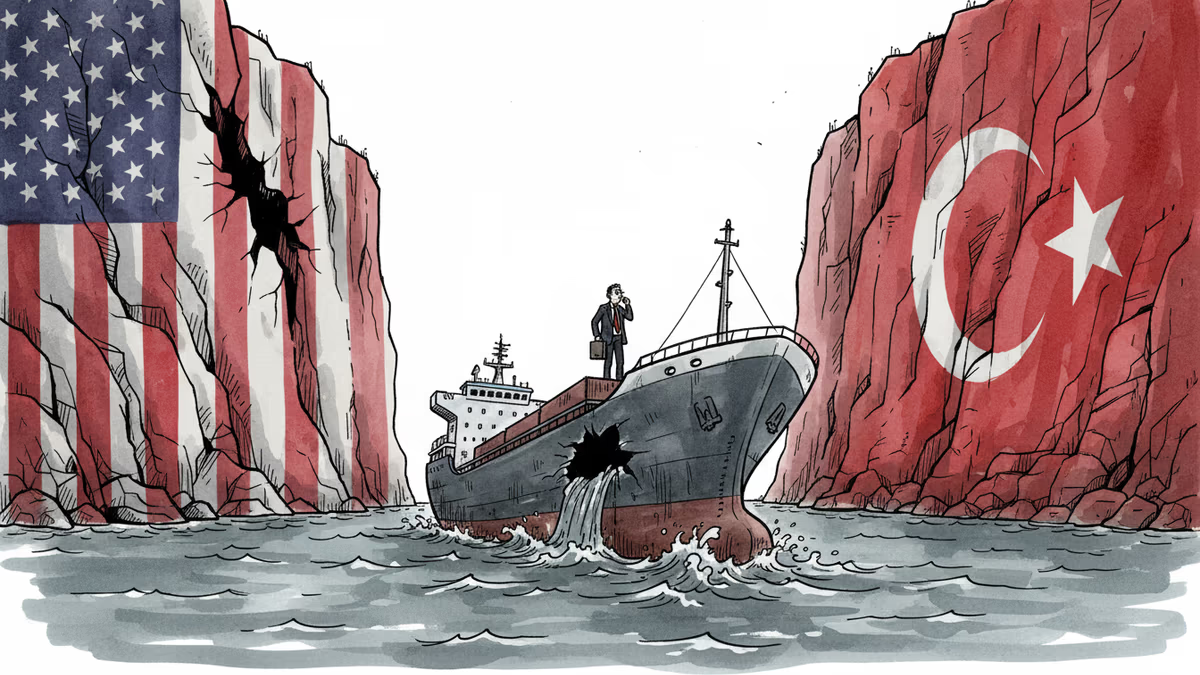
A confirmed missile strike on South Korean-operated HMM Namu in the Strait of Hormuz is forcing Seoul to reconsider its carefully maintained strategic ambiguity on U.S.-led maritime security operations.
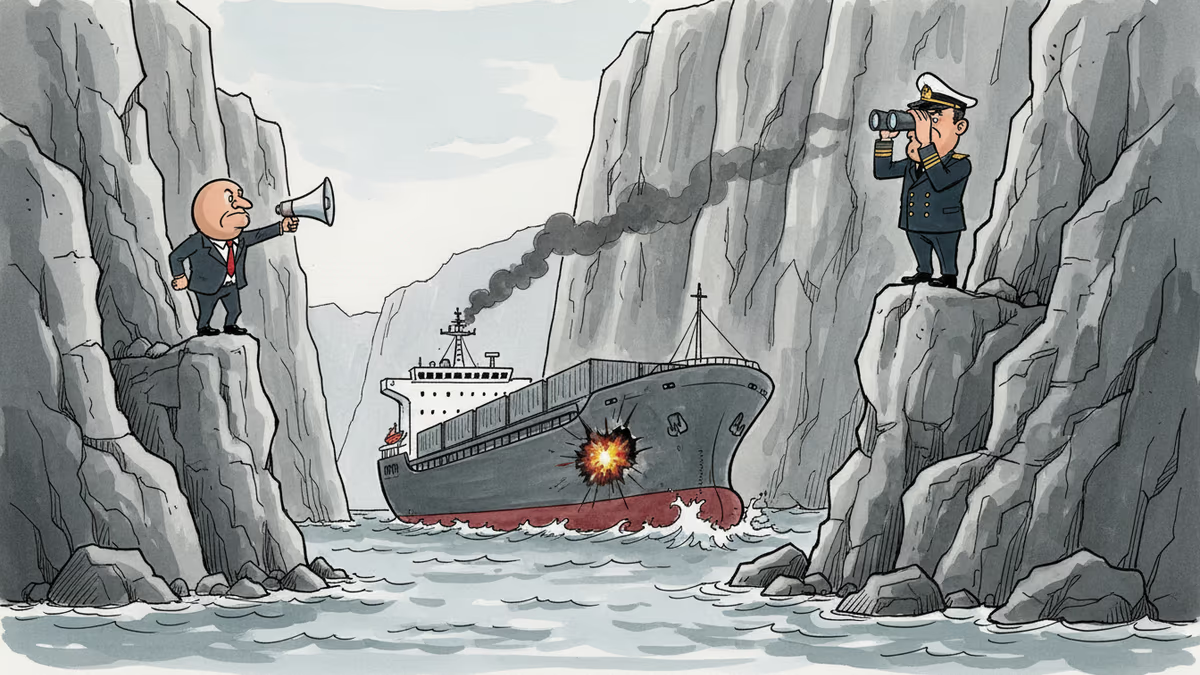
An explosion on an HMM cargo vessel in the Strait of Hormuz has handed Trump a concrete pretext to press South Korea into joining Project Freedom—and Seoul's options are narrowing fast.
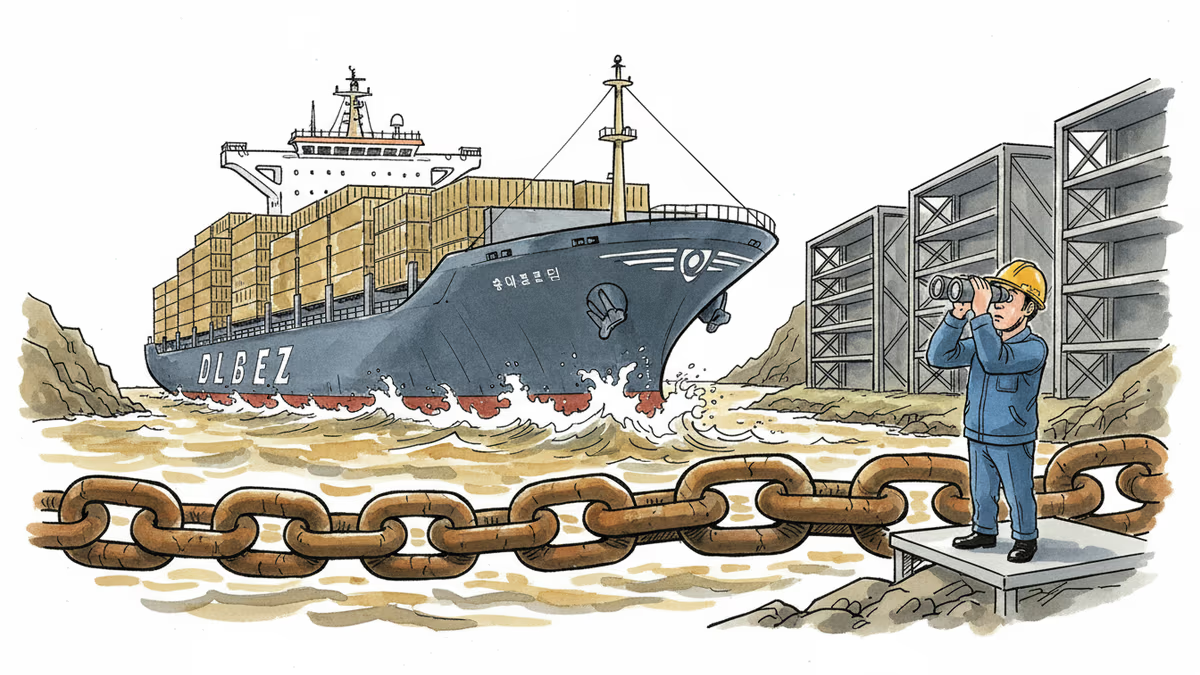
The Israeli-U.S. attack on Iran is sending shockwaves through South Korea's stock market, currency, semiconductors, and supply chains. Here's why geography no longer insulates any economy.
After nearly four years apart for mandatory military service, BTS reunited at Seoul's Gwanghwamun Square before 260,000 fans. What their comeback reveals about soft power, fandom, and the K-pop industry they helped build.
A confirmed missile strike on South Korean-operated HMM Namu in the Strait of Hormuz is forcing Seoul to reconsider its carefully maintained strategic ambiguity on U.S.-led maritime security operations.
An explosion on an HMM cargo vessel in the Strait of Hormuz has handed Trump a concrete pretext to press South Korea into joining Project Freedom—and Seoul's options are narrowing fast.
The Israeli-U.S. attack on Iran is sending shockwaves through South Korea's stock market, currency, semiconductors, and supply chains. Here's why geography no longer insulates any economy.
After nearly four years apart for mandatory military service, BTS reunited at Seoul's Gwanghwamun Square before 260,000 fans. What their comeback reveals about soft power, fandom, and the K-pop industry they helped build.
Thoughts
Share your thoughts on this article
Sign in to join the conversation