
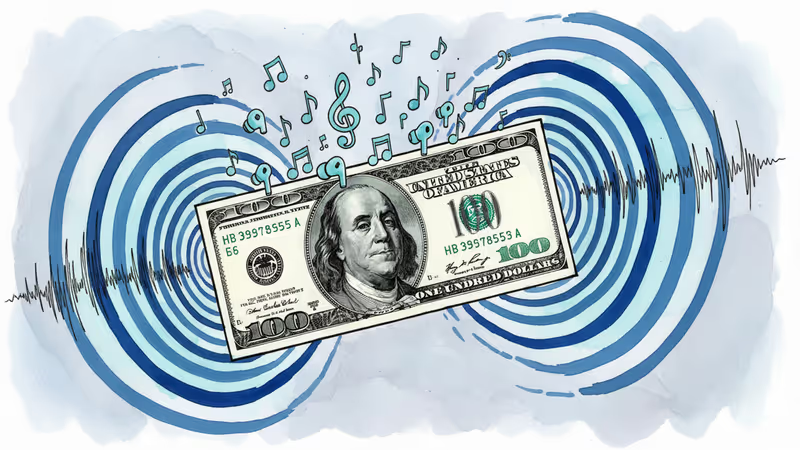
The $100 Revolution: Premium Earbuds Go Mainstream in 2026
WIRED's latest earbuds roundup reveals how premium features like noise canceling and 8-hour battery life are now available for under $100, reshaping the entire audio market landscape.
$30 for noise-canceling earbuds. Five years ago, that would've been laughable. Today, JLab Audio'sGo Pop ANC proves it's not just possible—it's reshaping what we expect from budget audio gear.
WIRED's latest earbuds roundup for 2026 tells a fascinating story: the premium audio experience has officially gone mainstream. When their top pick for "most people" costs just $129 (Google Pixel Buds 2a), we're witnessing something bigger than incremental improvements.
The Great Audio Democratization
The numbers tell the story. Features that once justified $300 price tags—active noise canceling, 8-hour battery life, waterproofing—are now standard in sub-$100 models. Samsung'sGalaxy Buds3 FE delivers "outstanding sound quality" and "surprisingly effective ANC" for $150.
This isn't just about cheaper manufacturing. It's about core technologies reaching commodity status. The same Bluetooth chips, noise-canceling algorithms, and battery tech that powered flagship models three years ago are now available to budget manufacturers.
The Ecosystem Wars Heat Up
But there's a catch. As hardware commoditizes, brands are doubling down on software integration. Apple'sAirPods Pro 3 remain "the definitive choice" for iPhone users, while Samsung's Galaxy Buds3 FE are explicitly "Samsung-first" products—many features work exclusively with Galaxy phones.
Google's taking this further with Pixel Buds Pro 2, which can launch Gemini Live AI conversations with "Hey Google, let's talk." We're watching earbuds evolve from audio accessories into AI interfaces, with each tech giant building their own walled garden.

The Open-Ear Surprise
Perhaps the most intriguing trend is the rise of open-ear designs. Soundcore'sAeroclip and Bose'sUltra Open Earbuds cater to users who want audio without total isolation. This reflects a post-pandemic shift in how we think about personal audio—sometimes we need to stay connected to our environment.
For parents working from home, joggers concerned about safety, or anyone juggling multiple audio sources throughout the day, "situational awareness" has become a feature, not a bug.
What This Means for Your Wallet
The practical implications are enormous. The "good enough" threshold has moved dramatically upward while prices have dropped. For most users, spending $300+ on earbuds now requires justifying premium features like spatial audio or brand-specific integrations rather than basic quality.
This creates interesting dynamics. Early adopters who paid premium prices for features now available in budget models might feel burned. Meanwhile, mainstream consumers suddenly have access to audio quality that was exclusive to audiophiles just a few years ago.
The Innovation Paradox
Here's where it gets complicated: as core features commoditize, brands are pushing into more specialized territory. Heart rate monitoring (Beats Powerbeats Pro 2), real-time translation (Apple AirPods Pro 3), and AI integration (Google Pixel Buds Pro 2) represent the new frontier.
But do we actually need earbuds that monitor our pulse? The risk is feature creep—adding complexity that most users won't value while potentially compromising the core audio experience.
Authors
Related Articles
Apple's entire AirPods lineup is now regularly discounted. We analyze what this pricing shift reveals about the wireless earbuds market and Apple's evolving strategy.

Major retailers are offering substantial tech discounts through Presidents Day weekend, with savings up to $1,400 on OLED TVs and premium headphones. What's driving this retail strategy shift?

Sony's WF-1000XM6 earbuds feature 3x faster processor, 8 microphones, and premium audio tech. Can they challenge Apple's AirPods dominance after 2.5 years of silence?

Poor audio quality makes you 8% less trustworthy in virtual meetings, Yale research reveals. How AI-powered audio technology is reshaping business communication rules.
Apple's entire AirPods lineup is now regularly discounted. We analyze what this pricing shift reveals about the wireless earbuds market and Apple's evolving strategy.
Major retailers are offering substantial tech discounts through Presidents Day weekend, with savings up to $1,400 on OLED TVs and premium headphones. What's driving this retail strategy shift?
Sony's WF-1000XM6 earbuds feature 3x faster processor, 8 microphones, and premium audio tech. Can they challenge Apple's AirPods dominance after 2.5 years of silence?
Poor audio quality makes you 8% less trustworthy in virtual meetings, Yale research reveals. How AI-powered audio technology is reshaping business communication rules.
Thoughts
Share your thoughts on this article
Sign in to join the conversation