

Best Mattresses for Side Sleepers 2026: Top Expert Picks for Spine Alignment
Discover the best mattresses for side sleepers in 2026. Expert reviews of Nolah, Helix, Bear, and Leesa based on firmness, spine alignment, and cooling performance.
Between 50% and 75% of people are side sleepers, yet many struggle with inadequate support. It's not just about comfort; it's about keeping the spine aligned while cushioning heavy pressure points like shoulders and hips. According to latest data from WIRED reviews updated in January 2026, the industry has moved toward sophisticated hybrid designs that prioritize zoned lumbar support.
Ranking the Best Mattresses for Side Sleepers 2026
- 1st: Nolah Evolution (Best Overall, priced at $1,480 with a 35% discount)
- 2nd: Helix Sleep Midnight Luxe (Best for Back Pain, Firmness: 6.5/10)
- 3rd: Bear Elite Hybrid (Best Firm Option, $1,578)
- 4th: Leesa Sapira Chill (Best Cooling, $1,809)

Why Zoned Support is the 2026 Industry Standard
The Nolah Evolution stands out for its 15-inch profile and zoned AirFoam, which specifically targets the lower back. Meanwhile, the Helix Sleep Midnight Luxe utilizes high-density foam along the torso to prevent sinking. For those who sleep hot, the Leesa Sapira Chill maintains a surface temperature of 88 degrees Fahrenheit, proving that modern mattress tech can solve multiple sleep issues simultaneously.
Authors
Related Articles

Samsung Electronics' union branch revealed that 84% of survey respondents oppose the government's roughly $290 billion (₩400 trillion) semiconductor megaproject in Gwangju. Government, management, the union and shareholders are all reading the same national project in sharply different ways.
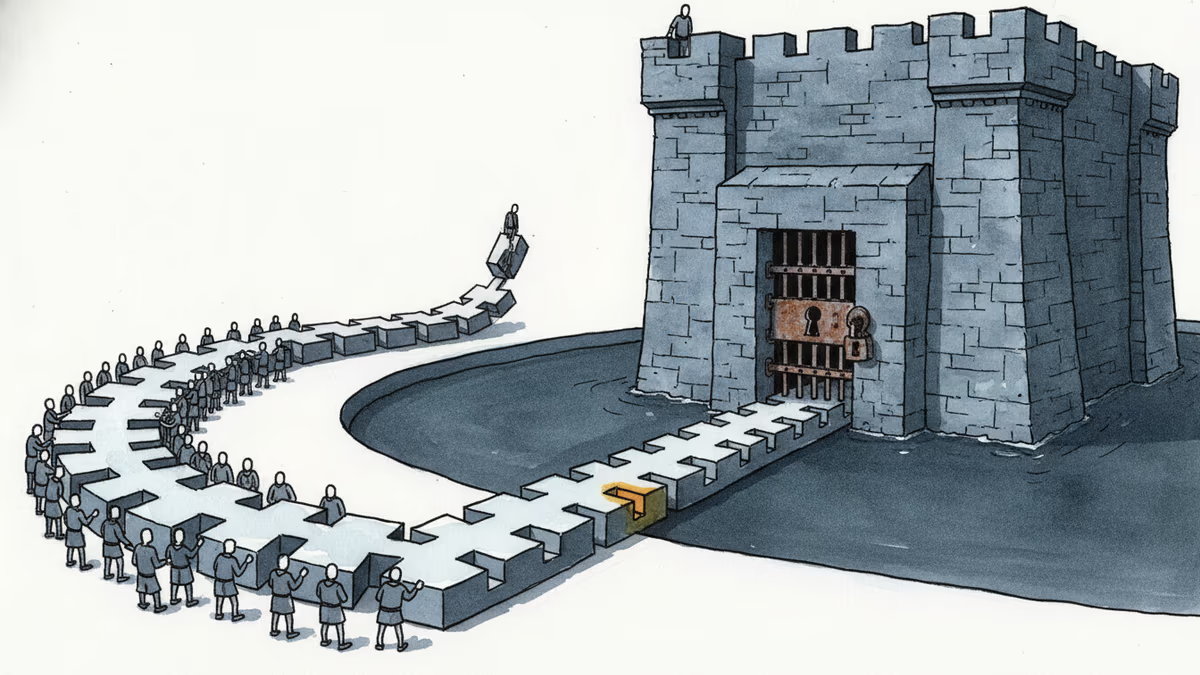
Nvidia shipped roughly a billion RISC-V cores in 2024, then announced it would run CUDA on the open standard. We break down how royalty-free instruction sets and open software stacks are trying to route around CUDA's lock-in. Part 2 of the Semiconductor Sovereignty series.
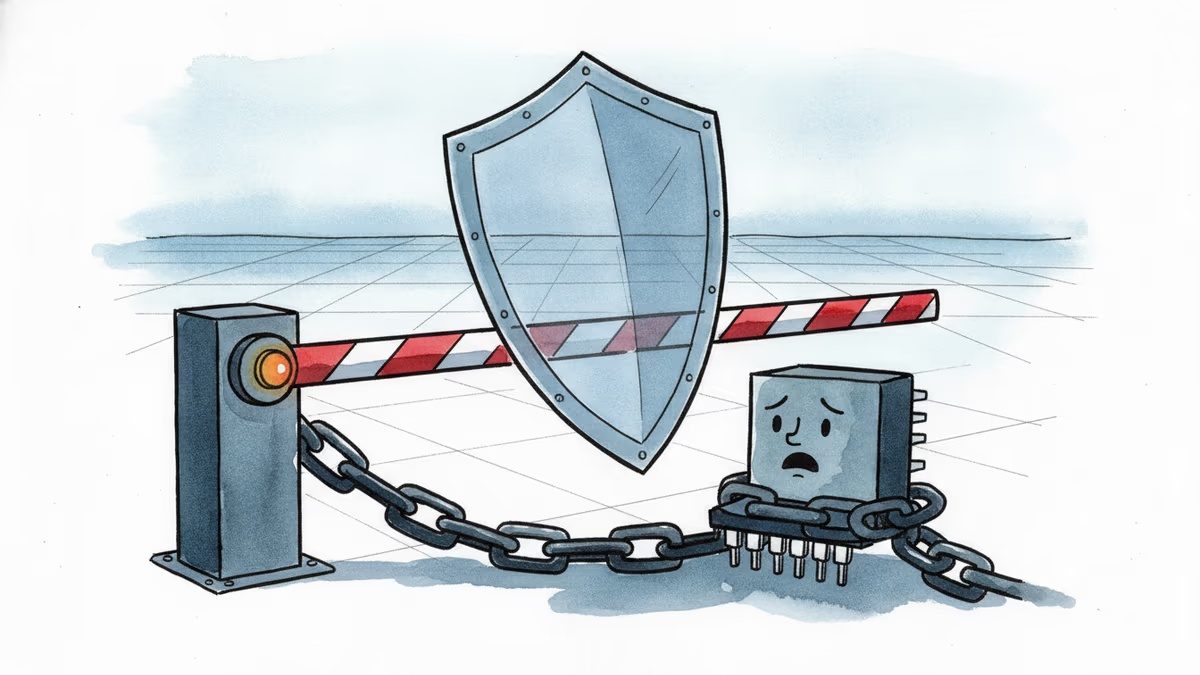
US AI-chip export controls split into three layers in the first half of 2026 — January easing, a May crackdown on circumvention, and a pending bill. Nvidia erased China from its guidance and still posted a record $81.6 billion quarter. A look at the export policy that both shields and cages it.

AMD's MI325X matches or beats Nvidia on memory and bandwidth — yet Nvidia's 86-92% share holds. The real moat is CUDA, 20 years in the making. Part 1 of 4.
Samsung Electronics' union branch revealed that 84% of survey respondents oppose the government's roughly $290 billion (₩400 trillion) semiconductor megaproject in Gwangju. Government, management, the union and shareholders are all reading the same national project in sharply different ways.
Nvidia shipped roughly a billion RISC-V cores in 2024, then announced it would run CUDA on the open standard. We break down how royalty-free instruction sets and open software stacks are trying to route around CUDA's lock-in. Part 2 of the Semiconductor Sovereignty series.
US AI-chip export controls split into three layers in the first half of 2026 — January easing, a May crackdown on circumvention, and a pending bill. Nvidia erased China from its guidance and still posted a record $81.6 billion quarter. A look at the export policy that both shields and cages it.
AMD's MI325X matches or beats Nvidia on memory and bandwidth — yet Nvidia's 86-92% share holds. The real moat is CUDA, 20 years in the making. Part 1 of 4.
Thoughts
Share your thoughts on this article
Sign in to join the conversation