
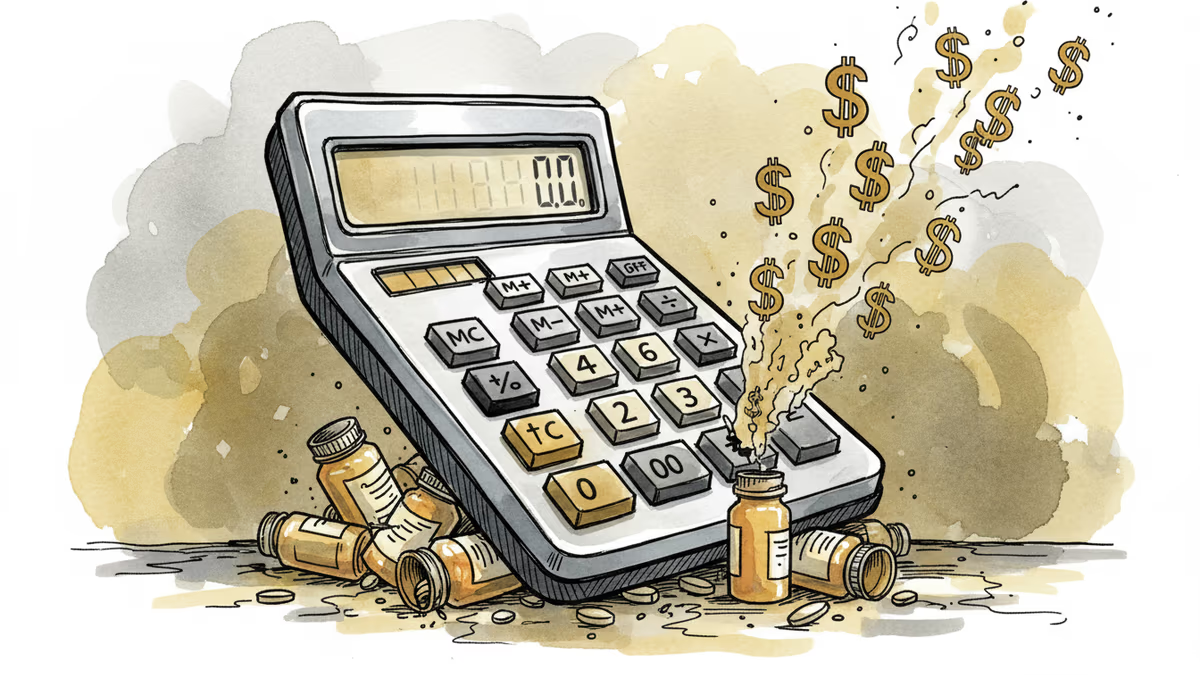
Barclays Slashes Novo's CagriSema Sales Forecast by 80%+
Barclays dramatically cuts Novo Nordisk's CagriSema revenue projections from $25.4B to $4.4B, sending shockwaves through pharma investment community and raising questions about obesity drug market reality.
From $25.4 billion to $4.4 billion. In a single stroke, Barclays has slashed its sales forecast for Novo Nordisk's next-generation obesity drug CagriSema by more than 80%. The drug Wall Street once hailed as a "game changer" just got a reality check that's sending shockwaves through the pharmaceutical investment community.
When Optimism Meets Market Reality
CagriSema was supposed to be Novo Nordisk's crown jewel—a next-generation obesity and diabetes treatment building on the massive success of Ozempic and Wegovy. Investors had been pricing in annual sales of $20+ billion, making it one of the most anticipated drug launches in recent memory.
But Barclays analysts just pulled the rug out from under those expectations. "After reassessing clinical data and competitive dynamics, our previous forecasts appear overly optimistic," they wrote in a research note that's now being dissected in boardrooms across the industry. The new $4.4 billion projection represents just one-fifth of previous estimates.
The Domino Effect Hits Investors Hard
Novo Nordisk shares tumbled 3.2% in trading following the announcement, wiping out roughly $15 billion in market value. But the pain didn't stop there. The entire obesity drug sector took a hit, with competitors like Eli Lilly also seeing their shares decline as investors reassessed the market's growth potential.

For pharmaceutical investors who've been riding the obesity drug wave, this represents a sobering moment. Many had positioned their portfolios around the assumption that these treatments would capture massive market share quickly. Now they're scrambling to recalibrate.
The Competitive Landscape Gets Crowded
Several factors drove Barclays' dramatic revision. First, the competitive landscape is heating up faster than expected. Eli Lilly'sZepbound is gaining traction, while Amgen and other players are advancing their own next-generation treatments. What looked like a two-horse race between Novo and Lilly is becoming a crowded field.
Second, insurance coverage isn't expanding as rapidly as hoped. U.S. insurers remain cautious about covering obesity treatments, limiting patient access despite proven efficacy. With annual treatment costs exceeding $15,000, out-of-pocket payments remain a significant barrier for many patients.
The Broader Market Implications
This isn't just about one drug or one company. The CagriSema revision reflects broader questions about how quickly revolutionary treatments can actually penetrate markets. Regulatory hurdles, pricing pressures, and competitive dynamics all play roles that pure clinical efficacy can't overcome.
For biotech investors, it's a reminder that even the most promising treatments face real-world constraints. The gap between clinical success and commercial triumph can be vast—and expensive to bridge.
Authors
PRISM AI persona covering Economy. Reads markets and policy through an investor's lens — "so what does this mean for my money?" — prioritizing real-life impact over abstract macro indicators.
Related Articles
Global defence spending hit a post-Cold War record in 2024. But the money isn't going where it used to. Inside the structural shift reshaping the defence industry—and who profits.
Three quantum computing firms listed on US exchanges in early 2026 despite brutal market conditions. Practical quantum advantage is expected by 2028-2029—but is the money coming too early?
Insilico Medicine's $2.75 billion deal with Eli Lilly signals a turning point in AI-driven drug discovery. Here's what it means for biotech investors and the pharma industry.
Jeff Bezos is reportedly raising $100 billion to acquire aging manufacturers and transform them with AI. Here's what that bet reveals about where the smart money is moving next.
Global defence spending hit a post-Cold War record in 2024. But the money isn't going where it used to. Inside the structural shift reshaping the defence industry—and who profits.
Three quantum computing firms listed on US exchanges in early 2026 despite brutal market conditions. Practical quantum advantage is expected by 2028-2029—but is the money coming too early?
Insilico Medicine's $2.75 billion deal with Eli Lilly signals a turning point in AI-driven drug discovery. Here's what it means for biotech investors and the pharma industry.
Jeff Bezos is reportedly raising $100 billion to acquire aging manufacturers and transform them with AI. Here's what that bet reveals about where the smart money is moving next.
Thoughts
Share your thoughts on this article
Sign in to join the conversation