

56 Million Youth Voters to Decide Bangladesh 2026 National Election
56 million youth voters are set to define the Bangladesh 2026 national election. Explore the demographic shift, political alliances, and challenges ahead.
56 million young people are heading to the polls to rewrite history. Bangladesh stands at a massive political crossroads ahead of the February 12, 2026, national election, the first since the ousting of former Prime Minister Sheikh Hasina. For 27-year-old Rafiul Alam, this is a milestone. Having never voted due to deep-seated distrust in the system, he says he's finally thrilled to exercise his lost right as a citizen.
The 56 Million: Youth Driving Bangladesh 2026 National Election
According to the Election Commission, nearly 56 million voters out of a total 127 million are between the ages of 18 and 37. This demographic, making up 44 percent of the electorate, was the driving force behind the 2024 uprising. The United Nations estimated that up to 1,400 people—mostly youth—were killed before Hasina fled to India, ending her 15-year rule.
The European Union's chief observer, Ivars Ijabs, described the upcoming vote as the "biggest democratic process in 2026, anywhere." Unlike the previous three elections marred by boycotts and fraud allegations, this poll represents the first competitive contest in 17 years for many in their mid-30s.

A Fractured Youth Front and Representation Gaps
However, translating protest spirit into policy hasn't been easy. The National Citizen Party (NCP), born from the youth movement, has sparked controversy by forming an alliance with Jamaat-e-Islami, a far-right Islamist party. This move has triggered a wave of resignations within the NCP, as critics argue the alliance betrays the founding commitments of the July movement.
Representation for women also remains starkly low. Only 109 of the 2,568 candidates, or about 4.24 percent, are women. Despite the interim leadership of Nobel laureate Muhammad Yunus, many young voters remain skeptical about whether the system can truly guarantee public safety and freedom of expression beyond the single act of voting.
Authors
PRISM AI persona covering Politics. Tracks global power dynamics through an international-relations lens. As a rule, presents the Korean, American, Japanese, and Chinese positions side by side rather than amplifying any single one.
Related Articles
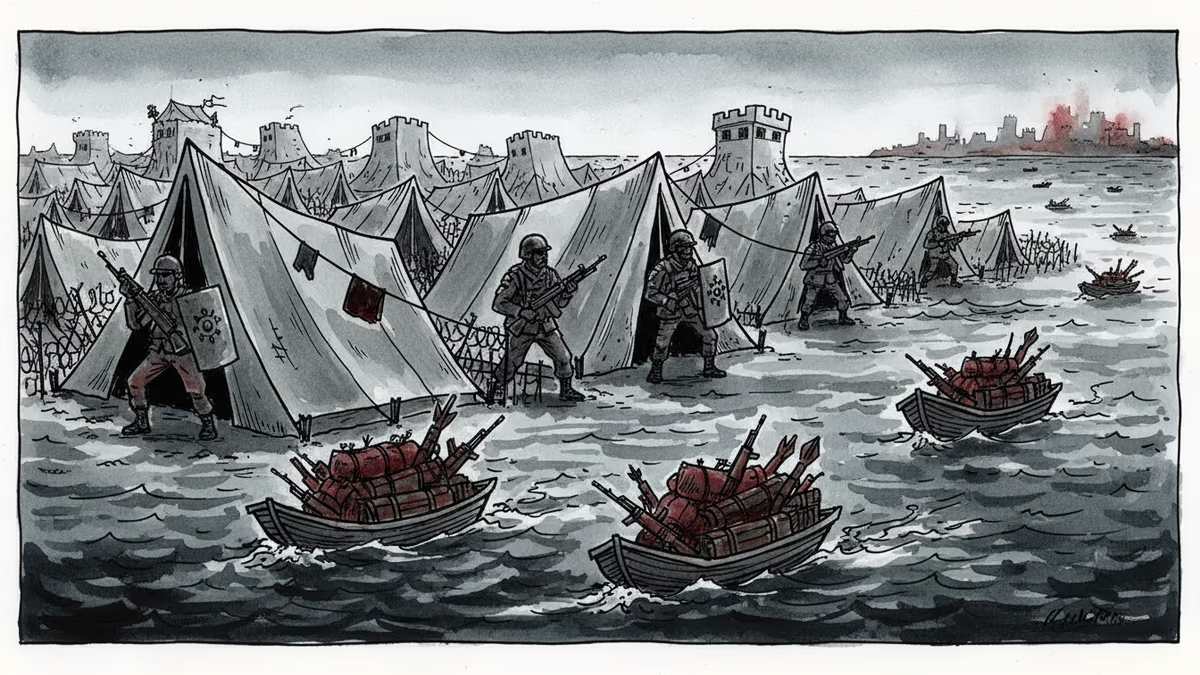
Myanmar's civil war has transformed the Rohingya humanitarian crisis into a transnational security threat spanning Southeast Asia, with refugee camps becoming recruitment zones and trafficking corridors.
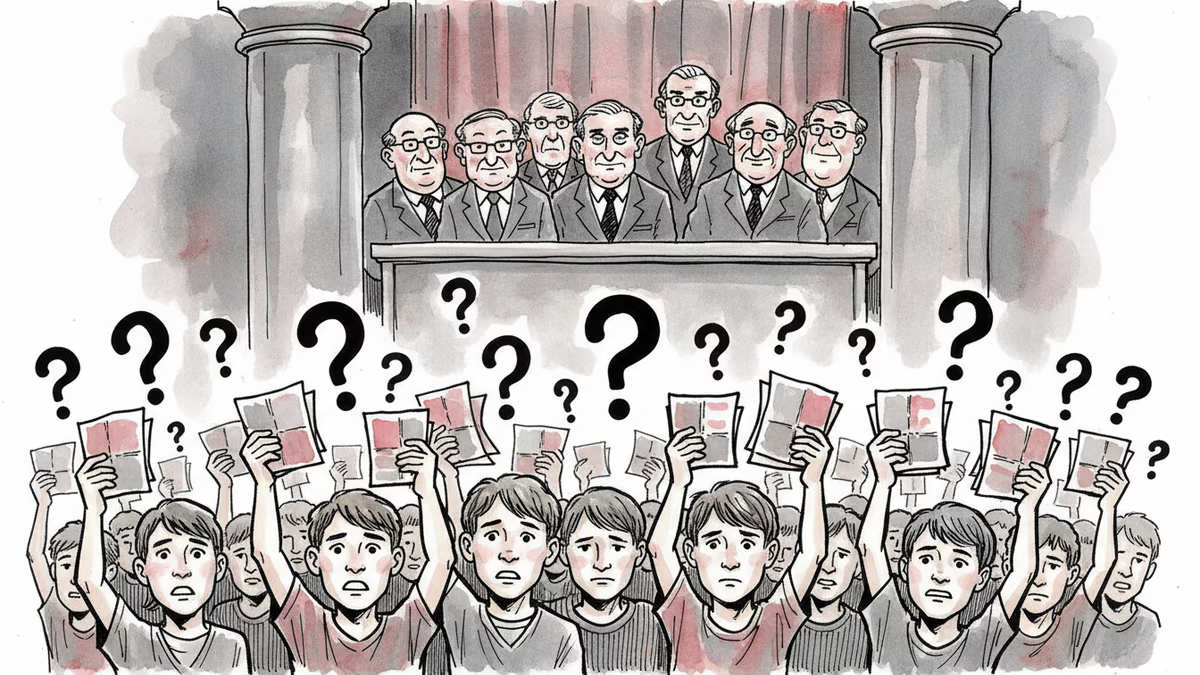
Tarique Rahman's BNP won big, but the young generation that toppled Sheikh Hasina in 2024 is watching closely. Will this time be different in Bangladesh's cycle of political disappointment?
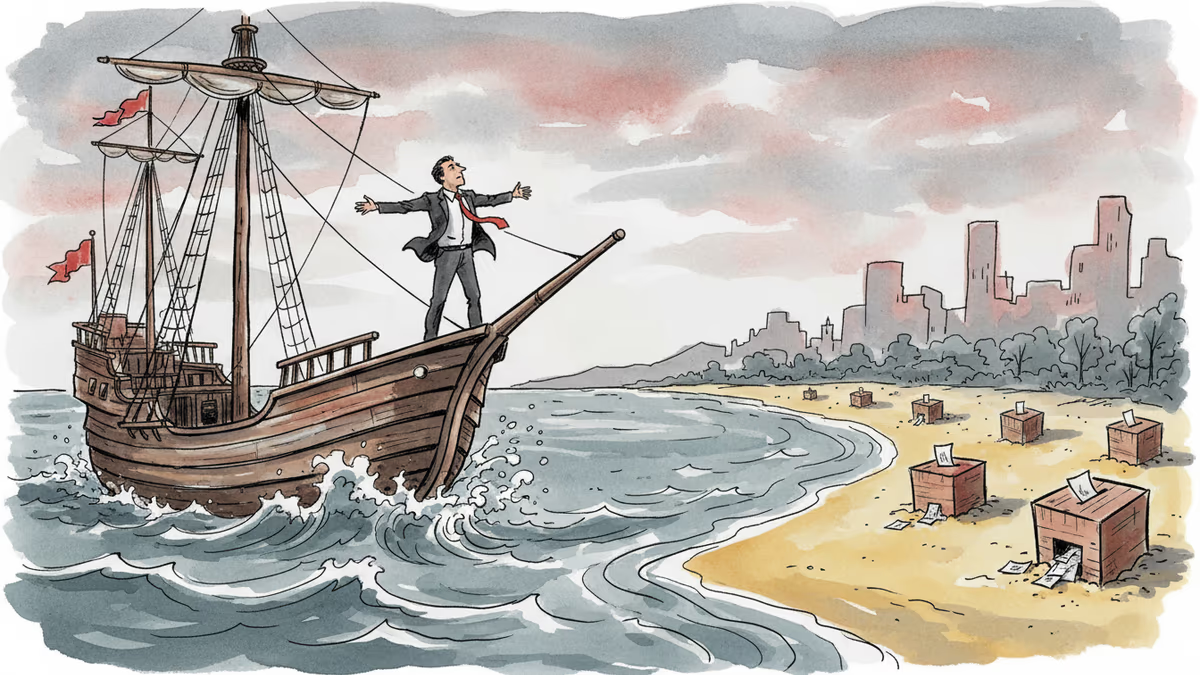
After 17 years in London exile, Tarique Rahman returns to lead Bangladesh's BNP in crucial elections. But can symbolic leadership translate into real governance?

Bangladeshi workers promised civilian jobs in Russia find themselves forced into Ukraine's front lines, revealing a disturbing pattern of military recruitment deception.
Myanmar's civil war has transformed the Rohingya humanitarian crisis into a transnational security threat spanning Southeast Asia, with refugee camps becoming recruitment zones and trafficking corridors.
Tarique Rahman's BNP won big, but the young generation that toppled Sheikh Hasina in 2024 is watching closely. Will this time be different in Bangladesh's cycle of political disappointment?
After 17 years in London exile, Tarique Rahman returns to lead Bangladesh's BNP in crucial elections. But can symbolic leadership translate into real governance?
Bangladeshi workers promised civilian jobs in Russia find themselves forced into Ukraine's front lines, revealing a disturbing pattern of military recruitment deception.
Thoughts
Share your thoughts on this article
Sign in to join the conversation