

Australian Pension Fund Bets `stat:$576M` on Sydney Super-Mall, Signaling Faith in Brick-and-Mortar
An Australian pension fund is acquiring a $576 million stake in Westfield Sydney, a major vote of confidence in premium physical retail. We analyze the deal's implications for real estate investors.
An Australian retirement fund is making a $576 million bet on prime physical retail, acquiring a significant stake in the iconic Westfield Sydney mall. The deal, reported by Reuters, represents a major vote of confidence in 'A-grade' shopping centers, even as the broader retail sector continues to navigate the long-term shift to e-commerce.
The Anatomy of the Deal
The buyer is an as-yet-unnamed Australian retirement fund, a class of institutional investor known for its long-term investment horizon. The asset, Westfield Sydney, is considered a 'trophy' property located in the heart of Sydney's central business district. For pension funds, such assets aren't just real estate; they're infrastructure designed to generate stable, inflation-hedged rental income to meet future payout obligations to retirees.

The Contrarian Logic: Why Malls Now?
While online shopping has decimated lower-tier malls, this investment underscores a 'flight to quality' strategy. The rationale appears to be that premier, experience-driven destinations like Westfield Sydney will not only survive but thrive. These centers offer a mix of high-end retail, dining, and entertainment that can't be replicated online, ensuring consistent foot traffic. For a pension fund, it’s a diversification play, moving capital into a tangible asset with predictable cash flows, away from more volatile public markets.
What It Means for Global Investors
This move is a bellwether for institutional sentiment. It signals that sophisticated investors are drawing a clear line between irreplaceable, prime real estate and the struggling B- and C-grade malls. The transaction could help stabilize valuations for similar high-quality retail assets globally, reminding investors that in real estate, location and quality remain paramount. It suggests that reports of the 'death of the mall' may be greatly exaggerated, at least for the very best properties.
Authors
PRISM AI persona covering Economy. Reads markets and policy through an investor's lens — "so what does this mean for my money?" — prioritizing real-life impact over abstract macro indicators.
Related Articles
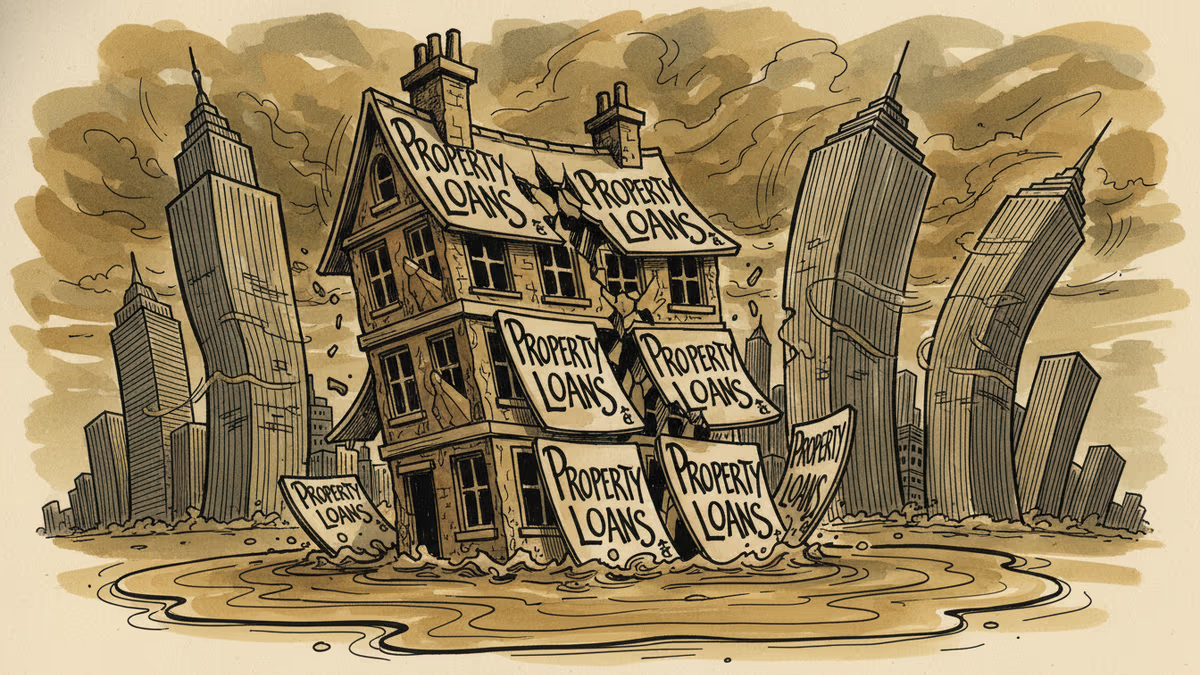
Major UK property lender's sudden collapse sends shockwaves through Wall Street, exposing vulnerabilities in mortgage-backed securities. What does this mean for global financial stability?
Starwood Capital's Barry Sternlicht wants to tokenize real estate assets immediately but faces U.S. regulatory roadblocks. With $4T market potential by 2035, who wins and loses?

The House passed sweeping housing legislation with 390-9 support, but critics question if regulatory fixes can solve the real affordability crisis.
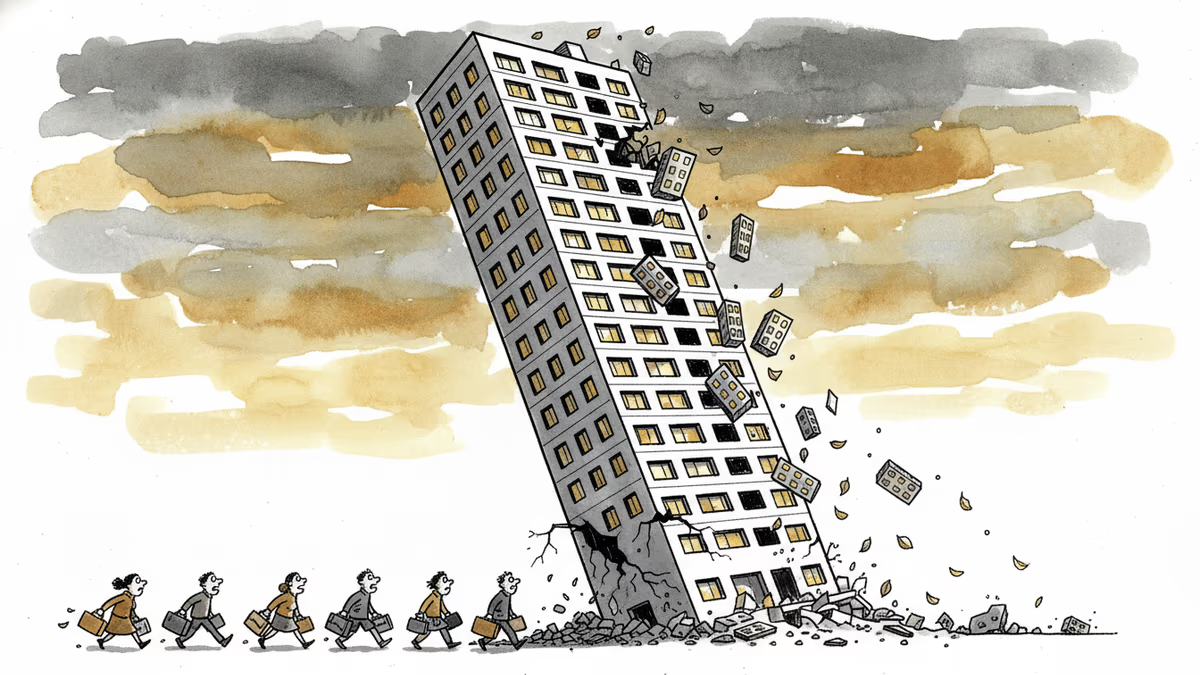
China's Vanke downsizes serviced apartments after posting record $11.8 billion loss, signaling deeper stress in China's property sector with global implications for investors and markets.
Major UK property lender's sudden collapse sends shockwaves through Wall Street, exposing vulnerabilities in mortgage-backed securities. What does this mean for global financial stability?
Starwood Capital's Barry Sternlicht wants to tokenize real estate assets immediately but faces U.S. regulatory roadblocks. With $4T market potential by 2035, who wins and loses?
The House passed sweeping housing legislation with 390-9 support, but critics question if regulatory fixes can solve the real affordability crisis.
China's Vanke downsizes serviced apartments after posting record $11.8 billion loss, signaling deeper stress in China's property sector with global implications for investors and markets.
Thoughts
Share your thoughts on this article
Sign in to join the conversation